WISCONSIN RAPIDS – A May 4 public hearing scheduled to discuss a conditional use permit for a proposed data center in the city has been postponed.
The city announced after 5 p.m. April 30 the Planning Commission hearing on the data center was deferred because of the project’s specific industry, size and location. The city also pointed to the importance of conscientious planning for the city’s growth and development.

“The city has decided to postpone any action on the data center (conditional use permit) request,” the announcement said.
The city will schedule a listening session to provide more information about the project and respond to resident questions, the announcement said. The date and time of that listening session has not yet been scheduled.
Groups organize meetings after data center announcement
The announcement that the meeting would be postponed comes after the Daily Tribune was first to report April 20 that the Wisconsin Rapids Planning Commission would host a public hearing at 4 p.m. May 4 to discuss two city requests. The second request of the public hearing was from PCH WI Holdings LLC for a conditional use permit to construct a data center at 950 Fourth Ave. N. in Wisconsin Rapids.
Following that report, various groups organized and held public information meetings about data centers.
South Wood County Neighbors for Responsible Development and Great Lakes Neighbors United hosted an informational event on data centers Wednesday, April 29 in the Wisconsin Rapids Area Middle School auditorium. The Midwest Renewable Energy Association hosted a free Energy in Your Township educational presentation April 30 at B’s Tap House.
In Thursday’s announcement, Mayor Matt Zacher said taking additional time ensures the city meets its obligations.
“In a democratic, market-based system, it’s essential that all potential businesses have access to a transparent and equitable review process,” Zacher said in the announcement. “We also have an obligation to maintain ordinances that safeguard residents’ quality of life and to thoughtfully address the concerns they share with us. Taking additional time to distribute and review information regarding the CUP, as well as to facilitate a public listening session, allows us to meet that obligation.”
What do we know about the proposed data center?
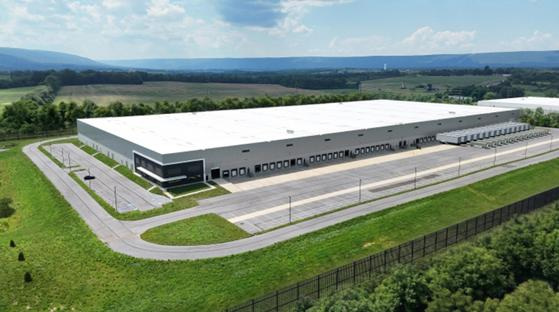
According to the conditional use application from PCH WI Holdings LLC, the group plans to construct a data center campus with four new data center buildings and one remodeled existing building on the 209-acre property.
The data center campus would employ up to 70 employees per shift. According to the document, the applicant stated the data center would generate minimal traffic with limited employee traffic, saying the traffic would be lower than what it was when the paper mill was in full operation.
According to the city document, the applicant stated the project would have minimal environmental impact and would comply with all applicable regulations, including stormwater and noise control requirements. There would be no industrial discharge or heavy material handling, according to the application, and water use would be “limited to domestic needs, with cooling provided through a closed-loop system,” according to the application.
The applicant also listed it would follow applicable noise standards during operations, minimizing potential nuisance.
What could initial building plans look like?
According to a letter to the city from Larkin Hoffman on behalf of PNK Group USA, the developer aiming to redevelop the former paper pulp mill, the group aims to redevelop an underutilized industrial site for long-term use, “with the potential to create high-quality jobs and a stable tax base for the community.”
The letter said the developer would “repurpose the property as a secure, state-of-the-art data center campus, leveraging existing industrial infrastructure while upgrading the site to current building, environmental and technology standards.”
The letter went on to say the project would significantly improve the property’s condition, landscaping and overall appearance.
The site design would include multiple buildings and utility structures, taking up about 1.2 million square feet, as well as internal drives, parking, stormwater management facilities and landscaped buffers. Mechanical equipment like cooling towers and rooftop units would be screened in to minimize noise and make the space look better, according to the letter.
Initial plans also include converting an existing building of about 143,000 square feet into a data center at the south end of the property. The maximum height planned for all buildings would be 45 feet, according to initial plans, not including any rooftop mechanical equipment and screening. Any cooling towers installed would comply with applicable height restrictions in the city code, the letter stated.
Buffers and screenings would include vegetation combined with an opaque fence, separating the data center property from its northwestern neighbors, according to the letter. The buffer would also include existing trees on site, made up of a combination of coniferous and deciduous trees, standing at least 25 wide and trees reaching at least 50 feet in height, according to the letter.
Each structure on the property would include adjacent mechanical equipment and generators that would provide backup and auxiliary generation only, according to the letter. Each building would be served by chillers and ancillary mechanical equipment, and all equipment would be fully screened from adjacent properties for noise and visual mitigation, according to the letter. Other than “exigent circumstances,” each backup generator would be tested only once or twice per month for no more than 30 minutes between 10 a.m. and 4 p.m. with no testing during weekends or holidays, according to the letter.
The letter also stated noise levels at the property line would comply with ordinances, and all mechanical equipment would be screened by architectural and/or acoustic walls. The letter stated there would be no impact on residential areas.
What could the timeline look like?
The letter from the developer to the city stated it expects to develop the property in phases over a multi-year period. So far, the developer anticipates construction between 2027 and 2029. The project would start with converting and improving existing structures wherever possible, then constructing initial data halls and supporting infrastructure. Further phases will be determined based on market demand and available utility capacity, according to the letter.
What about electricity?
The property stands within the service territory of Consolidated Water Power Company, a state public utility regulated by the Public Service Commission of Wisconsin.
According to the letter from the developer, Consolidated has served large industry on the site for more than a century, and the existing distribution and substation infrastructure on the property and adjacent to the property was originally designed to support a heavy industrial demand from all paper mill operations.
The developer plans to use power provided through a coordinated arrangement between Consolidated Water Power Company at the local distribution and substation level and the American Transmission Company at the regional bulk transmission level, according to the letter.
American Transmission Company is the independent, FERC-regulated transmission owner responsible for the high-voltage transmission grid serving central and eastern Wisconsin, according to the letter. Any transmission-side improvements associated with the data center project would be evaluated, scheduled and implemented under the ATC’s standard and regulated framework, according to the letter.
The developer claims the data center project does not introduce a new heavy load into the community, as the city has historically supported the Wisconsin Rapids paper mill complex for decades on the property. The letter states the substation, distribution feeders and transmission corridors on site were built to deliver tens of megawatts of continuous industrial power to the paper mill complex to serve pulp and paper-making operations. As the paper mill shut down the majority of its operations, a significant amount of available power has been freed up and remains available, according to the letter.
The developer calls the proposed data center the modern successor to the industrial load that long existed on the site.
“The project is, in meaningful part, bringing existing industrial power capability back into productive use at the site where it was originally intended to be consumed, rather than imposing a new burden on a system designed for residential or light-commercial demand,” the letter stated.
The project aims to develop in phases, according to the letter, starting with about 40 MW targeted for the first half of 2027, growing to about 100 MW by 2028, then to about 150 MW by 2023.
Each of those phases would be contingent on completing applicable engineering studies, regulatory approvals and definitive service agreements, according to the letter.
The phases are intentional, according to the letter, allowing for multi-year planning, upgrades wherever required and following normal regulatory processes. The letter said the phased approach would avoid any need for sudden or unplanned changes to the local system.
Can Consolidated provide the needed power?
According to the developer’s letter to the city, Consolidated Water Power Company provided written preliminary capability assessment of the project, confirming it had existing capability to deliver up to 40 MVA of power to the proposed facility. The Consolidated letter also stated initial service could be provided under its existing PSCW-approved S21 tariff, with final capability subject to completion of an ATC System Impact Study, currently underway.
Loads beyond the initial phase would be evaluated through that study and through Consolidated Water and Power company’s planning process, according to the developer’s letter.
Would the project affect local electric services?
According to the developer, the data center project has been structured specifically to ensure it would not degrade electric services for homes, schools, hospitals and existing businesses in Wisconsin Rapids.
The project would not draw from the electric supply currently serving residential or existing commercial demand, according to the developer.
“The project is, in effect, bringing additional power supply into the local service area to serve the project’s own load, rather than reallocating supply that today serves residents or other businesses,” the letter stated.
Will the data center affect the city budget or taxpayers?
According to the developer, all project-driven distribution, substation and transmission work would be funded through the standard regulated interconnection and tariff framework that’s applicable to a new large-load customer. Under that, costs of project-specific upgrades are recovered.
According to the developer’s letter to the city, no municipal capital is required, and the city would not be asked to fund, finance, guarantee or co-sign any electrical infrastructure associated with the data center project. The developer also stated no special assessment or ratepayer subsidy would be requested and said the city utility budget would not be impacted. Since Consolidated Water Power Company is not a municipal utility, city utilities would not be involved in funding or operating the project’s electrical service, according to the developer.
What about water?
According to the letter from the developer to the city, water would be used for an initial filling of the on-site closed-loop cooling system. That cooling system would rely on a modern, highly efficient closed-loop system designed to minimize water consumption, according to the developer.
The developer anticipates using domestic city sewer and water only and would connect to the city’s municipal sewer and water system for the data center project.
According to the developer, historical data indicated the paper mill on the property used about 28 million gallons of water each day, or about 10.2 billion gallons annually.
According to the developer, the data center would use less water. It estimates using about 2,000 gallons per day per building, totaling about 10,000 gallons of water per day for the entire property.
The developer also stated the anticipated sewer discharge would be about the same as domestic water usage, and no chemicals will be discharged into the network. Volumes discharged for chiller maintenance are limited to a few hundred gallons per year, according to the developer’s letter.
What else is mentioned in the developer letter?
The developer listed nine specific required considerations under the city’s zoning code before issuing a conditional use permit, including parcel size, compatibility with other uses, the location within the property, effects on traffic safety, efficiency and pedestrians, suitability, effects on the environment, effects on surrounding properties and other relevant factors. It addressed each of the nine conditions and explained how it believed the data center project fit the parameters listed.
The developer letter to the city concluded, asking for the city to approve its conditional use permit.
“We appreciate the city’s careful review and recognize its responsibility to balance economic development with protection of community resources,” the letter stated. “PNK Group looks forward to working with staff, appointed and elected officials and community members throughout the review process and in implementing any conditions of approval.”
Contact Caitlin at cshuda@usatodayco.com or follow her on Twitter @CaitlinShuda.
(This story was updated to provide new information.)
This article originally appeared on Wisconsin Rapids Daily Tribune: City postpones May 4 public hearing on Wisconsin Rapids data center
Reporting by Caitlin Shuda, Wisconsin Rapids Daily Tribune / Wisconsin Rapids Daily Tribune
USA TODAY Network via Reuters Connect