I’m taking on some professional obligations that will make it hard to keep doing this the way I’d want to, so this is probably my last column for a while (also, maybe not).
As an idealistic teenage fan of “The West Wing,” one of my few professional dreams was to be an opinion columnist at a newspaper, where my soaring and incisive rhetorical flourishes would shift the discourse around the important issues of the day. I don’t know that I succeeded by that measure, but a few readers have been kind enough to say I’ve at least been a fun hang.

I want to express my gratitude to IndyStar, to James Briggs and to the readers for the opportunity to live out a teenage dream.
As I step away from this platform, I find myself thinking less about the issues, and more about how we talk about them.
Two ways to fly
I believe that our civic future is, at some level, a choice that can be understood through two competing flight metaphors.
We’re all familiar with Flight 93: the 9/11 flight in which passengers realized the hijackers intended to crash the plane into the U.S. Capitol, charged the cockpit and brought the plane down. They were heroes and should forever be remembered as such.
Unfortunately, in almost direct contrast to the heroic nature of those passengers, the Flight 93 metaphor has become one of the more toxic concepts of our time: the idea that if the alternative is losing to our perceived enemies, it’s better to bring the whole plane down.
That ethos has hardened over the last decade or so, on both the right and the left, and it’s made its way into Indiana politics and rhetoric in a major way. During the redistricting debate, Indiana state Sen. Mike Gaskill, R-Pendleton, openly said on the Senate floor that we are in a civil war.
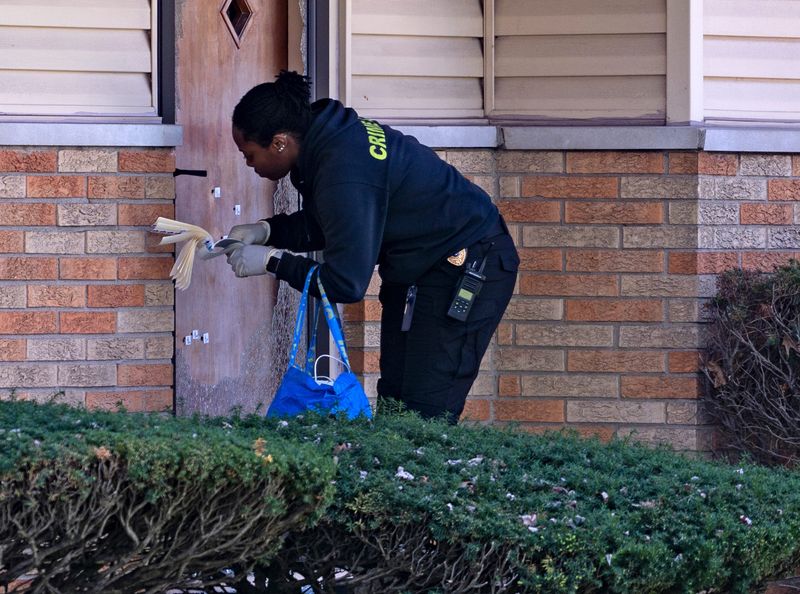
On the left, you see a version of this in the language of “social murder,” which was most recently popularized by two leftist influencers on a New York Times podcast. This idea has shown up locally. When City-County Councilor Ron Gibson had his home shot at, the discourse across much of left-leaning social media in Indiana was that it was probably a hoax, but even if it wasn’t, he somehow deserved it because of his vote on the data center issue.
This is madness.
Follow this civil war and social murder rhetoric to its logical end, and you don’t get a socialist utopia or a conservative paradise. You get a society where people lead lives that are, as described by Thomas Hobbes, “solitary, poor, nasty, brutish and short.” The norms, mores and guardrails that govern civil discourse are the only things keeping us on the right side of that line.
The alternative metaphor, of course, is “Sully” Sullenberger, who took a plane that was all but certain to crash and safely landed it on the Hudson River.
There is no Sully coming to save us right now, and so the work in front of us is collective: rediscovering the Flight 93 sense of shared responsibility but aimed at landing the plane safely.
Starting from kindness
In the real world, most people are unflinchingly kind and considerate and caring. Most Americans would bend over backwards to help a stranger in trouble, and that is still true today, regardless of the rhetoric. We are not at war with each other, and the sooner we start acting like that’s true, the better.
This leads to the obvious questions of what this could look like in practice. One answer is something I’ve talked about before: the “yes, and” approach to public discourse.
Too often, we retreat into our silos, figure out what “our side” is saying and refuse to acknowledge that the other side might have a point. “Yes, and” is a way of forcing ourselves to hold competing truths at the same time.
This is not about ignoring trade-offs or pretending hard choices don’t exist. It’s actually the opposite. It’s about starting from the premise that most issues don’t belong neatly to one side or the other, and that disagreement doesn’t automatically imply bad faith.
This approach applies across the board. Immigration enforcement can be overreaching and abusive, and borders are also a legitimate feature of a sovereign country. Public health institutions have made real mistakes and eroded public trust, and vaccines are still one of the greatest scientific achievements of modern life. Schools are about skills and workforce preparation, and they are also about values and social development. Data centers are necessary for economic and technological competitiveness, and they often impose real costs on the communities where they’re built, without conferring anywhere close to a commensurate level of benefits.
A “yes, and” approach forces us to engage with reality as it actually is rather than the simplified narrative that’s more convenient for our side. Better conversations don’t guarantee better outcomes, but it’s hard to imagine progress if we’re not talking about things as they are, rather than as we wish they were.
I’ll close in a way that would have given my teenage self the chills, with a quote from my favorite fictional president, Jed Bartlet, who said: “Surely the code of our humanity is faithful service to that unwritten commandment that says, ‘We shall give our children better than we ourselves received.’” Maybe that’s naive, but it’s a naivete of my own choosing, driven by the belief that our shared commitment to a better future is something to build on.
Jay Chaudhary is a former director of the Indiana Division of Mental Health and Addiction and chair of the Indiana Behavioral Health Commission. He writes the Substack, Favorable Thriving Conditions.
This article originally appeared on Indianapolis Star: Stop treating politics like a war we have to win at any cost | Opinion
Reporting by Jay Chaudhary, Contributing Columnist / Indianapolis Star
USA TODAY Network via Reuters Connect