Editor’s note: This story was originally published in 2024. We are republishing it as part of our coverage of this year’s event.
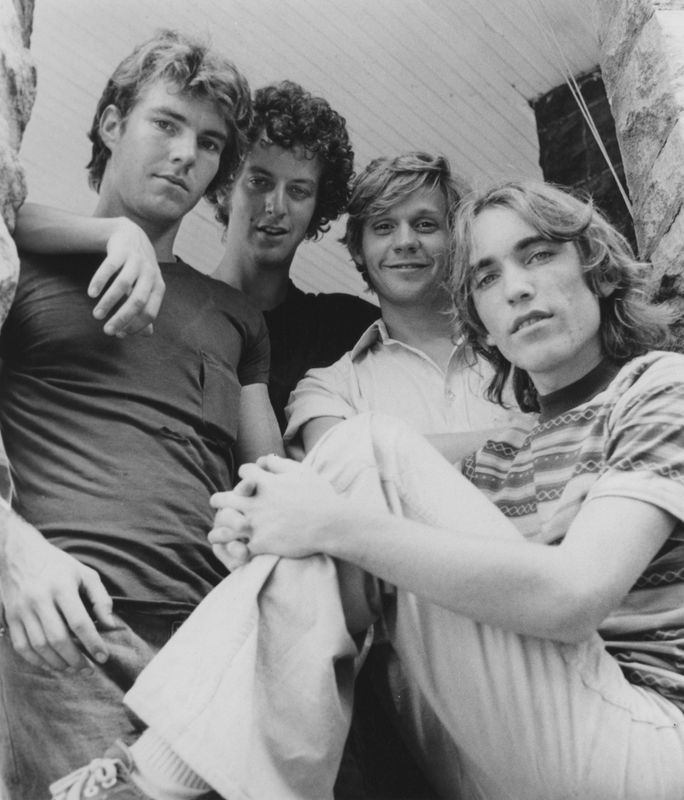
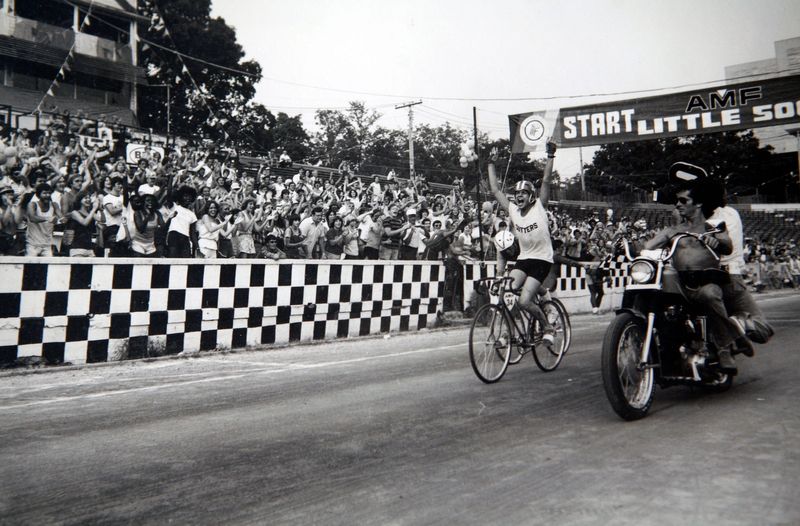
Like any self-respecting Hoosier, I hold a tremendous amount of affection for “Breaking Away,” the Oscar-winning 1979 coming-of-age film about the Little 500 bike race at Indiana University.

It’s an entertaining, very silly, and now very dated film. But beyond all that, when I first saw it as a young teen, it made me feel seen in a way no other piece of media had, because it beautifully articulated what it felt like to grow up in Bloomington, in the shadow of the university.
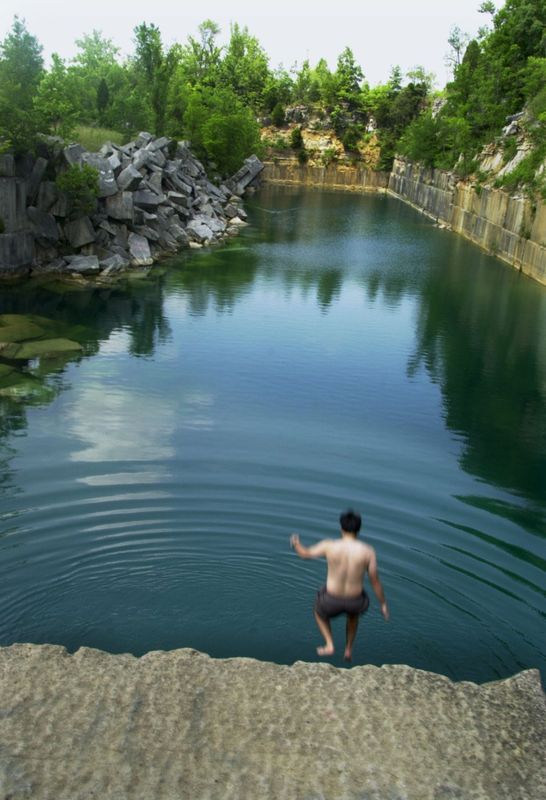
Like many Bloomington residents, I had many connections to the movie. I grew up less than a 10-minute drive from the iconic quarry featured throughout the film. Many of my high school classmates, including me, took our senior pictures at Woolery Mill, the mill one character’s dad visits (no, you can’t see them). Of course I’ve been to many of the locations in the film.
But more importantly: I am deeply, painfully townie. One of those situations where if someone didn’t know my mom, they knew of my dad, who was the eldest of the first set of triplets on record in the county — the Hays boys were literally on calendars. Townies in the Bloomington nostalgia Facebook page routinely reminisce about the Hays triplets. We had small businesses on both sides of my family, too. People who didn’t know Yellow Cab (which closed in 2019 after 100 years in operation) knew Hays Market just down Sixth Street, and they’re likely to ask me if I have the recipe for the ham salad (I don’t).
Here are four of my hottest takes about “Breaking Away,” which was released nearly 50 years ago.
Bloomington locals were never called ‘cutters’
Let’s go ahead and get this out of the way: the term “cutter” was made up for the movie. Bloomington locals were called stoneys, because of the limestone industry, but people in Bloomington always assumed the movie changed the term because of the drug-culture connotation stoneys might have in the late ’70s.
Former IU professor Scott Russell Sanders explained the term’s irony to Bloom Magazine’s Mike Leonard in 2018: “I was bemused by the fact that Cutters were treated in the film as a derogatory term for townies when, in fact, in the stone industry the cutters were the next to the top of the hierarchy. The highest are the carvers, and right below them are the cutters. These were the foremen who knew the stone so well they knew what to cut and where to cut. It actually was an honorific to be a cutter.”
If you want another pop culture reference, go back and listen to John Mellencamp’s “I Need A Lover,” released a year before the film, which includes the lyric: “All them stoneys are dancin’ to the radio.”
The Little 500 is a great weekend for students, an awful one for townies
Dubbed “The World’s Greatest College Weekend,” the Little 500 bike race is notorious for prompting the campus’ biggest parties. I’m sure it’s great – I’ve never been.
When you’re a townie, or at least my breed of townie, you don’t go to the race. You don’t go to the parties. You prepare for Little 5 weekend by buying bread, milk, eggs and toilet paper and pretending there’s a storm coming. It’s a stay-at-home, no non-essential-errands kind of weekend.
Quarry swimming is a bad idea
The film does a beautiful job of depicting Indiana limestone and the workers who milled it, and it glamorizes swimming in quarry holes.
Don’t do that.
The only folks I really know who have jumped into a quarry to swim were out-of-towners and my dad, who told a story of nearly drowning when he was a young teen in the early ‘70s.
Why not do it? Well, for starters, it’s dangerous. The iconic quarry featured in the movie, Sanders, also known as Adams or Rooftop, has been at least partially filled in since 2018. When my colleagues at the Bloomington Herald-Times reported the closure, they noted that multiple people had died there in the preceding 25 years.
Second, quarries aren’t public property, so you’re trespassing. And third, you don’t know what’s in that water. Not only may it contain whatever they’ve been using in the mining process, it may also have whatever people have dumped in it. At one point in the movie, the gang panics because they think Mike (Dennis Quaid) has been trapped in a submerged refrigerator. Big yikes.
Why ‘Breaking Away’ is still required viewing
One of the things that makes “Breaking Away” stand the test of time is its handling of the uncomfortable us-versus-them mentality between the students and the locals. Bloomington and the IU campus are completely different worlds, with differing views and values.
There’s a scene in which the gang are watching football practice at Memorial Stadium, and Mike (Dennis Quaid) is talking about his high school quarterback days, and how frustrating it is to have to read about the college team in the newspaper.
“Every year it’s gonna be a new one, and every year it’s never gonna be me. I’m just gonna be Mike. Twenty-year-old Mike, 30-year-old Mike, old mean old man Mike.”
“These college kids out here, they’re never gonna get old or out of shape. Because new ones come along every year. They’re gonna keep calling us ‘cutters.’ To them it’s just a dirty word — to me, it’s just something else I never got a chance to be.”
This scene has always felt very relevant to me, a townie from the woods south of Bloomington who was the first in her household to finish college and who grew up resenting the university and all it represented.
Ironic, I know, given that I have two degrees from Indiana University and would never have had the opportunities I’ve had if it weren’t for that school. But when seeking higher education, I didn’t feel like I had much of a choice, since it was the cheapest four-year option available to me. To this day, when someone points out that I, too, was a student there, I reply: “Yes, but I wasn’t one of them.”
I didn’t grow up spending time on or near campus. When I enrolled in 2012, I relied on my out-of-town classmates to help me navigate campus. Living there wasn’t something we could afford, and I wasn’t about to take out loans to move 20 minutes down the road, so I commuted. I had a lot of preconceived notions about the people around me: privileged, rich, know-it-all kids who came in to wreak havoc in my hometown for nine months a year and leave us to deal with the consequences.
I was a fish out of water, getting lost in my own hometown and struggling to find my place as someone both within and without. I sought meetings that semester with academic and career advisers to discuss taking a break from my studies, and I began to wonder what my life might look like if I never got a college degree. I grew up around a lot of Mean Old Man Mike-types, and there was a nonzero chance I could’ve become one, myself.
Not only is Mike commenting on the state of the limestone industry in the above quote — he couldn’t even be a cutter because they’re closing the mills — he’s perfectly illustrating what it feels like to grow up in the shadow of that university. Feeling less-than. Feeling like an outsider in your own hometown. Wanting to be a part of something, but being held back by pride and fear.
For my money, that scene is exactly why the movie won the Academy Award for best original screenplay, and it’s why 45 years later it should be required viewing for every Bloomington resident — student or townie.
Contact IndyStar pop culture reporter Holly Hays at holly.hays@indystar.com. Follow her on X/Twitter: @hollyvhays.
This article originally appeared on Indianapolis Star: Why ‘Breaking Away’ is still required viewing for IU students, townies
Reporting by Holly V. Hays, Indianapolis Star / Indianapolis Star
USA TODAY Network via Reuters Connect