State audits of five attendant care providers in Indiana found $200 million in “improper payments” they extracted from state coffers during a three-year period ― the same period when an explosion in costs for this program contributed to a $1 billion Medicaid budget shortfall that prompted a slew of policy changes.
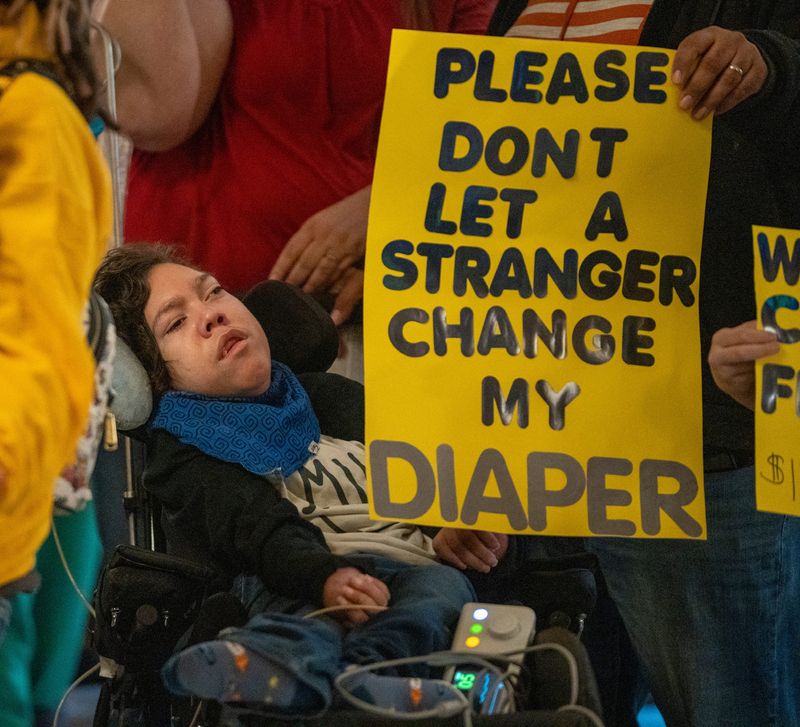
Attendant care is the Medicaid-reimbursable program that allows a “legally responsible Individual” to provide non-medical assistance with tasks, such as bathing, dressing, moving around and eating, to a person with medically complex conditions at an hourly rate. Family members, like parents or spouses, used to be able to take on this role.

But in late 2023, the state Medicaid office informed state lawmakers that they had under-budgeted Medicaid expenditures by nearly $1 billion due to a forecasting error and some unforeseen growth in costs. One of the biggest cost drivers was a sharp uptick in the use of attendant care: state spending roughly quadrupled from $317 million in 2022 to a projected $1.4 billion in 2024, coinciding with when many families learned from a March 2022 FSSA bulletin that they could do this as an alternative to relying on the increasingly scarce skilled-nursing labor force.
The largest growth occurred among families getting approved by the state for more than 40 reimbursable hours a week.
One of the policy changes the Family and Social Services Administration made to try to reign in costs was requiring families in the attendant care program to either find a new attendant caregiver who is not a family member, or transition to Structured Family Caregiving, a program that provides a flat daily rate to caregivers and wraparound services.
FSSA had also initiated these audits, finding that the $150 million increase in program costs from 2021 to 2022 was “not supported by changes in member need or program structure.”
For a review period extending from Jan. 1, 2022 to March 32, 2025, auditors randomly sampled 625 claims to review from five “highest risk” providers and found nearly all of them had compliance issues, such as missing criminal background checks, insufficient documentation or payments for clinical tasks that shouldn’t have been covered by attendant care. The news release did not specify which providers were targeted and a spokesperson did not respond to questions from IndyStar.
“These audits reveal not just mistakes, but a wholesale abandonment of the rules that protect vulnerable Hoosiers,” FSSA Secretary Mitch Roob said. “When a provider neglects to perform the required criminal background checks and bills for services without documentation, that is not an ‘oversight’, it is a reckless disregard for safety, and an abuse of trust. Taxpayers are done subsidizing negligence, and we will pursue full recovery and accountability.”
The agency says it will continue auditing other providers in this space, as well as implementing prepayment review for “offenders” and strengthening education efforts on the requirements for attendant care providers.
Though the agency characterizes these findings as part of ongoing efforts to root out “fraud, waste and abuse” in the Medicaid program, FSSA is not directly accusing the providers in these cases of “fraud,” deputy chief of staff Marcus Barlow said. A federal audit of Indiana’s autism behavior therapy program similarly purposefully avoided the word “fraud.”
But they are also “not saying fraud didn’t occur,” Barlow said, saying that’s up to law enforcement.
“What we are saying is they improperly billed for services – so it’s misuse of funds,” he said.
This distinction is an important one in terms of enforcement efforts, as fraud may imply intentionality, points out Tom Crishon, chief legal officer for The Arc of Indiana. The organization’s main concern out of this is that enforcement efforts don’t sweep good actors with a broad brush, he said.
“We strongly support oversight and accountability in the Medicaid program. Any misuse of funds should be addressed,” he said. “We also want to make sure any response to a situation like this is targeted and balanced so it doesn’t reduce access to services people with disabilities need.”
Parents of children on the waivers that support these programs, united under the banner organization Indiana Families United for Care, said in a statement that FSSA’s announcement acknowledges that there’s a systemic issue that the state should play a part in solving.
“FSSA’s attendant care audit shows what we’ve been saying all along—that FSSA must eliminate polices allowing providers to capitalize on the health and welfare of our children—the state’s sickest Hoosiers,” parents Sarah Saylor and Renee Case stated. “The legislature and FSSA must work together to adequately fund Indiana’s attendant care program so families like ours can continue to care for our kids at home instead of expensive and preventative hospital stays.”
Communications director Lindsay Shipps Haake said a narrative circulating heretofore has been to blame the families using these programs.
“The fact that our kids have been blamed for the fiscal crisis left and right is pretty infuriating, and we have become tiresome of having this blamed on our kiddos who are dealing with much more complex issues,” she said.
Provider behavior notwithstanding, the state’s actions in response to the budget shortfall has led to litigation. Two families sued the state in 2024, alleging that the Structured Family Caregiving rate is inadequate to support a family, meaning the mothers who were the caregivers would have to find outside work. Because in-home skilled nurses have not been available for these families, they argued their only option would be to institutionalize their children, which would would violate federal mandates in the Americans with Disabilities Act of 1990 and the Rehabilitation Act of 1973.
A district court and federal appeals court ruled in the families’ favor, but the parties are now in the process of settling the lawsuit out of court, according to a status report filed April 23.
Contact IndyStar Statehouse reporter Kayla Dwyer at kdwyer@indystar.com or follow her on X @kayla_dwyer17.
This article originally appeared on Indianapolis Star: Audit finds $200M in ‘improper payments’ to Indiana Medicaid providers
Reporting by Kayla Dwyer, Indianapolis Star / Indianapolis Star
USA TODAY Network via Reuters Connect