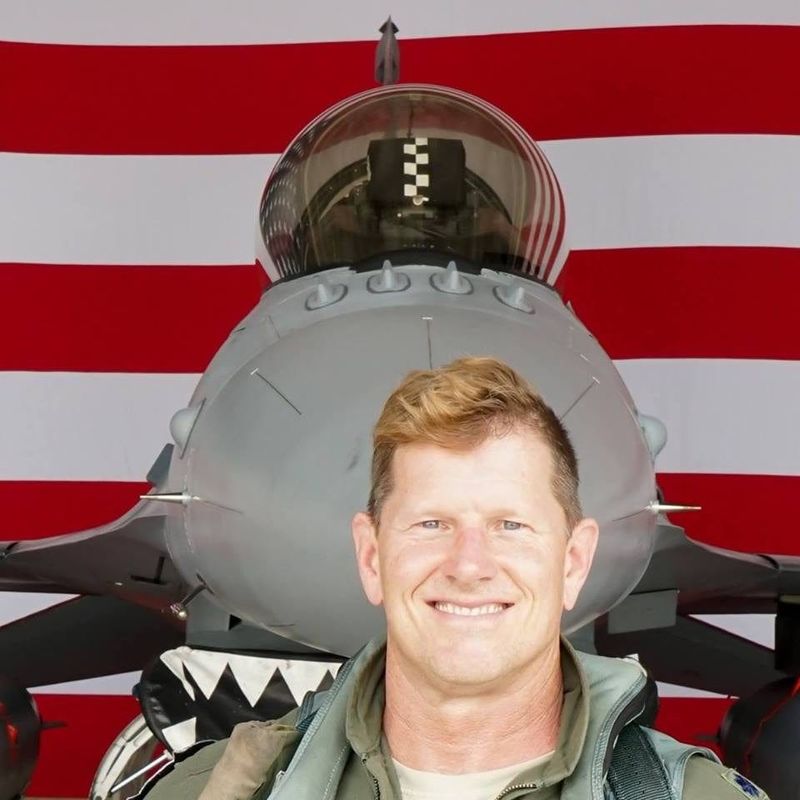
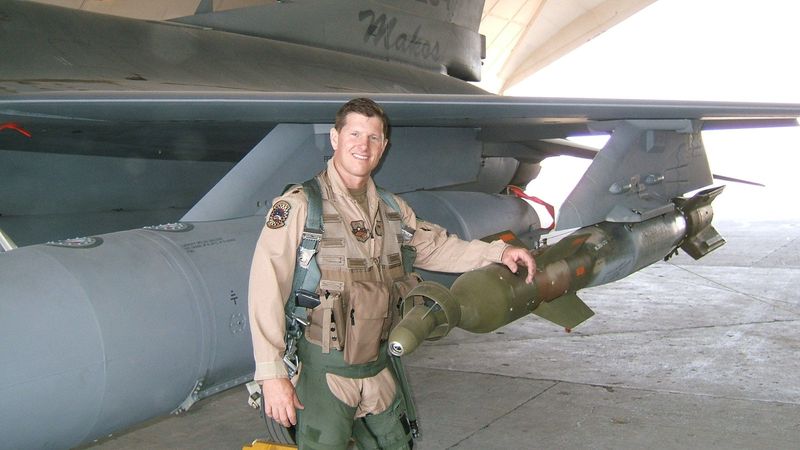
Joe Feheley never had to eject in his own career — “all my takeoffs equaled landings,” he said — but the retired Air Force pilot and Florida State graduate spent decades training for the moment no pilot ever wants.

“Under the ejection seat, you’ve got a kit – radios, signaling devices, even a weapon,” said Feheley, 64, a Tallahassee resident. “That stuff exists for one reason: to help the pilot get home.”
That philosophy was on full display during a daring U.S. military rescue earlier this month after a fighter jet was shot down by Iran.
U.S. forces recovered a weapons systems officer, identified by the call sign Dude 44B, from behind enemy lines on Friday, April 3, and rescued the injured pilot (call sign Dude 44A) on Easter Sunday, April 5, after he hid deep in Iran’s mountainous terrain for nearly 48 hours before Iranian troops could close in.
Even as millions of dollars in aircraft and equipment were put at risk or destroyed — combined with hundreds of bombs expended and missions flown — Feheley views the outcome in much simpler terms.
“Two U.S. airmen rescued alive – priceless,” Feheley told the Tallahassee Democrat. “Because it shows that we do not put a price on our people.”
The United States launched major combat operations against Iran on Feb. 28, 2026.
On Tuesday, April 7, President Donald Trump said he had agreed “to suspend the bombing and attack of Iran for a period of two weeks” on the condition that Iran reopens the Strait of Hormuz. The announcement suspended Trump’s threat to annihilate Iran.
Downed U.S. airman spent days evading the enemy
President Trump said on Easter Sunday that the downed airman spent nearly two days evading Iranian forces, climbing into rugged terrain, treating his own wounds and transmitting his location using survival equipment.
Feheley spent 33 years in that world, compiling more than 5,200 total fighter hours, including over 500 combat hours on missions ranging from Iraq to Bosnia and Afghanistan. He now serves as an F-16 simulator instructor with the 93rd Fighter Squadron’s “Makos” at Homestead Air Reserve Base, training the next generation of pilots either flying or running the simulator console.
So when news broke of the dramatic rescue — involving Air Force pararescue jumpers (PJs), SEAL Team 6, A‑10s, C‑130s and HH‑60 helicopters — Feheley immediately grasped the significance.
“The whole effort was absolutely amazing,” he said.
Feheley pointed especially to the downed pilot himself — a full‑bird colonel — who relied on years of SERE training (survival, evasion, resistance and escape) to stay alive and avoid capture.
“He listened when they taught that stuff,” Feheley said. “With a totally messed‑up ankle and bleeding, he climbed a 7,000‑foot hill just to get away — because he knew if he was captured, the leverage that would give Iran would be enormous.”
Feheley said there is still no clear public answer about what missile brought the aircraft down — whether a sophisticated air‑defense system or a shoulder‑fired weapon — but the danger is something every combat pilot understands.
“If it’s infrared, nothing in the jet even tells you it’s coming,” he said. “That’s why visual lookout is so critical.”
Joe Feheley explains combat rescue doctrine
What stood out just as much, Feheley said, was the teamwork after the shootdown — how the Air Force’s combat rescue doctrine worked exactly as designed.
“This is something we practice again and again,” Feheley said. “Large‑force exercises. Everything coming together. We are not going to leave somebody behind.”
Even pilots who remained airborne showed that same commitment. Feheley pointed to an A‑10 pilot who flew a badly damaged aircraft all the way to Kuwait before ejecting safely in friendly territory.
“He flew that airplane as long as humanly possible,” Feheley said. “That kind of thing doesn’t go unnoticed.”
A retired Lt. Colonel and 1984 graduate of FSU, Feheley when in active duty also was part of three F-16 flyovers over Doak Campbell Stadium prior to FSU football games.
Now 64, Feheley still makes the drive from Tallahassee to Miami about one week each month to work with his former squadron, teaching, mentoring and staying connected to the mission.
Long after the bombs fade, one message continues to resonate — words sent by the rescued pilot himself on Easter Sunday.
“God is good,” Feheley said. “That pretty much says everything.”
This article originally appeared on Tallahassee Democrat: FSU grad, former pilot says rescue in Iran shows military commitment
Reporting by Jim Henry, Tallahassee Democrat / Tallahassee Democrat
USA TODAY Network via Reuters Connect