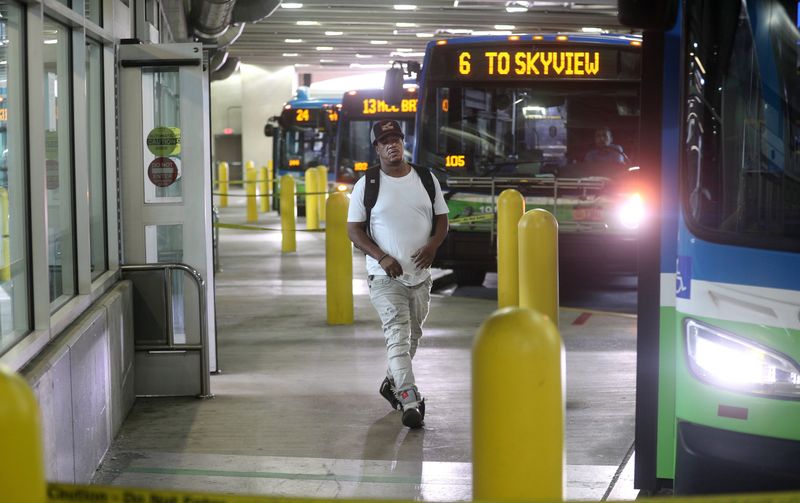
As more upstate New Yorkers are relying on public transportation, public transit agencies outside of New York City say they need more funding to ensure they have reliable systems to support that growth.
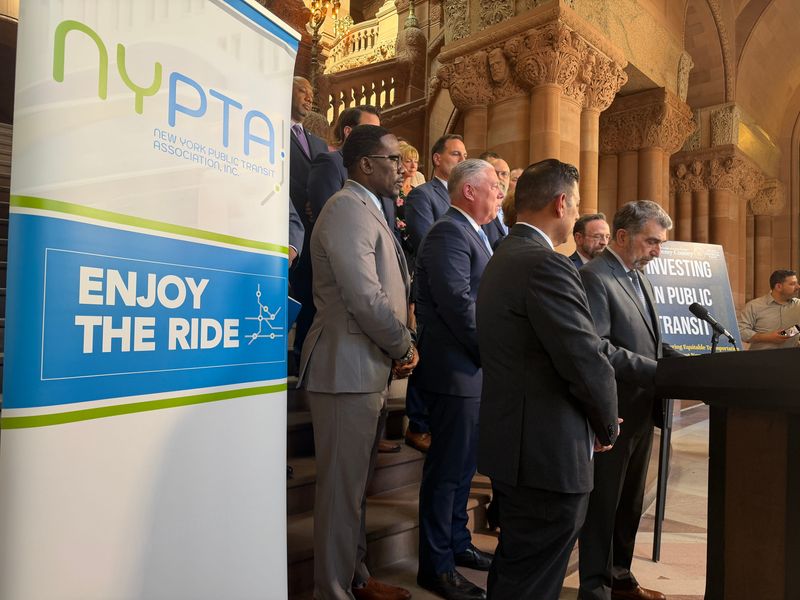
Inside the New York Capitol on March 25, state lawmakers and upstate New York public transit officials gathered to call for a 15% Statewide Mass Transportation Assistance Program (STOA) funding increase for non-Metropolitan Transportation Authority public transit. If the additional funding isn’t approved, they assert the essential service will be affected.

“Without adequate funding, we cannot maintain current service levels, let alone expand and improve service to meet growing community demand,” Miguel Velázquez, New York Public Transit Association (NYPTA) president and CEO of Rochester’s Regional Transit System (RTS).
“This level of investment is not optional,” Velázquez added. “It is essential to stabilize our systems today and position us for the future.”
Here’s what to know.
How much has public transit ridership increased in upstate New York?
RTS and the Capital District Transportation Authority (CDTA) have both reported double-digit percentage year-over-year ridership gains already this year and Centro, which serves the Syracuse region, has seen a more than 10% increase in elderly and disabled riders, officials said.
In Ithaca, Tompkins Consolidated Area Transit General Manger Matthew Rosenbloom-Jones says the system’s ridership has increased 32% year over year as of the end of February 2026.
State legislators are pointing to rising car ownership and gas prices being the culprit.
“Upstate transit authorities are grappling with the same rising cost of gasoline as working families thanks to the ongoing war with Iran and other external factors,” Sen. Patricia Fahy, D-Albany, said. “Working people in particular rely on public transportation, and during periods of energy crises, we see ridership rates and public transit utilization rise as gasoline prices break the bank.”
The average monthly new-car payment reached $774 in January, a nearly $200 increase since January 2021, New York Times reported recently, and the overall cost of owning a vehicle has ballooned more than 40% since January 2020. According to the NYPTA, New Yorkers can save an average of up to $13,000 per year, or around $1,100 per month, by using public transportation instead of driving.
“Affordability and public transit go hand-in-hand,” Senate Transportation Chair Jeremy Cooney, a Rochester Democrat, said.
“Car prices are rising, we know that. Gas prices are rising, we know that,” Cooney said, before adding, “We might not have control over the policies that are happening in other parts of our world or certainly down in Washington D.C., but we can control what’s going to happen in our upstate New York communities.”
How would an increase in funding help upstate New York’s public transit systems?
Almost 70% of RTS customers live in homes without access to a vehicle, Velázquez noted. He says the burden will fall on those who can least afford it if upstate transit systems are forced to cut service or raise fare rates.
“For many upstate residents, (public transit) is the only way to get to work, access healthcare, attend school and meet basic daily needs,” Velázquez added. “Reliable, safe and convenient transit is not a luxury. It is a lifeline. It connects people to opportunity, supports financial stability and fuels regional economic growth.”
In Albany, CDTA officials warn service reductions and fewer mobility options could be possible for the agency’s riders without the 15% boost. And in Syracuse, the future service demands the Micron project will bring to the region will necessitate additional financial help, according to Assembly Transportation Chair William Magnarelli, D-Syracuse.
Broome County’s Commissioner of Public Transportation Greg Kilmer said the extra money will help the BC Transit system maintain its current service levels and “allow for route modifications that better connect new housing projects with the community.”
“Imagine what those dollars would look like and mean for the agencies standing with us today,” Cooney says. “For Rochester and the Capital District and in Central New York and in Buffalo and Western New York, we know that people depend on public transit just as much as they depend on public transit in New York City.”
Would this come at any additional cost to NY taxpayers?
The Senate’s one-house budget includes a $75.8 million increase in STOA funding, bringing the total to $1.09 billion, for non-MTA public transit, while the Assembly’s one-house budget includes a 7.45% funding increase. And Gov. Kathy Hochul’s executive budget also includes a 5.8% STOA funding increase.
None of these proposals include tax or fee increases, according to a NYPTA spokesperson, so the additional funding wouldn’t have any affect on taxpayers’ pockets.
“We need to give our transit agencies the affordable resources that they need,” Cooney said. “And when we do that, because we will, we will invest in the workers and the drivers, we will invest in the people that depend on these services because investment in public transit is an investment in a more affordable New York.”
Emily Barnes covers state government for the USA TODAY Network-New York with a focus on how policy and laws impact New Yorkers’ taxes, communities and jobs. Follow her on Instagram or X @byemilybarnes. Get in touch at ebarnes@usatodayco.com.
This article originally appeared on Rochester Democrat and Chronicle: As gas prices surge, upstate NY public transit systems offer solution
Reporting by Emily Barnes, New York State Team / Rochester Democrat and Chronicle
USA TODAY Network via Reuters Connect