Editor’s note: This story originally ran as a Florida Times column on Oct. 3 2019. It has been edited for length and updating.
In 1881 — 145 years ago — Hamilton Disston made what may have been the most lopsided land deal since the U.S. got the vast wastelands of Alaska for a song and then found oil there.

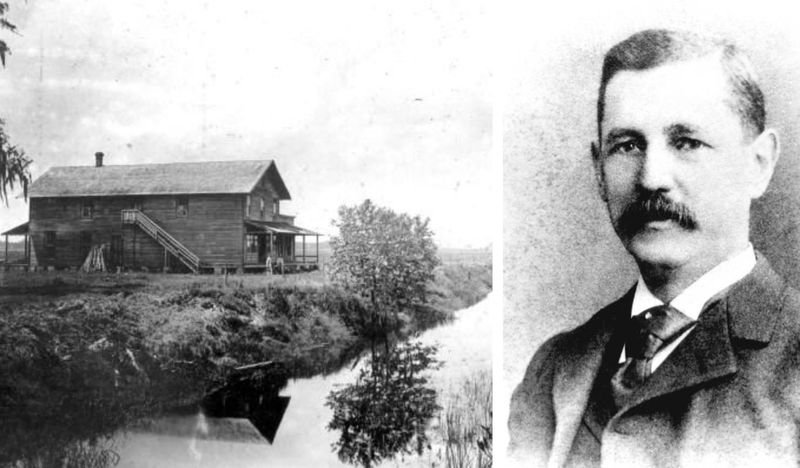
Born in August 1844, into the Disston and Sons family of Philadelphia, makers of saws and other tools, Hamilton was only 34 when his father died in 1878 and he inherited the business. He would travel to Florida for frequent fishing trips and had met Henry Sanford, who founded the town north of Orlando that bears his name.
But Disston saw great potential there as a land speculator, and so he bought four million acres. This 6,250-square-mile chunk of central Florida is larger than Connecticut. Today, it stretches from Sanford to Orlando to Kissimmee and includes Walt Disney World. It accounts for 11% of the state’s total land area and its value today is staggering.
For all that land, the tool prince paid an unimaginable 25 cents an acre. For his $1 million investment, Disston saw hidden promise in central Florida’s rich muck. He also believed he could create several recreational waterways that would draw fishermen, pleasure boaters and tourists.
Disston’s immediate goal was to create one major waterway across and down the state. It was the predecessor to the Cross Florida Barge Canal, a disastrous planned shortcut across the northern peninsula that would be abandoned in 1971, leaving long scars across the land.
Disston’s dredges cut channels that connected several Central Florida lakes. Men blasted cliffs, deepened creeks and straightened parts of the Kissimmee River.
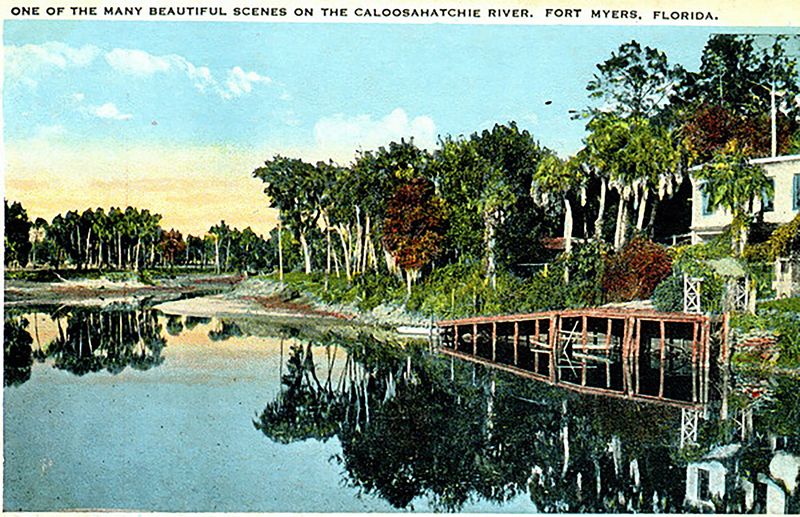
To the southwest, the Caloosahatchee (“hatchee” is Seminole for “river”), a river which flowed west to the Gulf of Mexico at Fort Myers, began only three miles west of Lake Okeechobee. It seemed to beg for a canal that would span that last three-mile link and connect the big lake to the rest of the world. Disston made it happen.
By the mid 1880s, the young entrepreneur created a continuous waterway from central Florida down to Lake Okeechobee and out to the Gulf of Mexico. Boats could now carry people, livestock and winter crops from Kissimmee to Fort Myers and to the rest of the world.
This is before automobiles became the primary mode of transportation and industries depended on water highway to move goods. Environmentalists either kept quiet or were ignored in the rush of optimism.
The New Orleans Times Democrat financed a group of explorers who sailed down the Kissimmee, into Lake Okeechobee, through the canal and into the Caloosahatchee, and down to Fort Myers.
The November 1882 trek of nearly 500 miles took fourteen days. The public was captivated.
Soon after completing his project, Disston boasted that his canals had dropped Lake Okeechobee’s level a foot and a half, thereby removing the threat of flooding.
But the truth is, Florida was experiencing a dry cycle.
A national economic panic in 1893 wiped out the Disston family fortune, and Hamilton Disston died three years later in his native city, Philadelphia, at age 51. He actually received only 1.6 million acres and permanently drained only 50,000 of them. His heavily mortgaged properties, including the rest of the Florida land that he’d bought for pennies an acre, were sold off.
Eliot Kleinberg is a former staff writer for The Palm Beach Post and the author of numerous books about Florida and its history.
This article originally appeared on Palm Beach Post: Hamilton Disston owned 11% of Florida in 1880s but his plans failed
Reporting by Eliot Kleinberg, Special to the Palm Beach Post / Palm Beach Post
USA TODAY Network via Reuters Connect