(This story was updated with new information.)
The legacy of César Chávez has long been celebrated in Coachella — from a local elementary school and a city street named for him to a monument honoring him.

Now, newly revealed allegations of sexual abuse against Chávez, including against young girls, are raising questions about how he should be remembered.
It was not immediately clear whether the school or street in Coachella will be renamed. City and school district officials did not offer comments in response to requests from The Desert Sun on Wednesday, March 18.
Chávez is accused of sexually abusing two young girls in the 1970s and of raping fellow labor leader Dolores Huerta in the 1960s, according to an investigation published Wednesday in The New York Times.
He was one of the most influential figures in the labor movement, and led national boycotts, marches and fasts to improve wages and working conditions for farmworkers. He died in 1993 at the age of 66.
Huerta, who co-founded the farmworker movement alongside Chávez and helped build what became the United Farm Workers, said “said she chose not to report the assault to the police because of their hostility toward the movement, and she feared that no one within the union would believe her,” according to the New York Times.
Her statement and the Times investigation come a day after the United Farm Workers and the César Chávez Foundation said they had learned of “deeply troubling allegations” against Chávez. The union said it would not be participating in any César Chávez Day celebrations on March 31, the state holiday named in his honor.
Elected officials say they side with César Chávez’s victims
Chávez’s family said in a statement that it was “not in a position” to judge the claims but described the allegations as “deeply painful.”
Following the Times investigation, U.S. Sen. Alex Padilla (D-Calif.) called the reports of sexual abuse by Chávez “heartbreaking, horrific accounts” and commending the survivors for their bravery in sharing their stories.
“There must be zero tolerance for abuse, exploitation, and the silencing of victims, no matter who is involved,” Padilla said in a statement. “Confronting painful truths and ensuring accountability is essential to honoring the very values the greater farm worker movement stands for — values rooted in dignity and justice for all.”
U.S. Rep. Raul Ruiz, who was raised in the Coachella Valley, said he was “deeply heartbroken” for the two victims identified in the report, as well as Huerta.
“I am outraged and disgusted by the harm that was done to young girls. There is no excuse for abuse, and I unequivocally condemn rape and child molestation,” Ruiz said in a statement. “Like many, I am grappling with the fact that someone I once saw as an inspiration caused such harm. That makes this even more painful, but it does not change what is right. We must stand with survivors and hold abusers accountable.”
The son of farmworkers, Ruiz’s district occupies the southeast corner of the state and includes the Coachella Valley cities of Indio, Coachella, Cathedral City and Desert Hot Springs, along with all of Imperial County and cities in the San Gorgonio Pass and San Jacinto area.
Ruiz also highlighted the importance of supporting organizations, like Líderes Campesinas, that work on the front lines to combat sexual harassment and abuse in the agricultural industry.
“I will continue to honor and fight for farmworkers and the farmworker movement, not the man,” Ruiz said.
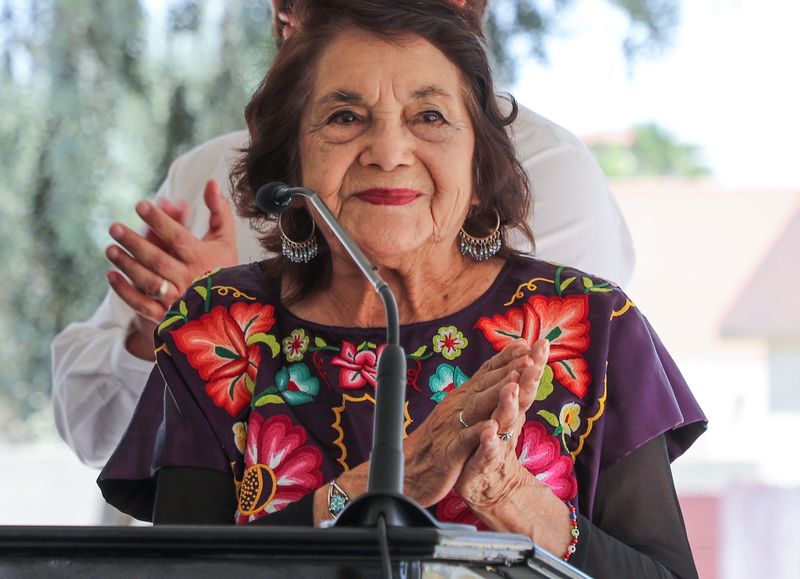
Huerta, in a separate statement also released Wednesday, said she remained silent for decades because she believed speaking out could harm the farmworker movement she helped build.
“The knowledge that he hurt young girls sickens me. My heart aches for everyone who suffered alone and in silence for years,” she said. “There are no words strong enough to condemn those deplorable actions that he did. Cesar’s actions do not reflect the values of our community and our movement.”
As a young mother in the ’60s, Huerta said she experienced two sexual encounters with Chávez that resulted in pregnancies she kept secret. She said she was “manipulated and pressured” into one encounter and later “forced, against my will” in another.
After their births, Huerta arranged for them to be raised by other families, she said. While she developed relationships with those children over time, no one knew the full truth about how they were conceived until recently.
“The farmworker movement has always been bigger and far more important than any one individual. Cesar’s actions do not diminish the permanent improvements achieved for farmworkers with the help of thousands of people. We must continue to engage and support our community, which needs advocacy and activism now more than ever,” Huerta said.
Luz Gallegos, executive director of TODEC Legal Clinic — which has an office in Coachella and provides immigrants free legal advice and education about civil rights — said the nonprofit stands with Huerta and other survivors.
“Silence has never protected our farmworker communities. No movement for justice can ask people to stay silent about abuse. Not then. Not now,” she said in a statement. “The farmworker movement was built by workers and families. It belongs to the people. Standing with survivors is not a betrayal of the moment. It is a commitment to its values. We hold grief. We hold pain. And we stay committed to dignity and justice.”
What did The New York Times report about César Chávez?
The New York Times reported allegations of Chávez’s abuse made by two women. The investigation found extensive evidence supporting their accounts, based on interviews with more than 60 people, as well as a review of union records, confidential emails, photographs and audio recordings.
One woman said that when she was 15, Chávez invited her to join a march that was “a nearly 60-day event.” The march reached Stockton, and on “one night,” Chávez told the girl he was sending her home, the Times reported. Instead, Chávez brought her back to a motel where he “had sexual intercourse with her.”
Under California law, it was rape because she was not of age to consent, the New York Times reported.
A different woman said Chávez molested her and “was summoned for sexual encounters” with Chávez “dozens of times” over several years, the New York Times said.
Chávez was married to Helen Chávez, who died in 2016. They had eight children together. The New York Times reported that he also had children with other women.
Coachella has several tributes to César Chávez
Locally, Chávez’s legacy is reflected in places that remain part of the city of Coachella’s civic and historical landscape.
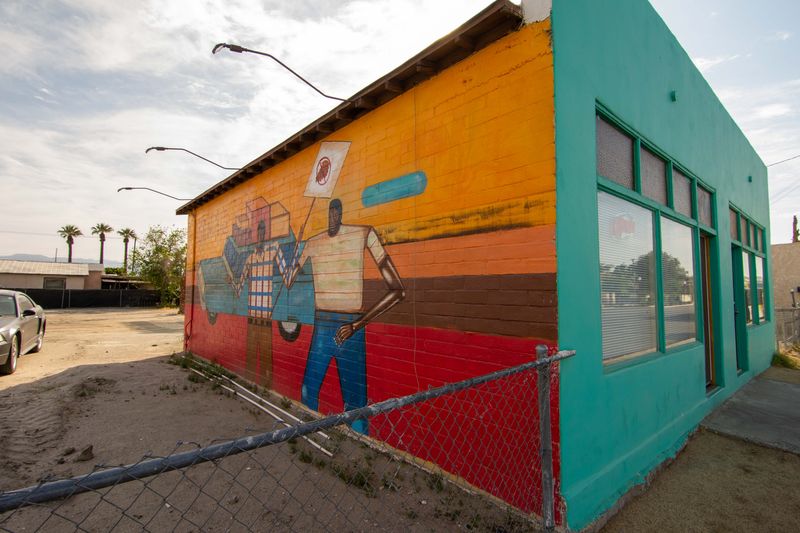
In the 1960s, Chávez worked out of the Casa del Trabajador, the United Farm Worker organization’s offices at the corner of Fourth Street and Vine Avenue in downtown Coachella. The property is owned by Jesus Gonzalez, a school board member for Coachella Valley Unified School District and a former mayor of Coachella.
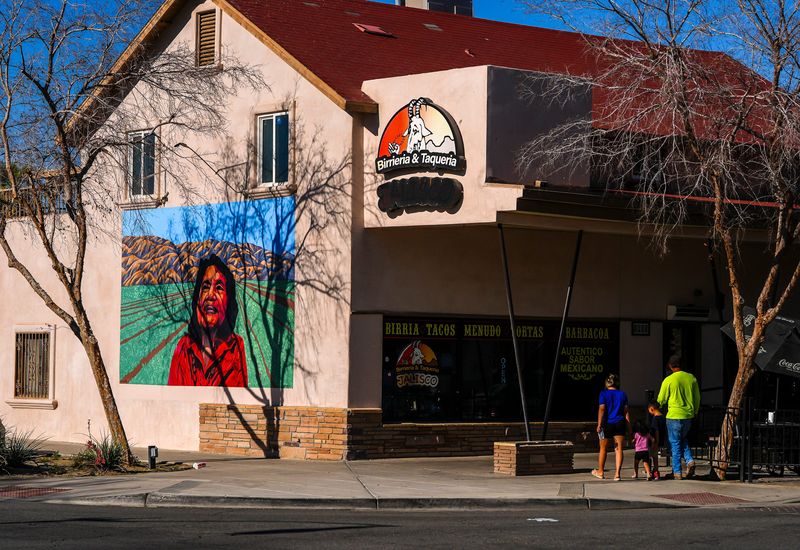
About a block away on Vine Avenue and Sixth Street, the city of Coachella also honored Huerta with a mural in 2021. A year later, the city held a groundbreaking ceremony for Placita Dolores Huerta, an affordable housing project on Bagdad Avenue, named in her honor. Huerta attended both events.
Over time, Chávez’s legacy came to represent not only labor victories, but ideals of service, community and social justice.
César Chávez Elementary School, part of the Coachella Valley Unified School District, became the first public school in California to be named after him in 1990, and the only one he dedicated during his lifetime.
“In this world, it is possible to accumulate great wealth and to live in opulence, but a life built on those things alone leaves a shallow legacy,” Chávez said at the dedication ceremony of the new elementary school bearing his name.
During the school’s 25th anniversary celebration in 2016, in his opening remarks, the then-principal quoted from the speech Chávez gave on the day he dedicated the school: “The end of all education should truly be service to others.” At the time, the principal said the history of the school, tied to the leader of the labor movement, gave educators at the school a mission to pass on Chavez’s legacy.
Chávez is also listed among the city of Coachella’s “Hometown Heroes,” a program recognizing individuals who have made significant contributions to the community.
The city has honored him in other ways: with a monument to commemorate Chávez, which now sits at the corner of Avenida Del Oro and Avenue 50 at Del Oro Park. In 2018, Coachella also named one of its major streets after him.
In recent years, the city has hosted community events celebrating his legacy, including its first official César Chávez Day in 2023, where his grandson was a keynote speaker.
Coachella is one of many cities across California where Chávez’s legacy has been reflected in public institutions and spaces named in his honor, especially in regions with large farmworker and immigrant communities.
The allegations against Chávez raise questions about how communities should reconcile his legacy against the values those public honors are meant to reflect.
As of Wednesday, it’s unclear whether the city of Coachella or the school district plan to review or reconsider any of the public honors tied to Chávez.
Joey Acuña Jr., one of CVUSD’s three school board members representing Coachella, directed a request for comment to district staff and said he would comment if and when the issue comes before the board.
USA TODAY reporter Paris Barraza contributed to this story.
Jennifer Cortez covers education in the Coachella Valley. Reach her at jennifer.cortez@desertsun.com.
This article originally appeared on Palm Springs Desert Sun: Will Cesar Chavez tributes in Coachella change after allegations?
Reporting by Jennifer Cortez, Palm Springs Desert Sun / Palm Springs Desert Sun
USA TODAY Network via Reuters Connect