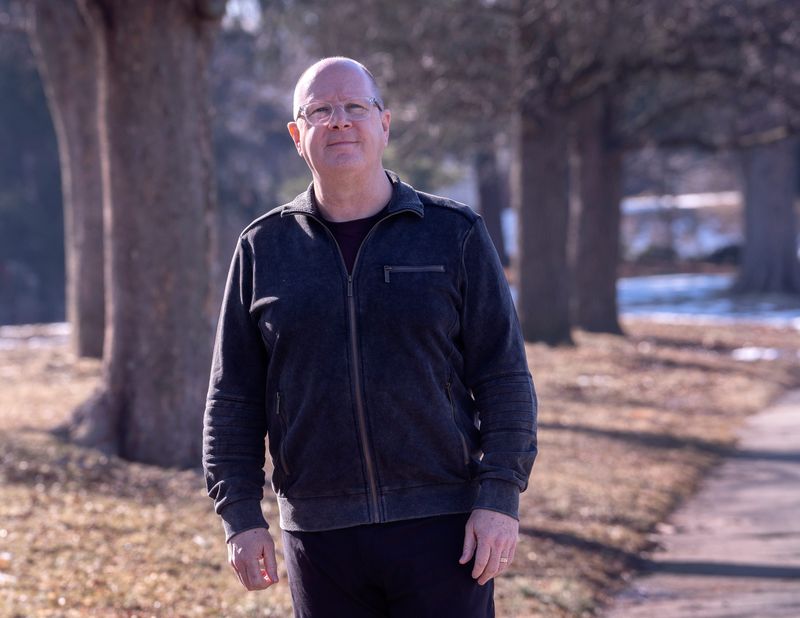
When David and Sue Schnieders moved to Broad Ripple in the 1970s, they were in their twenties and looking for an affordable and walkable area with plenty of activity.
The young couple bought a two-bedroom Cape Cod-style home for $33,000, where 50 years later, they remain. Over the past five decades as they’ve renovated their house several times, they have seen the neighborhood change dramatically.

In the 1970s, shoppers spent hours at G.C. Murphy, a department store on Broad Ripple Avenue, restaurants outnumbered bars and local kids walked to Broad Ripple High School.
Today the area remains one of the few walkable neighborhoods in the city, a rare commercial corridor on the heavily residential north side. Still many residents note the village is losing ground in appealing to young homeowners who gravitate to areas like Carmel for more amenities or Irvington for more affordable housing.
The neighborhood is trending older as home prices skyrocket, putting many houses out of reach for first-time buyers. A handful of new apartment buildings have brought hundreds of renters, but with each wave of development comes a tension between the past and present.
Restaurants must grapple with the perception that the village is unsafe at night. Empty storefronts with high rents pepper the main arteries and changing consumer habits have created a tiring carousel of businesses opening and closing.
Now, Broad Ripple finds itself at an inflection point: Can it reclaim its identity as a quaint but prosperous village in the heart of Midtown, and if so, how does it adjust to the changing demographics and demand?
“It’s in transition, it’s been in transition for a long time trying to get an identity that will fit all the people who live in that area,” said David Schnieders, now 76. “A lot of times there’s fighting between people who are trying to improve Broad Ripple and make it something nicer, then you’ve got people who want Broad Ripple to stay the way it was 20 years ago, and they don’t want any change.”
But those who live there see hope for the future. Broad Ripple is on the other side of the pandemic, a years-long road construction project and a 2023 shooting that killed three people and scarred the village’s reputation. What it needs now, they say, is good marketing — and money.
‘It starts with the PR’
The Broad Ripple Village Association is actively working on marketing with a newly-minted leader at the helm in Mary Dicken, the association’s only full-time salaried worker. Dicken said too often people only talk about the bad in Broad Ripple, something she’s hoping to change.
Bill Ficca, owner of 317 Burger along the Central Canal, remembers when the village stood out as a dining and nightlife destination. Then, in 2014, a Broad Ripple shooting that injured seven people and the emergence of Carmel’s Midtown, Fountain Square and the Mass Ave Cultural District triggered what Ficca considers the beginning of Broad Ripple’s fade from the spotlight. He argued the reputation has never fully recovered.
“I think it starts with the PR,” he said. “The loudest critics are the people that seem to speak up first (and) honestly know the least about the realities about what the neighborhood is in 2026.”
Caleb Denorme, a 22-year-old senior at Butler University, heard rumblings about Broad Ripple crime during his freshman and sophomore years.
“There was always stuff happening in Broad Ripple,” Denorme said. “We heard a lot about that.”
Denorme started frequenting Broad Ripple restaurants and bars with his friends as construction ended. After losing out on campus housing for his senior year, Denorme looked at Broad Ripple, eventually settling in the Monon Court apartments off 61st Street.
Now, Denorme said he sees the neighborhood in a new light. He’s come to enjoy the character and variety local businesses bring.
“There’s something for everyone, which I think is really cool,” Denorme said. “When people come here, they appreciate how the area has boutiques owned by locals.”
The 7,000-person neighborhood needs not only a beefed-up campaign — one that draws people to live in and visit Broad Ripple — but also the city’s attention, several residents and neighborhood leaders told IndyStar. They say Broad Ripple needs the kind of love the Mile Square and Mass. Ave. enjoy to flourish.
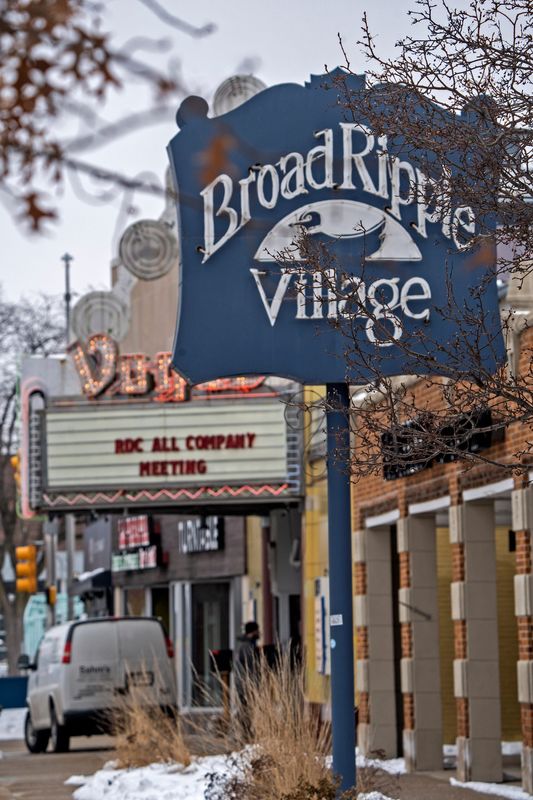
Stewards of Broad Ripple’s entertainment landscape blame the city’s waning interest in Broad Ripple for any perceived backslide. Longtime local figureheads like Steve Ross, who owned The Vogue Theater on College Avenue from 1986 to 2019, say the neighborhood has taken a backseat to downtown’s culture cluster in the city’s eyes.
“We always called Broad Ripple the orphan stepchild,” Ross said.
A recommitment to the cultural district
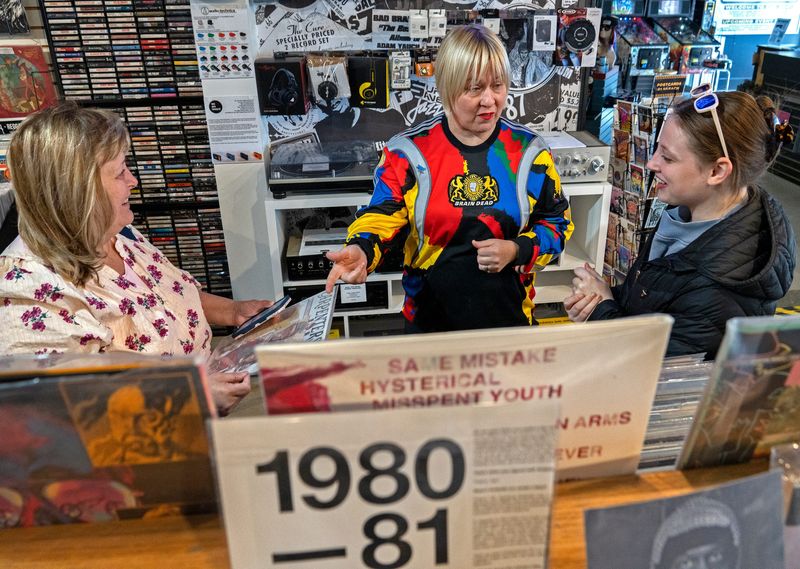
Ask 10 different people when the city’s eye wandered from Broad Ripple to downtown and you’ll get 10 different answers. Some locals like Andy Skinner, who owns Indy CD and Vinyl on Broad Ripple Avenue, say 2012’s Super Bowl XLVI, when Indianapolis hosted, was the turning point.
Skinner and his wife Annie have been staples of the Broad Ripple community since 2002, when they relocated from Salt Lake City to manage the shop at 806 Broad Ripple Ave. When 2012 rolled around, Skinner watched revenue flood downtown thanks to the game’s $277.9 million economic impact on the area.
“The Super Bowl money was a boom for the city, but it wasn’t a boom for Broad Ripple,” Skinner said. “The entertainment dollar started moving elsewhere.”
The neighborhood is recommitting to its cultural identity with the help of new funding. In 2025, the city doled out $500,000 for cultural hotspots around town. Out of 13 districts that received money, Broad Ripple took home the largest share. The money will go toward hanging decorative lights and helping businesses host live events, said Bryan Phillips, the BRVA Board President.
Indianapolis City-County Councilor John Barth, who represents a large part of Midtown, personally advocated for the pilot program to fill in the gaps he feels Broad Ripple is missing.
“Downtown has had resources lavished upon them where other cultural districts have struggled to get resources. I wanted Broad Ripple to invest in the same things and add forward momentum,” Barth said.
In response to a request for comment, Emily Kaufmann, a city spokesperson, said developments downtown are not necessarily a good fit for a historic neighborhood like Broad Ripple, and the other way around.
“Downtown is the economic engine of both our city and state with its own set of unique economic development needs,” she said.
She noted several village projects for which the city paid, including $24.7 million in infrastructure including for Red Line upgrades, Broad Ripple Avenue and bridges; $19.7 million for the Broad Ripple Family Center; and $7.5 million for a new fire station.
Development gets larger, so does debate
Founded in 1836, Broad Ripple evokes a quaintness, with narrow streets, short buildings and the picturesque canal.
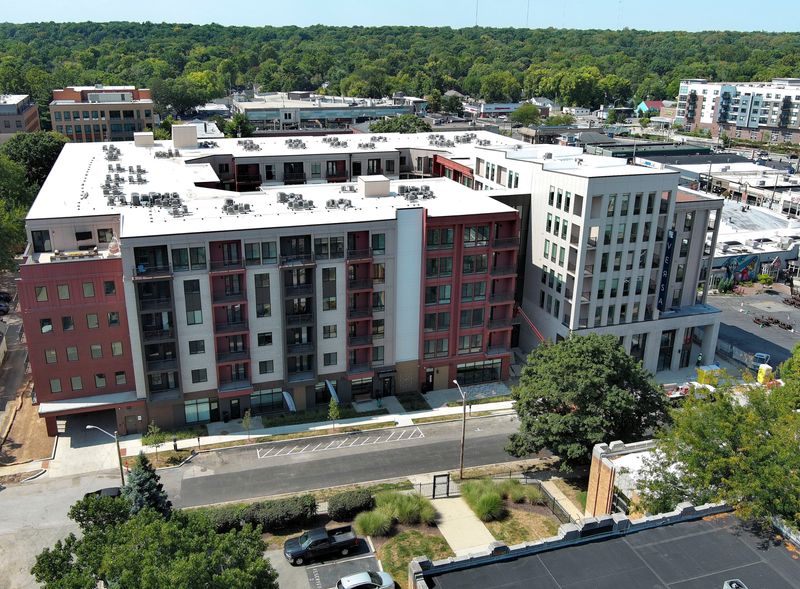
Last year, Broad Ripple’s largest apartment complex to date opened, ushering in a new era in development in the neighborhood. With 232 units, Versa, a six-story luxury apartment building, towers over the Broad Ripple strip, changing the fabric of the cozy neighborhood.
More than 700 apartments have been built over the past decade in Broad Ripple, allowing hundreds more residents to call the village home while opening the floodgates to grander development. And the wave isn’t over: At least two developers have their eyes on projects but neither has submitted a formal proposal.
Many argue the area needs the dense housing these commercial developments bring for local mom-and-pop shops to thrive. With new development has come a fair share of opposition and NIMBY-ism as the area balances retaining its intimate, small-town feel. For instance, Versa replaced a neighborhood Kroger grocery store that many mourned.
Yet more residents mean more dollars staying in the village microeconomy, something Broad Ripple needs to sustain itself. Some of the largest housing projects in the village came about because of a Midtown tax-increment financing district, or TIF, established in 2000. TIF allows additional property tax revenue to go back to the district where development has increased property values.
The Coil apartments — with more than 150 units, a parking garage and mixed-use retail space — were a direct result of the TIF, Barth said. Though he says the development tool “punched way above its weight,” with $13.1 million in bonds to support housing, its funds are dried up and about to expire.
Bo Boroski, a 20-year area resident, created a new nonprofit called Friends of Broad Ripple Village to be a conduit between the city’s economic development group and Broad Ripple. He said he wants the city to play a more active role in attracting dollars and development to the area. That’s why he embarked on a nearly year-long process to publish a master development plan. His group will unveil a set of recommendations to the city in April on what development Broad Ripple residents want.
Ultimately, the goal is to get more economic incentives to build in Broad Ripple, Boroski said.
“In my mind, the days of doing nothing are over, because if you do nothing, nothing will change,” Boroski said.
Kaufmann said the city is looking forward to seeing the recommendations and bringing them to life.
After 26 years living in Broad Ripple, Scott Moshier can list of a plethora of amenities that’s kept him there. He walks to several places — Fresh Thyme, The Vogue, Broad Ripple Brewpub, Union Jack. He knows his neighbors, loves the architecture.
But in recent years, he didn’t hear enough of those good things being talked about within the neighborhood. So he joined the BRVA as a volunteer to do what he could to get the word out.
“I was anxious to do something to improve the perception of Broad Ripple,” Moshier said.
While there were no homicides in Broad Ripple in 2025 and violent crimes were down 27% in the police district, according to IMPD data provided by the BRVA, to the mind of many, Broad Ripple is still synonymous with crime.
Business owners like Indy CD and Vinyl’s Skinner have had to fight misconceptions prompted by headlines of violence and crime that have masked Broad Ripple’s true character.
“We’re trying to maintain our identity in spite of the 24-hour news cycle and constant content dumps,” Skinner said. “It’s a perfectly safe place to live, work and shop.”
Restaurateurs chase new concepts
While college students and young adults new to Indianapolis may know Broad Ripple for its nightlife, longtime local residents also admire the neighborhood for its food scene. But Broad Ripple establishments faced a one-two punch of the pandemic and the ensuing construction that clogged Broad Ripple Avenue and Westfield Boulevard from spring 2022 through much of 2024.
Restaurateur Michael Cranfill, whose portfolio includes ownership stakes in Cholita Tacos on Broad Ripple Avenue and The Quarter on Westfield Boulevard, said that while his restaurants in other parts of Indianapolis enjoyed a post-pandemic bump, those in Broad Ripple did not see the same effect.
Cranfill, who lived in Broad Ripple from 2005 to 2022, said Broad Ripple may have put itself in a tough position over the last decade or two by failing to adapt to changing tastes. While much of Broad Ripple’s past was rooted in the “3 a.m. bars” that brought Butler students and others to the village in dehydrated droves, the neighborhood’s future lies in more compelling dining concepts, ones like Fernando’s Mexican and Brazilian Cuisine.
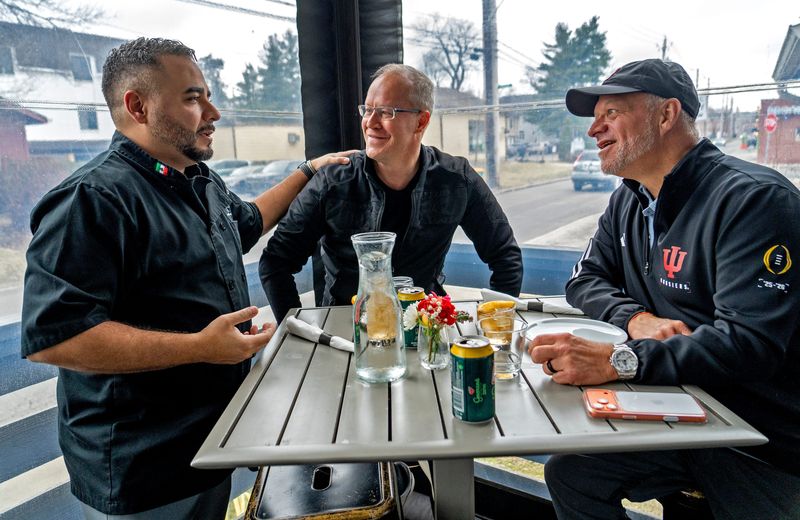
In 2023 married duo Elizabeth Fernandez and Cristiano Rodrigues opened their restaurant on 64th Street, paying homage to their respective upbringings.
Rodrigues, who moved to Indianapolis with his family as a 12-year-old in 1999, immediately took a liking to Broad Ripple. Though he grew up near the State Fairgrounds — Rodrigues noted that his mom was an immigrant who washed dishes and cleaned houses, so a place in Broad Ripple was out of the question financially — the Brazilian native felt at home on the village’s bustling sidewalks.
So, when Rodrigues and Fernandez secured the capital to open a restaurant of their own, Rodrigues chose Broad Ripple. Last summer he and Fernandez opened a second location on Mass Ave, and soon they plan to move into a larger space one block south left vacant by Lou Malnati’s.
Rodrigues doesn’t want to see Broad Ripple become a replica of Midtown Carmel, Mass Ave or even Fountain Square. To him, Broad Ripple’s feel and culture make it unique. Cranfill put it most succinctly when describing the neighborhood’s quirky, hard-to-place sense of self.
“Everyone who wants to add to Broad Ripple needs to have a little bit of that weirdness,” he said.
Part of the challenge for Broad Ripple’s business owners moving forward will be improving the neighborhood’s commercial viability while protecting its identity. And although the neighborhood has been a subject of debate for years, Rodrigues isn’t giving up on it.
“I think it’s pretty clear that Broad Ripple has been forgotten for a while,” Rodrigues said. “But it’s not too late.”
Contact business reporter Alysa Guffey at alysa.guffey@indystar.com. Contact dining reporter Bradley Hohulin at bhohulin@indystar.com. Contact IndyStar Pop Culture Reporter Heather Bushman at hbushman@usatodayco.com.
This article originally appeared on Indianapolis Star: Culture, history, a little ‘weirdness’: Broad Ripple fights for its place in Indy
Reporting by Alysa Guffey, Bradley Hohulin and Heather Bushman, Indianapolis Star / Indianapolis Star
USA TODAY Network via Reuters Connect