For the past seven years, Wendy Wall has welcomed a University of Minnesota project leader into her Binghamton University classroom to speak to her students about structural racism.
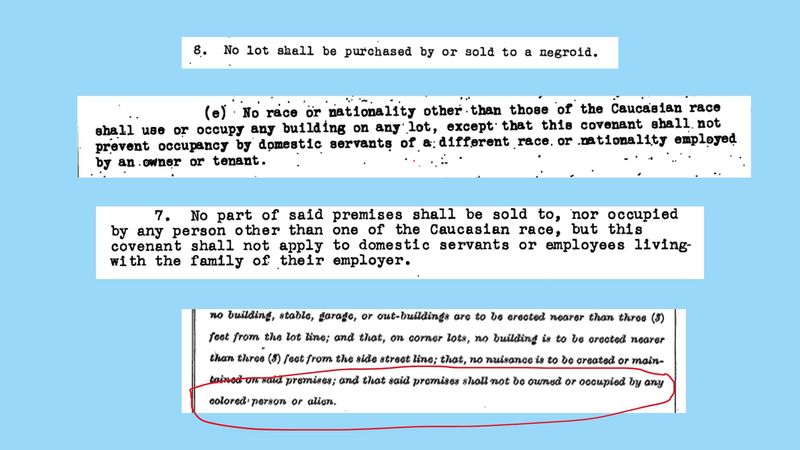
In Wall’s Introduction to Public History graduate class, Kristen Delegard, co-founder of Mapping Prejudice, has demonstrated the impact of her team’s work identifying and mapping historic racial covenants — a deed clause prohibiting people of a certain race from occupying a property — in her state.

Structural racism is a topic Wall thinks is “really hard” for a lot of people to wrap their minds around, but when people get to see “covenants on this map, sort of moving into their neighborhoods, then suddenly they kind of wake up to it.”
Wall was inspired to pursue a similar mapping of Broome County, and the opportunity finally came to fruition through Binghamton University’s Source Project, a program specifically for freshman students interested in research outside of STEM.
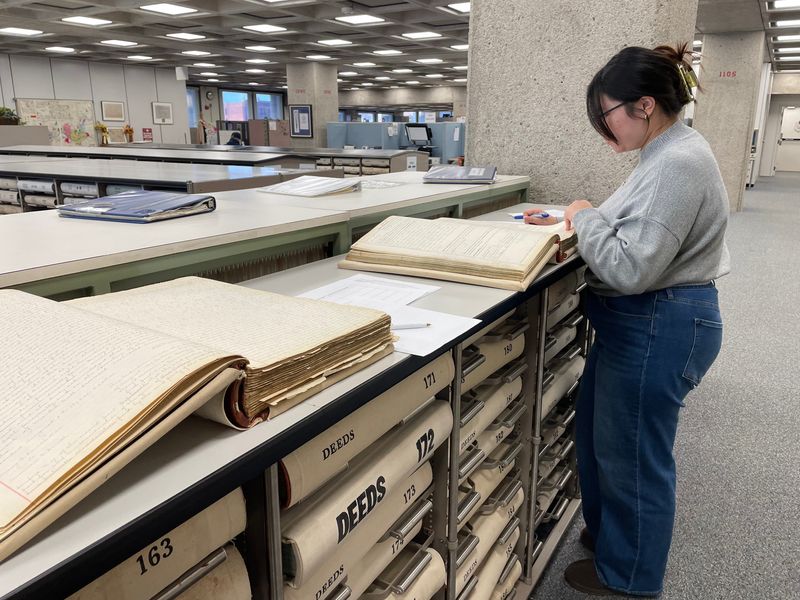
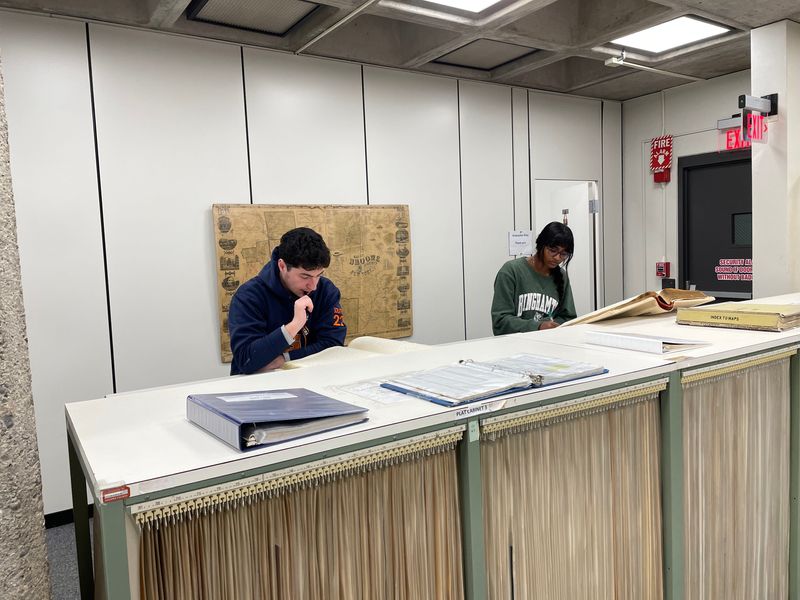
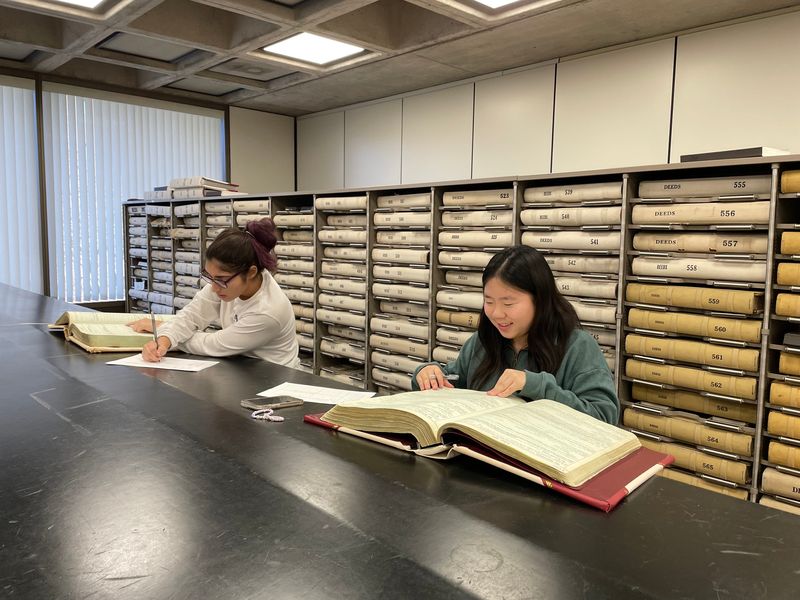
As part of the project, Wall has been teaching a course called “Mapping American Prejudice” for the last two years to highlight how the idea of prejudice evolves, and the physical shift it creates moving people across a landscape. Through studies of Broome County’s deed archives, the student-led effort has uncovered racial covenants and other examples of discrimination in the area’s history.
Project finds racial covenants predate redlining in Binghamton area
Wall and her students have uncovered evidence of racial covenants in the Binghamton area as early as the 1900s, leading Wall to believe residential segregation in the area “had roots that predate redlining.”
Redlining refers to the process of denying mortgage loans based on the racial makeup of a neighborhood. The federal government’s Home Owners’ Loan Corporation policy beginning in the 1930s marked neighborhoods where minorities predominantly lived as high-risk for lenders.
One of the earliest deeds the group has found so far in Broome County is dated Oct. 6, 1900, sold by Walter B. Perkins and his wife, Ellen S.B. Perkins, in the Town of Union to Lewis A. Mosser. The deed enforced a three-year restriction; at the time it was not uncommon for some racial covenants to have expiration dates. Of the five restrictions, the fifth states “grantee in accepting this deed agrees for herself, her heirs and assigns, not to sell or lease to Italians or colored people.”
The Broome County Clerk’s Office had deeds ranging from 1946 to 2017 available online when Wall and her students began their research. In the spring of 2022, Wall’s students spent a class period looking through digitized deeds and found about 60 racial covenants recorded online between May-August 1946. For Wall, the discovery established “proof of concept” for a larger project.
Over the past four years, Wall and her students have found more than 1,000 racial covenants, which Wall says represent just a “tiny, tiny, tiny fraction of what is out there.”
The three students involved in this first dive into the research created an interactive map which each of Wall’s classes has since built upon in a website of their own.
What records are available in Broome County?
The lack of access to digitized deeds and restrictions on census records — a 72-year restriction on U.S. Federal Population Census access means the most recent records, released in April 2022, are from 1950 — has stalled additional work like tracking the migration of people of color, job opportunities and housing discrimination within Broome County.
Former Broome County Clerk Joseph Mihalko said the county is in the process of digitizing all deeds dating back to when the county was formed in 1806 and plans to have them available online by the first quarter of 2026.
Where racial covenants were found in Broome County
While mapping what was available, Wall’s students have since dug deeper into related topics in the Binghamton area and their hometowns. They studied the evolution of campus activism, racial disparities in Westchester County, and racial covenants at a housing development in Windsor. They zeroed in on the actions of one Broome County housing developer and the displacement of people after the North Shore Drive highway was constructed.
The 2024 class started the project in January looking through pages and pages of digitized and physical deed documents. They found about 22 subdivisions under racial covenants.
Sunrise Terrace in the Town of Dickinson had the largest number of units the students came across at 90, and the covenants found so far date back to 1929. With research efforts limited to manual student findings, Wall believes there are still more to uncover.
“We’ve found many deeds with racial covenants in Sunrise Terrace but, I’m quite certain, not nearly all,” Wall said.
Most of the covenants for Sunrise Terrace properties had an expiration date of Jan. 1, 1952. Apparently, this was a common practice, according to the National Covenants Research Coalition studying racial covenants around the country. Certain clauses allowed for expiration dates to be renewed.
Four students in the 2024 class created another website mapping the racial covenants in the Binghamton area. The Unwelcome Neighbors website was created by Cynthia Chen, Kristen Cho, Kristen Li and Jade Torres and was featured on the United Way of Broome County’s 21-Day Equity Challenge to educate community members on racism and discrimination.
Jordyn Weintraub and her classmate focused on a housing development in Windsor, with properties sold by Nature Retreats Inc. They went to the county clerk’s office and found 40 deeds using restrictive language for multiple properties all near Beaver Lake.
“When I think about this class, that was such a crazy experience,” said Weintraub. “There’s a difference between learning about it and actually seeing it.”
Most of the racial covenants found were near Beaver Lake. Deeds included a covenant that said, “No conveyance of this property nor of any rights or interest therein may be made to anyone other than Gentiles, who are members of the white race.”
Alice Liu focused on the North Shore Drive highway and the impact its construction had on the families displaced in the area. During that time, the Seventh Ward had the largest population of low-to middle-income residents and African American residents. Broome County Historian Roger Luther presented the history of Columbus Park and the surrounding neighborhood in September during a City Council meeting regarding renaming the park.
According to Luther, the 7th and 8th wards were predominantly Black communities that underwent displacement during the expansion of the park and urban renewal projects in the area.
A Binghamton Press article dated Dec. 11, 1958, highlighted the impact redevelopment projects were having on the community. Joseph C. Frederick, who was the Binghamton District engineer for the Department of Public Works at that time, expressed his concerns for what he described as the “largest scale dislocation” to date.
The relocation of the estimated 409 families residing in the Seventh Ward was “paramount” during Binghamton’s fast track to redevelopment. In the same 1958 article, four urban renewal projects like the Sherman Place slum clearance were highlighted for the hundreds of families that were or planned to be uprooted from their communities.
Historic population trends in Binghamton
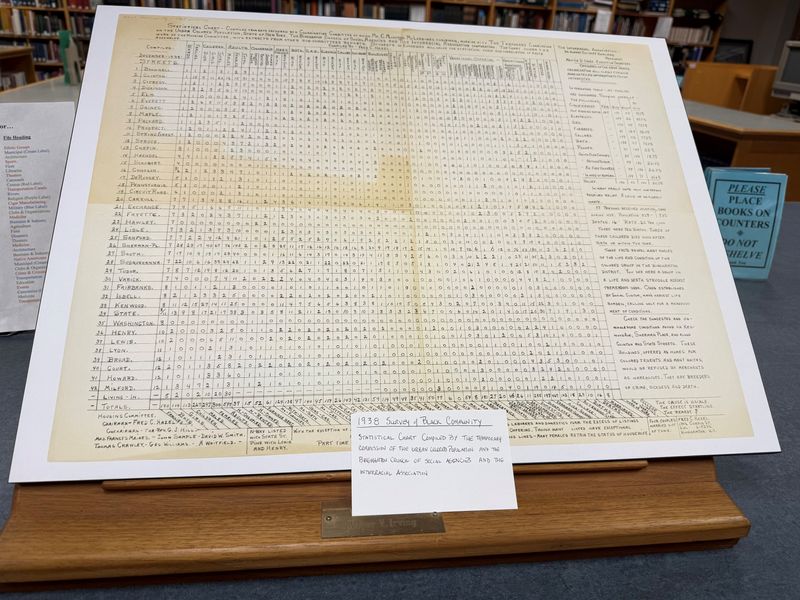
A 1938 survey compiled by the Temporary Commission of the Urban Colored Population, the Binghamton Council of the Social Agencies and the Interracial Association documented Black households across 42 streets. During that time, Binghamton had an estimated Black population of 824 with a majority of the families living on Clinton Street, Sherman Place, South Street, Susquehanna Street, Kenwood Street, State Street, Carroll Street and Sanford Street.
Some of the names of these streets have changed over the years.
Liu found articles about a white evangelical minister in Binghamton during the 1950s dismissing the idea of integration and suggesting African Americans had their own language.
On March 29, 1959, an article was published in the Binghamton Press about City Council Minority Leader Vincent P. Capozzi, who represented the Seventh Ward, reacting to the claims made by Rev. Paul I. Darling.
Darling claimed that during his travels to areas like New York, Ohio, Pennsylvania, West Virginia and Tennessee, he came to the conclusion that African Americans would prefer to live in their own neighborhoods and worship in separate churches.
In response, Capozzi said, “I believe also that they should be welcome to live wherever opportunities arise. I believe it is high time that the so called segregationists become convinced that the American Negro is here to stay, that he is a part of the social life, religious life and business life of the community.”
The African American population in the Binghamton area was lower compared to surrounding cities like Syracuse and Buffalo. The New York Heritage is a collaborative project that spans nine library councils in New York, collecting documents, photographs and history for digital access. During the 1940s, according to the project, Broome County had a non-white population of 807 people, and by 1957 that number had only increased to 1,000.
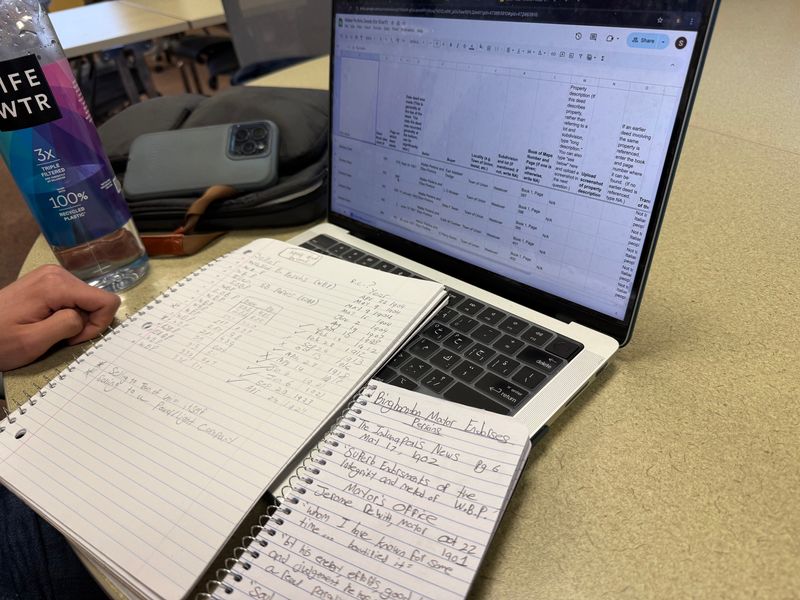
Sharif Zaky centered his project around a Boston developer, Walter Perkins, whose name came up in his review of historical documents at the county clerk’s office.
By scouring Newspapers.com and the U.S. Census, Zaky found evidence of racial covenants for properties Perkins owned in Akron, Ohio and that Perkins started selling property in Broome County during the 1900s.
A 1903 deed between Walter B. Perkins and Lottie R. Smith restricts the “sell or lease to Italians or colored people.” Zaky found about 23 deeds with racial covenants under Perkins’ name. The last was sold in 1924.
Since properties that were being sold in Broome County before the 1900s did not show any evidence of racial covenants, Zaky believes “they only began selling properties with racial covenants after Perkins brought them here.”
Wall said there is evidence of racial covenants tied to Perkins, specific to “Italians and colored people,” from 1899-1904 in Western Massachusetts and the suburbs of Philadelphia. She believes Perkins “helped to spread/accelerate the phenomenon.”
Broome-area discrimination reflected in other NY counties
Broome wasn’t the only county where students found such covenants. In her hometown of Greenburgh, New York, Sophie Jost focused on how racial covenants, urban renewal, and zoning impacted the two unofficial villages of Edgemont and Fairview.
There was evidence of racial covenants in her hometown while urban renewal projects one town over “diminished Black homes and therefore stifled Black wealth,” Jost said.
Jost and her group were able to link the differences in education across the school districts to the racial divide that was put in place. They spoke with local Westchester County historians and other researchers including a local history teacher, searched the county clerk’s online database and combed the internet.
“We were just able to see both the historical implications and the modern impact,” Jost said during her last day of class in May. “Both by talking to people who live it every day and seeing where all of this stuff is coming from.”
Taking BU project to a broader audience
Wall presented the work her students collected to a group of racial covenant researchers from around the country who meet online once a month. They confirmed most of the racial covenants identified are dated after 1910.
The early covenants found in Johnson City and Endicott banning sales to “Italians and colored people” had not been heard of by the group.
Wall and her students have not found specific reasoning behind Perkins’ discrimination toward Italians, though an anti-Italian movement had swept through the United States in the late 19th and 20th centuries.
In other cities around the U.S., the group believed few racial covenants mention Italians. If they did, it was part of a broader exclusion of Southern and Eastern Europeans.
Expanding the Binghamton mapping project
Wall hopes to bring this project to the community and get residents and local organizations involved with identifying racial covenants. Wall applied for a Digital Humanities Program Incubator grant, which she believes will help “build a more permanent map and website, incorporating everything we’ve gathered.”
The grant would allow Wall and five undergrad students from her previous classes to create a more public presence, including the interactive map, crowdsourcing and a publicly accessible website to educate people about racial covenants and the impact it had on the current structure of Broome County.
A meeting was held on July 11 with Wall and her technical advisors, Ruth Carpenter and Chelsea Gibson, to discuss what is missing, possible formats and looking over the data that has already been collected.
Racial covenants was a new topic for all the students who participated in this project. By the end of the class, they were forever changed by what they learned.
“I realized I actually really enjoy researching and learning about social justice,” said Li. The class prompted her to change her major from business to philosophy, politics, and law.
Chen changed her major from history to sociology after seeing how policies can impact different communities and how that has translated into today’s society.
“For me, I do hope eventually through this project this will lead me to places I can better advocate for people in realms of housing,” she said.
Chen planned to work with the New York Public Interest Research Group Binghamton chapter as a housing and homelessness campaign leader, but had to resign from the position due to research commitments which “increased significantly” over the semester.
Before going on Thanksgiving break, Chen made a unique discovery. A deed dated 1917 for a property in the Town of Union referred to as “Arcadia” is the first racial covenant that excludes the sale or leasing to “Italians, Slavish, Russian, Polish or Chinese.” For Wall, this is a “real outlier” and something to keep an eye out for as it is the first deed so far that has not mentioned African Americans.
The Broome County Racial Covenants Project is currently in the works. Wall met with technical advisors and a geography graduate student in September to discuss next steps, with plans to meet monthly. There are also five undergraduate students who previously took a course with Wall helping with the project, taking on the task of looking through deed books.
Wall plans to have the map and website up and running by the end of the spring semester, with the “possibility the work will spill into the summer.” In the beginning, the website will not feature all of the racial covenants for Broome County due to the lack of resources, number of deeds and volunteer help.
The goal is to create a time-lapse map with a sufficient number of covenants to give the public a general sense of how the practice moved through Broome County and shaped the neighborhoods we see today.
Kalyn Grant reports on public service issues for the Press & Sun-Bulletin, focusing on schools and community impact. Have a story to share? Follow her on Instagram @KalynCarmen and on Facebook under Kalyn Kearney. Get in touch at kcgrant@gannett.com.
This article originally appeared on Binghamton Press & Sun-Bulletin: How a Binghamton project is uncovering racial covenants, ‘Mapping American Prejudice’
Reporting by Kalyn Grant, Binghamton Press & Sun Bulletin / Binghamton Press & Sun-Bulletin
USA TODAY Network via Reuters Connect