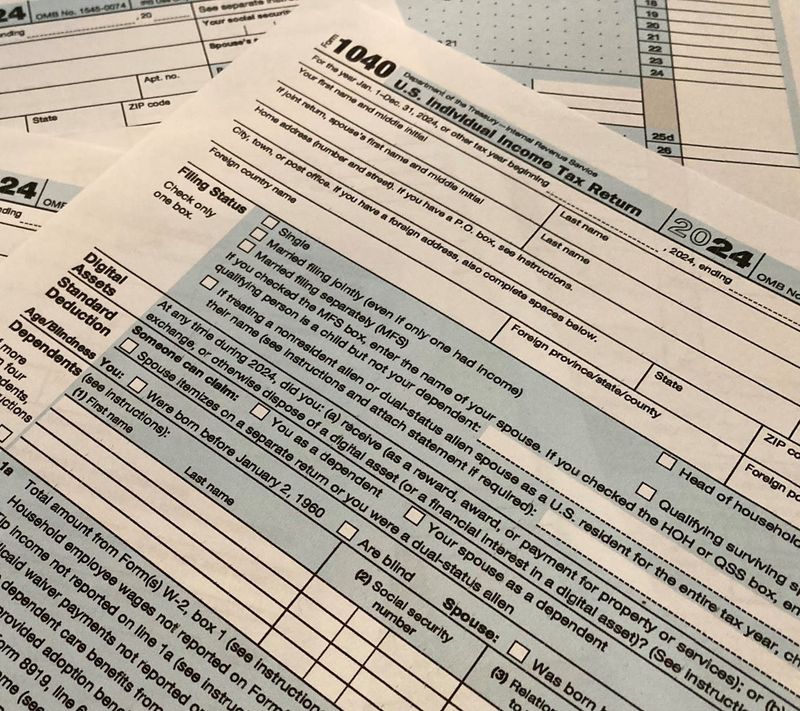
Wondering when you’ll receive your W-2 and when you can start filing your taxes?
The Internal Revenue Service (IRS) has not yet confirmed a date, but has provided taxpayers with a pretty exhaustive list of how filing taxes will change in 2026 due to provisions introduced in the One, Big, Beautiful Bill.

W-2 forms are a bit easier to predict as employers are required by law to send out the Wage and Tax Statement by Saturday, Jan. 31.
Florida taxpayers could see bigger returns this tax season thanks to one of the bill’s provisions that slashes taxes on tips, overtime pay and car loan interest. Many 2017 tax cuts have also been extended, too.
Here’s everything you need to know to get ahead on filing your taxes this year.
When can I start filing my taxes?
The IRS doesn’t stick to a consistent start date for tax season, but it typically starts near the end of January. Feb. 2 falls on a Monday, leading some to speculate that will be the first day of tax season in 2026, according to USA TODAY.
If you’re eager to get started on filing your 2025 tax returns, the majority of online tax filing services and will allow you to start preparing your tax filings already. While you won’t be able to file them just yet, and may need to wait until you receive other tax forms, you’ll be able to save your progress and come back to those sections later.
When do employers send out W-2 forms?
Employers are required by law to send out W-2 forms by Saturday, Jan. 31. Determining when specific companies will start sending out W-2s will depend on the employer. Some employers have already sent out end of the year tax forms online. The best way to find out when you might receive yours is to contact your employer directly.
Where can I find my W-2 online?
This will also depend on your employer. Companies that use major payroll services will likely have an easy way for you to access tax forms where you manage your earnings. If your employer doesn’t offer something like this, you’ll likely have to ask them to provide you with a copy directly.
Can I use my last pay stub to file my taxes?
While you might be tempted to use your last pay stub in lieu of a W-2, the provided information won’t include your finalized gross pay, tax withholding, potential tax deductions or your net pay. So, while you could potentially use it to give you an estimate on your return, it shouldn’t be used when you actually file your return.
New IRS changes for the 2026 tax season
The 2026 tax season will have a number of changes, so let’s knock out the smaller stuff first. Here’s a quick look at what changes the IRS has made this year, and what’s still the same:
Form 1099-K: Taxpayers who received more than $20,000 in payments for goods and services in more than 200 transactions through an online marketplace or payment app in 2025 should expect to receive a Form 1099-K in January 2026. The IRS will also receive a copy of your Form 1099-K.
Federal income tax: There haven’t been any changes to the taxability of income, according to the IRS’ website. Taxpayers are required to report all income, even if it’s from a side job or sale of goods, and regardless of whether they received the appropriate tax form.
Life events: There are no new life events, but it’s important to take a second and reflect on whether you qualify for one this year. These tax benefits could include things like the Education Credit, Child Tax Credit/Additional Child Tax Credit, Earned Income Tax Credit, the Child and Dependent Care Credit and Credit for Other Dependents.
What are the tax changes introduced by the ‘Big Beautiful Bill?’
Trump’s One, Big, Beautiful Bill Act will significantly impact federal taxes, credits and deductions this tax season. A full breakdown of the bill goes beyond the scope of this story, but here are the highlights that would affect most taxpayers.
Tax inflation adjustments: Here’s a look at how much standard deductions increased:
Tax year 2026
Tax year 2025
Marginal rates for tax year 2026
Alternative minimum tax exemption amounts for tax year 2026
Estate tax exclusion for tax year 2026
Adoption credit limits for tax year 2026
Employer-provided childcare credit expansion for tax year 2026
Deduction for seniors: People who are 65 years old and older can claim an additional $6,000 deduction in addition to the standard senior deduction between 2025 and 2028. This applies per eligible individual, so a married couple could receive $12,000. The deduction phases out for taxpayers with modified adjusted gross income over $75,000 or $150,000 for joint filers.
No tax on tips: Up to $25,000 in qualified tips can be deducted from 2025 through 2028 in occupations that the IRS deems as “customarily and regularly receiving tips.” This deduction phases out for taxpayers with modified adjusted gross income over $150,000 or $300,000 for joint filers.
No tax on overtime: Up to $12,500 or $25,000 for joint filers can be deducted from the portion of qualified overtime pay that exceeds an employees regular pay rate. This deduction phases out for taxpayers with modified adjusted gross income over $150,000 or $300,000 for joint filers.
No tax on car loan interest: Up to $10,000 can be deducted from interest paid on car loans for qualified vehicles. The interest must have been paid on a loan that:
Cars, minivans, vans, SUVs, pickup trcuks and motorocycles that have a gross vehicle weight less than 14,000 pounds and underwent final assembly in the U.S. qualify.
Trump Accounts: Trump Accounts are new in 2026 and are a new type of individual retirement account for children. A pilot program contribution of $1,000 is available for children born between Jan. 1, 2025 and Dec. 31, 2028, and who are U.S. citizens with a valid Social Security number.
Expiring energy-related credits and deductions: Trump’s One, Big, Beautiful Bill expedited the termination of eight energy credits and deductions:
You can read more detailed information about the expiring credits on the IRS website.
This article originally appeared on Pensacola News Journal: No tax on tips, overtime and other tax season changes you need to know
Reporting by Brandon Girod, Pensacola News Journal / Pensacola News Journal
USA TODAY Network via Reuters Connect