It was one of the highest-profile police misconduct cases in recent years.
In 2018, Milwaukee police officers arrested then-NBA player Sterling Brown, taking him to the ground and using a Taser. The encounter started over a parking violation.

The case cost one Milwaukee officer their career, resulted in discipline or retraining for 10 others and left taxpayers on the hook for a $750,000 settlement.
The officer who lost his job, Erik Andrade, was disciplined for social media posts he made after the arrest.
Those posts showed racial bias, according to the Milwaukee County District Attorney’s Office, which added him to a list of officers with credibility concerns, findings of dishonesty or bias, or past criminal charges.
None of the other officers involved, even those who were suspended, landed on the list.
That includes a supervisor who admitted that he wrongly told Internal Affairs he saw a gun in Brown’s car that night.
The case illustrates the decision-making behind who gets placed on a “Brady/Giglio” list in Milwaukee County. Such lists take their name from two landmark U.S. Supreme Court rulings and help prosecutors fulfill their legal obligations to share information favorable to the defense.
Veteran defense attorneys and some outside legal experts have argued the Milwaukee County District Attorney’s Office criteria for including officers on the list is too narrow, depriving defendants of crucial information.
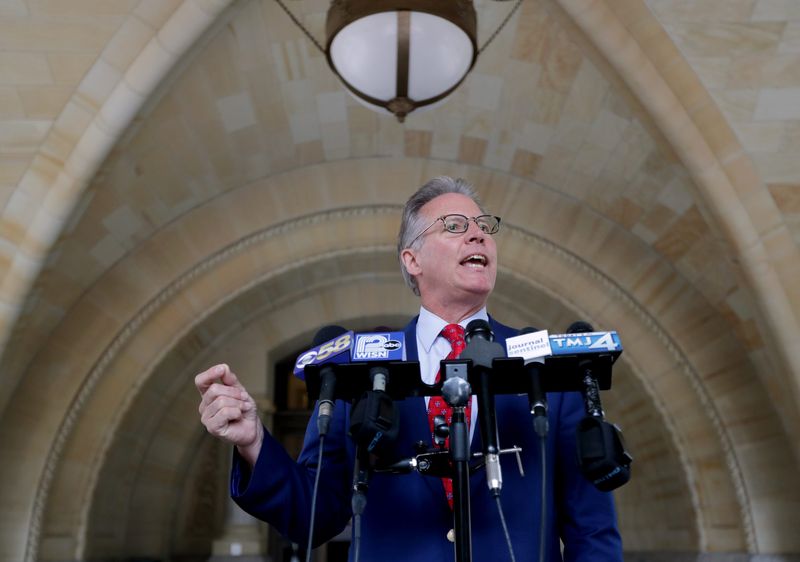
District Attorney Kent Lovern has maintained his office is fulfilling its legal obligations.
In the case of Andrade, Lovern, then-chief deputy district attorney, went a step further and said prosecutors should no longer use Andrade for testimony in any future case. That decision factored heavily in Andrade’s firing.
Brown’s attorney, Mark Thomsen of Gingras, Thomsen and Wachs, still questions why Andrade is on the list, while the higher-ranking sergeant who made an inaccurate statement to Internal Affairs is not.
Thomsen said the sergeant appeared to lie to internal investigators and that should get him a spot on the Brady list.
“The goal of our justice system is not to send innocent people to jail, which means you’ve got to trust the people that are making the allegations,” Thomsen said.
A sergeant says he ‘misspoke’ when he wrongly said he saw a gun in Sterling Brown’s car
Two sergeants were involved in the arrest of Brown, who at the time was a rookie for the Milwaukee Bucks.
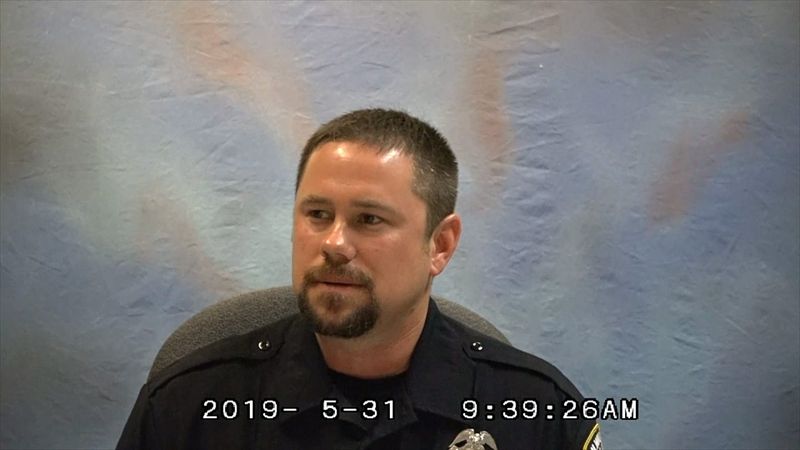
One of them was Sgt. Jeffrey Krueger.
Krueger grabbed Brown during the arrest and takedown outside a Walgreens on the city’s south side. He did not order the Taser to be used against Brown. That order was given by the other supervisor present, Sgt. Sean A. Mahnke.
Police body camera footage showed Brown staying calm and polite as the officers became increasingly confrontational during the interaction. The video contradicted early draft reports from officers, including Krueger, that described Brown as “aggressive.”
In an Internal Affairs interview, Krueger described how he shined a flashlight in Brown’s car, which was parked across two handicapped spots. Krueger said he saw a paper target with bullet holes and then looked at another sergeant, Mahnke, peering into the car.
“It clicked all at once,” Krueger told internal investigators. “Uh, it started making a lot more sense. OK, you know this guy was agitated with Officer (Joseph) Grams, um, he got really agitated with me looking into his vehicle.”
“And now I see this gun,” he said.
Police did not find a gun in the car or on Brown.
During a deposition in the civil lawsuit, Thomsen questioned Krueger about his assertion that he saw a gun. Krueger asked to see the police records before answering.
“Oh, it was – yeah. That – I did not see a gun. No,” Krueger said, according to a transcript of the deposition.
“So if you never saw a gun, why are you telling internal affairs that you saw a gun, sir?” Thomsen asked.
“I must have misspoke and nobody caught it,” he replied.
To Thomsen, the reason the sergeant said he saw a gun was obvious: He wanted to justify the force used on Brown by implying there was a threat.
“When he said it, he knew it was a lie,” Thomsen claimed in an interview. “That’s not a mistake. Nobody makes that kind of mistake, not a sergeant with all the experience in the world.”
In addition, the internal investigators questioning Krueger knew no gun had been found, Thomsen said.
Krueger received a 10-day suspension for failing to be a role model for professional police service during Brown’s arrest. He did not respond to an interview request from TMJ4 News for this story, and the Milwaukee Police Department declined a separate request to interview him.
Asked about Krueger’s claim of misspeaking, Police Chief Jeffrey Norman said he did not have enough information to discuss the issue. Norman was not chief at the time of Brown’s arrest.
In a follow-up email, the Police Department said none of the officers involved in Brown’s arrest were disciplined for an integrity issue except for Andrade. Because of that, no other officers were referred to the district attorney’s office for potential inclusion on the Brady list.
In an interview, Lovern, the district attorney, said people can and do misspeak, and later realize they were incorrect. He stressed he was speaking generally and not about any specific case, including Krueger’s.
“That doesn’t mean those were dishonest statements,” Lovern said. “That doesn’t mean that that earlier statement was somehow lacking integrity.”
“And there has to be an allowance for the fact that, frankly, people will make misstatements. People will have to correct the record later,” he said, adding: “That’s just the world we live in. That’s just life.”
Thomsen said he believed Krueger’s words to Internal Affairs were not just a misstatement.
“When the sergeant who’s supervising is able to say to Internal Affairs a lie, and everybody knows it’s a lie, and keeps their job, what message does that send institutionally?” Thomsen asked.
This article originally appeared on Milwaukee Journal Sentinel: A dozen officers took part in the 2018 arrest of a Bucks player. Only one was put on a list of officers with credibility issues.
Reporting by Ashley Luthern, Milwaukee Journal Sentinel / Milwaukee Journal Sentinel
USA TODAY Network via Reuters Connect