University of Florida Board of Trustees member James W. “Bill” Heavener and several other defendants accused of defrauding the government out of millions of dollars have moved to get the case against them thrown out over procedural technicalities, according to federal documents.
Heavener, in his capacity as partial owner and operator of the Los Angeles Film School (LAFS) and Full Sail University (FS), and other defendants named in the lawsuit motioned to dismiss the case after plaintiffs filed an amended complaint on Oct. 14.

The complaint, filed in 2024 in the U.S. District Court for the Central District of California, alleges LAFS and FS “financed thousands of short-term job placements for their graduates through schemes with non-profits and paid-off vendors” and that they lied to government officials about students’ employment outcomes for over a decade to continue receiving federal funding, a violation of federal law and accrediting standards.
For a school to be eligible for federal financial aid it must meet federal “gainful employment” requirements which stipulate 70% of graduates be consistently employed in the field in which they were trained. To meet this requirement, the complaint alleges Heavener and other executives ordered the school to maintain an “appearance of compliance.”
According to the complaint, LAFS receives over $85 million per year in federal financial assistance. Full Sail, a private, for-profit institution in Winter Park, receives $377 million in federal financial assistance per year.
The amended complaint broadens arguments made in the original complaint. It claims the universities violated federal regulation by substantially misrepresenting the nature of their educational programs, citing deceptive marketing practices including promotional videos and annual events that glorified “perhaps one graduate out of a thousand who has success in the entertainment industry, but conceals the majority of graduates who never get into entertainment for more than a few days, and have no career whatsoever.”
It also provides alleged evidence of fraud on LAFS’s campus through 2024.
In a 44-page filing, Heavener and other defendants through their attorneys argue the lawsuit should be dismissed on the grounds that the two former LAFS executives who filed the complaint — David Phillips, who served as vice president of career development, and Ben Chaib, who served as vice president of admissions — previously signed settlement agreements. They also argued that the complaint is “untimely” and does not fall within the False Claims Act’s limitations period of three years.
The defendants further contend plaintiffs failed to provide evidence of fraud and lack “firsthand knowledge of any alleged fraud because they were not employed in relevant positions at LAFS at the time of the alleged misconduct,” according to court documents.
They argue that even if the allegations were true, they aren’t “actionable” under the False Claims Act.
“Federal funding is not conditioned on meeting employment targets; therefore, the alleged “pay for placements” scheme could not lead to a false claim for a federal payment,” the defendants argued in court documents. Further, plaintiffs “fail to allege that any prohibited “compensation” was provided to employees based on enrollment success”.
The defendants also note misrepresentation rules are enforced by the Department of Education — not through private lawsuits.
The Department of Education conducted a three-year audit of LAFS, that ended in 2020 with a settlement.LAFS agreed to update its policies and procedures and had to pay less than $1 million. The university also agreed not to pay industry practitioners or third parties to “provide or arrange for jobs or gigs that [LAFS] uses to substantiate that graduates are placed for purposes of any placement or employment rate they are required to calculate.”
The defendants will ask the court to dismiss the case with prejudice at a hearing scheduled for late January 2026.
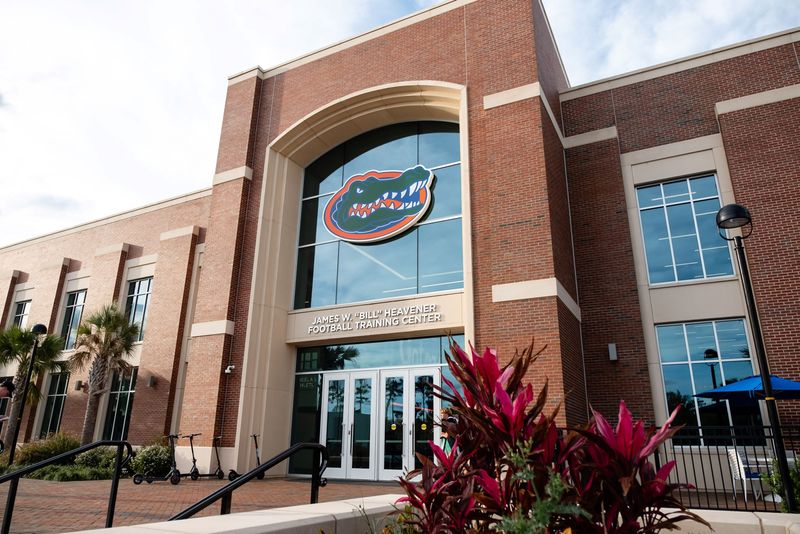
Heavener is a UF alum and has served on the Board of Trustees since 2013. He is a longtime donor to the university, as evidenced by the buildings throughout campus named after him, including the James W. “Bill” Heavener Football Training Center, the Heavener School of Business, Heavener Hall and the Heavener Football Complex.
Other defendants in the suit include Diana Derycz-Kessler, former president and CEO of LAFS, and her husband, Paul Kessler.
The plaintiffs in the case claim the LAFS and Full Sail’s operations were tight-knit and fraudulent schemes were coordinated by Heavener on both campuses. They argue Full Sail and Heavener are “jointly and severally liable to the United States under the False Claims Act in an amount to be determined at trial” in addition to a civil penalty of $5,500 to $11,000 for “each false statement they made, used, or caused to be made or used that were material to a false or fraudulent claim.”
This article originally appeared on The Gainesville Sun: UF trustee Heavener argues whistleblower lawsuit time-barred, lacks evidence
Reporting by Chelsea Long, Gainesville Sun / The Gainesville Sun
USA TODAY Network via Reuters Connect