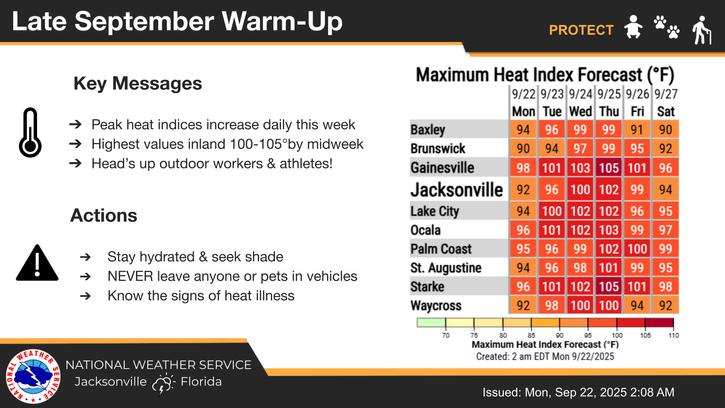
Astronomical fall may have officially begun with the Autumnal Equinox on Monday, Sept. 22, but in Jacksonville, it still feels like summer.
On Wednesday, Sept. 24, the temperature at Jacksonville International Airport hit 90 degrees, marking the 111th day this year with a high of 90 or above, according to the National Weather Service. That puts 2025 in a tie with 1990 for the second-most 90-degree days on record, just three days shy of the all-time high of 114 days set in 2011.

Here’s what high temperatures we can expect for the remainder of this week and how to stay safe during hot weather.
Heat in Jacksonville expected to continue through Friday
Forecasters project temperatures to remain hot on Thursday, Sept. 25, with a high temperature in Jacksonville expected to reach 91 degrees and a heat index of 102. The normal high temperature for Sept. 25 is 86 degrees, and the record of 96 degrees was set in 2019, according to National Weather Service records.
On Friday, Sept. 26, the weather service is forecasting a high of 89 degrees and a heat index of 99. The normal high temperature for Sept. 26 is 86 degrees, and the record of 97 degrees was set in 2019, according to records.
High temperatures in Jacksonville from Saturday through Tuesday are expected to be in the mid-80s, so the record for days with temperatures of 90 or above will stand — for now.
So even though the calendar says fall, the National Weather Service is advising residents to be aware of the heat and watch for signs of heat illness.
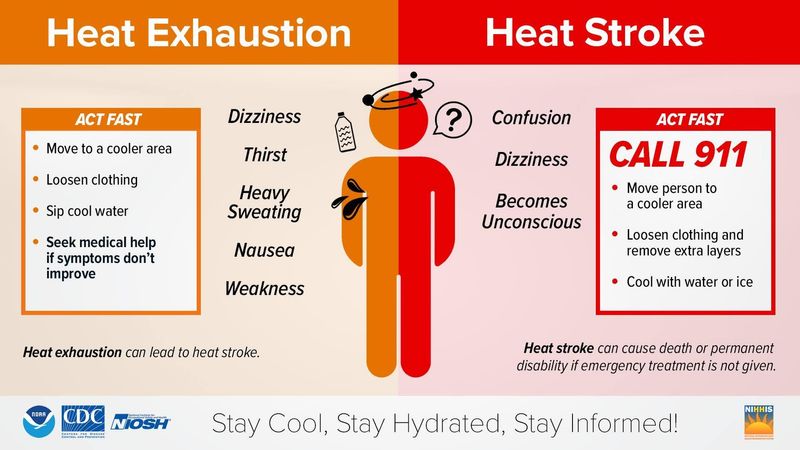
What are the signs and symptoms of heat-related illness or heat exhaustion?
When should you go to the ER for heat stroke?
Immediately, when you notice the signs. The CDC shares the symptoms of heat stroke:
How to cool down a person experiencing heat exhaustion
While you wait for emergency services, experts recommend attempting to cool the person down as much as possible. This can be achieved by lying them in a shaded, well-ventilated environment or applying ice packs or cool cloths around their body.
You can also encourage them to drink slightly salted fluids, such as sports drinks with electrolytes or salted water. However, do not give someone water if they are experiencing symptoms of heat stroke.
It is also recommended to not give them any medication, such as aspirin and acetaminophen, before seeing any medical professionals. Continue to monitor their breathing carefully and remove any airway blockages. Remove any tight or restrictive clothing.
Basic tips: Here’s how to prevent heat exhaustion and heat stroke
What’s the heat index? And how does a high index affect temperature in Florida?
When the humidity is high, sweating isn’t as effective at cooling the body. That makes it feel hotter than it is − and increases the danger.
The heat index is a measure of how hot it really feels when relative humidity is factored in with the actual air temperature.
When the heat index reaches 105 degrees or higher, conditions can quickly become dangerous for people and pets.
How much water should you drink when it’s hot?
According to UF Health in Florida, the Dietary Reference intake for water is between 91 and 125 fluid ounces (2.7 to 3.7 liters) of water per day for adults.
However, individual needs will depend on your gender, weight, age, and activity level, as well as any medical conditions you may have.
Here’s a Daily Water Intake Calculator by UF Health to help you determine your estimated water intake for proper hydration.
Keep in mind water consumption is even more urgent for people working outdoors in extreme heat. According to the Occupational Safety and Health Administration, outdoor workers should drink at least 8 ounces of water every 20 minutes, even if they’re not thirsty.
If you’re drinking 16-ounce bottles of water, that would be three bottles every two hours.
What to drink to stay hydrated?
Water is not enough to stay hydrated. Your body may need to replenish electrolytes, but be careful about sugary or caffeinated drinks if you’re trying to stay hydrated.
Kelly Olino, assistant professor of surgical oncology at the Yale School of Medicine, told USA TODAY that people can dilute a bottle of Gatorade with water to replenish the body and replace salt losses from extended sweating. “In the extreme heat, with sweating, we’re losing pure water, but we’re also losing salt,” she said.
This article originally appeared on Florida Times-Union: It’s been a hot year, Jacksonville. Could the city set a record for 90-degree days?
Reporting by Doris Alvarez Cea, Jacksonville Florida Times-Union / Florida Times-Union
USA TODAY Network via Reuters Connect