When Bill Huszti watches cars fly by on the dirt road outside his home, he worries someone could get killed — and knows every vehicle also means a popular metro Detroit public park is actively forgoing a ton of money.
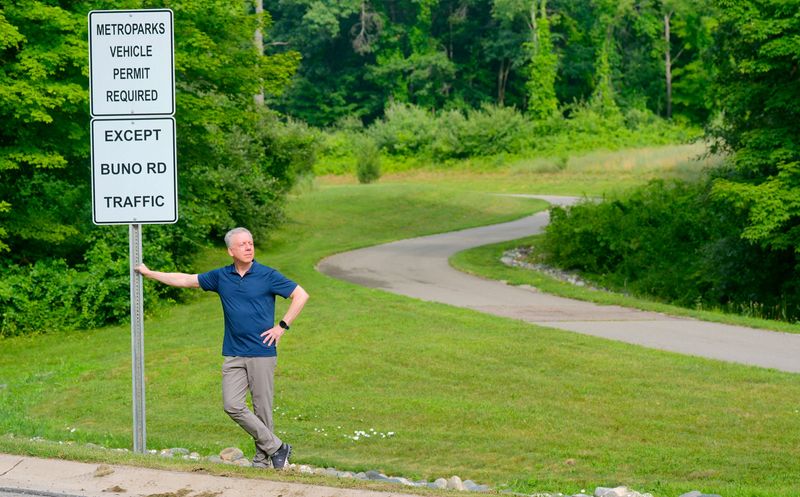
He lives in Milford in west Oakland County on West Buno Road. For years, it has been a key — and free — thoroughfare to Kensington Metropark.

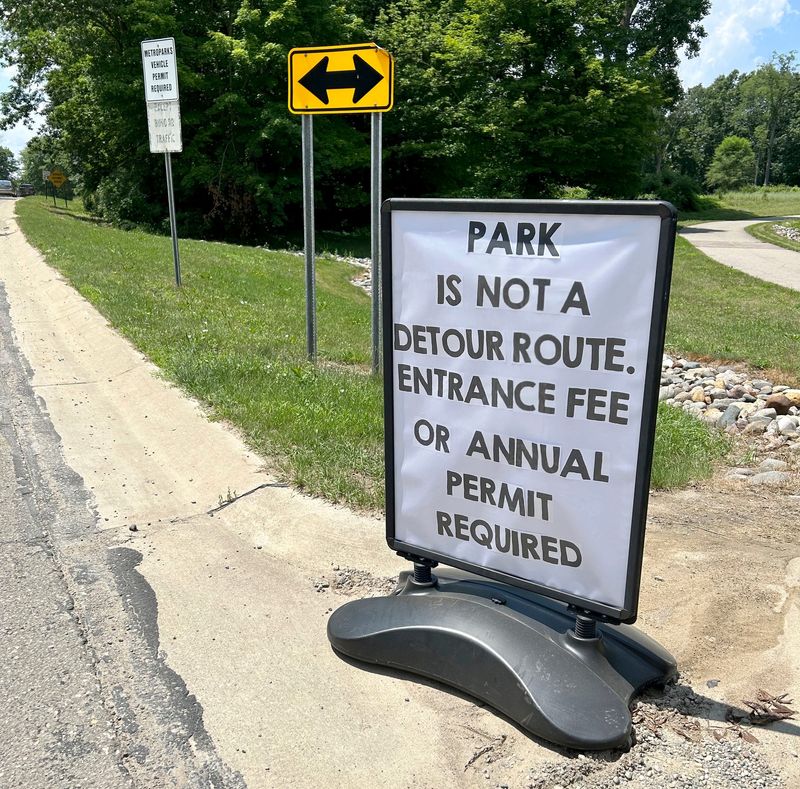
It’s no secret: Google maps take visitors from the Detroit area through this entrance where there is no tollbooth. The park system doesn’t list the road as an official entrance on its maps, but clearly shows the road leads into the park in a way that avoids tollbooths.
The park systems says they can’t put up a permanent tollbooth on West Buno Road to charge the $10 daily fee because it’s a public road that predates the park. The county road commission says they’re wrong.
Documents provided by the park system show this is the latest disagreement in a 75-year debate between park and county leaders over ownership of this tiny strip of road.
All the while, Huszti is afraid a family member or neighbor will get hit by one of the cars streaming in through the free park entrance outside his home.
“If Cedar Point had a West Buno Road entrance, we wouldn’t even be talking about it right now. It would’ve been solved a long time ago,” Huszti said.
“(Park officials have) acknowledged that Buno Road is a functional park entrance — and they monetize it when it suits them. But on ordinary days, it’s ignored. My research, based on their own internal toll data, shows they leave millions on the table.”
Park and county road dispute dates back decades
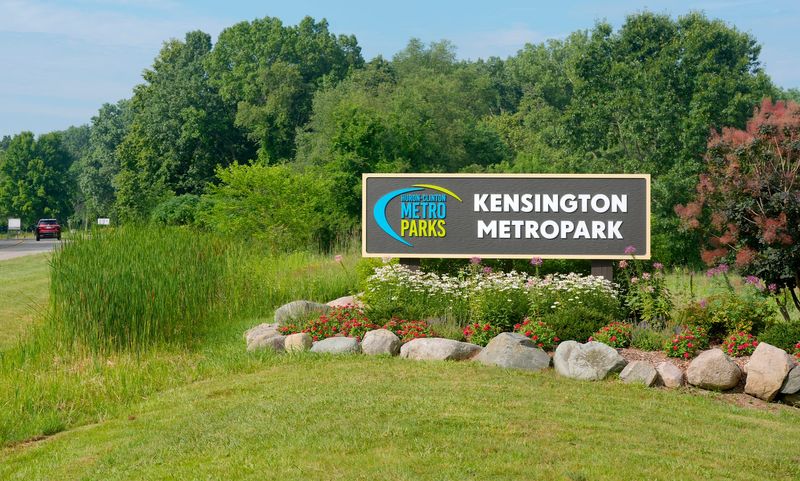
The park, about 40 miles northwest of Detroit, attracts roughly 2.5 million people a year, about 1 million more annually than Sleeping Bear Dunes.
It’s part of the broader Huron-Clinton Metropark system, an entity mainly funded by local taxes, records show. Aside from local levies, entrance fees account for the bulk of park revenues.
Many people pay the $10 daily fee or approximately $45 for the annual pass to enter Kensington and enjoy the golf, beaches, petting zoo and other attractions throughout the Huron-Clinton Metropark system.
But Kensington attendees can avoid paying by entering via West Buno Road, right in front of Huszti’s home.
Park leaders argue they are doing their best, but say their hands are tied in terms of installing a permanent tollbooth.
“Buno Road is a public roadway, as such, the Metroparks does not have jurisdiction to close or restrict access,” said Danielle Mauter, a spokeswoman for the Huron-Clinton Metroparks, which includes Kensington.
That’s wrong, said Road Commission for Oakland County spokesman Craig Bryson.
“Essentially, the bottom line is that Buno Road within the park is owned by the park, and they could close it if they wanted to, but choose not to. We are not going to close our section, which is a public road,” Bryson said.
Mauter fired back, sharing 14 documents with the Free Press the park system believes support the park’s position that they can’t install a permanent tollbooth. They include memos between the park authority and commission over several decades. There are old maps, minutes from a 1932 road commission meeting and other documents that date back more than 75 years.
Despite these records, Mauter contends the dispute is a new issue.
“Last year, the road commission first took the position that the road was not under (road commission) jurisdiction. We provided the same (documents) to the road commission last year and it was dormant for almost a year after that,” Mauter said Thursday.
A court order from 1947 shows the commission and park agreed the county would abandon a little less than 2,000 feet of Buno Road, turning it over to the park. Decades later, that section of what was once an old dirt road is now a trail, but it’s evidence the two entities have worked together to change ownership of the road in the past. There are also multiple letters about maintenance and jurisdiction of a bridge that’s part of the road in the park.
The road commission did tell the park it would consider abandoning the rest of the road that is in the park. But that was in 1989 — it’s unclear why the park system and road commission did not find agreement in the 36 years since.
“If the road commission wants to no longer be responsible for Buno Road and the bridge then it must go through its statutory process and involve all stakeholders, just like the road commission repeatedly instructed (the Huron-Clinton Metropolitan Authority) and like it did in the 1940s,” Mauter said in an email Thursday.
“Until then, Buno Road and the bridge remain under road commission jurisdiction.”
Bryson did not respond to additional questions about the road commission’s position on ownership of the road.
Park argues it’s trying
Mauter noted the park occasionally sets up temporary tollbooths in the vicinity of the entrance during busy events.
“Buno Road enters Kensington Metropark, continues through a section of the park and then exits the park and continues outside of the park. That section of Buno Road is used for emergency first responders as a travel path and by other motorists as a public road. Therefore, our seasonal tollbooths are placed outside of that section,” Mauter said.
“These seasonal tollbooths are physically in the park year-round, but are staffed traditionally on summer weekends and for large events throughout the year. Again, none of our tollbooths are staffed all hours, year-round. Doing so is not operationally or financially feasible.”
Mauter also said park police look for vehicles throughout the park that do not display evidence of payment, issuing them a “courtesy violation” that asks them to pay the entry fee.
Kensington also reached out to Google to ask it to change directions for the park.
“Unfortunately, we do not have control over Google and other mapping services, so we are aware that sometimes these services do route people through various ways — especially if they use the functionality to avoid toll roads. This is something we have reported and asked for edits on which are not always applied by the navigation service providers,” Mauter said.
“We remain committed to continuously reviewing our operations and listening to community feedback as we work to provide safe, accessible, and sustainable park experiences for all.”
Huszti says that’s lip service.
‘They see us as a nuisance’
Dozens of cars fly down the road every day right outside his home, Huszti said. It’s a safety issue for him and his neighbors, who walk along the road or enjoy park trails that cut across this park entrance.
He’s also sure, thanks to his own analysis of data he obtained through Freedom of Information Act requests, no tollbooth at the site likely cost the park more than $2 million over the past decade.
Huszti did his own analysis, examining tollbooth revenue records for years. The documents showed how often the park staffed booths and peak revenue. He also obtained a 2022 email through a public records request indicating the park collected $33,000 in one weekend from a temporary tollbooth for Buno Road.
He used that data to arrive at an estimated revenue loss of more than $200,000 per year.
Records show Kensington anticipates collecting nearly $3 million in toll revenue this year, already nabbing more than $300,000 through April.
Given the popularity of this entrance and mapping services directing visitors to use it, he thinks his estimate on money lost is conservative.
Mauter did not respond to questions about whether they have an estimate as to how much revenue has been lost by not setting up a permanent booth.
Every dollar counts in a public park system that costs millions more to operate and maintain than it earns every year. Kensington is expected to bring in about $5.8 million this year, more than the other eight parks in the system. But park leaders anticipate spending almost $9 million to operate just Kensington this year, 2025 budget records show.
Park leadership knew about the issue years ago. Huszti won’t let them forget — he has gone to park officials repeatedly, requesting information and battling over public records. But he’s not optimistic they’ll change any time soon.
“I came in hopeful, respectful, prepared — with facts about safety, revenue, and accountability. But they don’t see the public as a partner anymore. They see us as a nuisance — or worse,” Huszti said.
“The only question that remains now is whether they’ll rise to the moment.”
Reach Dave Boucher at dboucher@freepress.com or on X @Dave_Boucher1.
This article originally appeared on Detroit Free Press: Kensington Metropark losing serious money over unofficial, free entryway into park
Reporting by Dave Boucher, Detroit Free Press / Detroit Free Press
USA TODAY Network via Reuters Connect