Inside the more than 150 new laws that went into effect this month was one small line in one bill: “Section 316.0741, Florida Statutes, is repealed.”
And with that, Florida’s HOV lanes were struck down.

HOV (high occupancy vehicle) lanes are lanes in public roadways reserved for vehicles with more than one occupant, or for hybrid and low-emission vehicles that are registered with the state.
HB 1662, a wide-ranging transportation bill, removed HOV lanes from state law along with a variety of other changes including giving disabled veterans more specialty license plate choices and adding a more robust state framework for space flight development.
Here’s what to know.
What are HOV, high occupancy vehicle lanes?
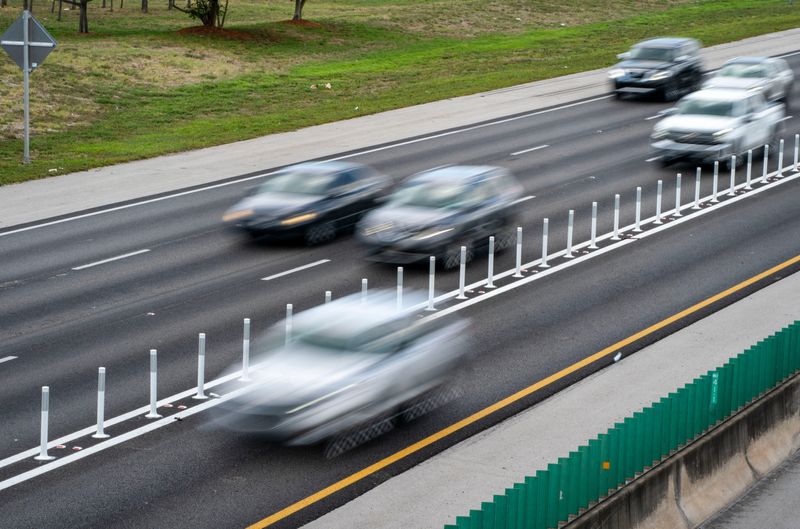
HOV lanes are intended to encourage carpooling and reduce traffic congestion by providing highway lanes limited to vehicles with a certain number of passengers or more. Sometimes the restriction is only for certain high-traffic times of the day. HOV lanes have diamond symbols along their length and signage listing applicable times and occupancy limits.
Driving in an HOV without anyone else in the car was a moving violation and law enforcement shared stories of catching people driving with mannequins, dolls, stuffed animals, inflatable people and other workarounds.
More recently, electric vehicles were added to the HOV lane list if they meet standards and are registered with the state.
Florida’s first HOV lane arrived in 1976, a 14-mile segment of Interstate 95 that eventually expanded to 21 miles between I-395 and I-595, according to a Department of Transportation report on managed lanes. HOVs were included in the federal Interstate Highway System Policy in 1991 and a 30-mile stretch of I-4 received an HOV lane during the morning and evening peak times.
In 2015, former President Barack Obama signed the Fixing America’s Surface Transportation Act (FAST Act), which, among many other things, allowed authorities to offer HOV access to low emission and energy efficient vehicles such as electric cars and hybrids if the driver pay a toll.
The FDOT started selling HOV decals for such vehicles to enable them to use HOV toll lanes. However, that provision in the FAST Act was scheduled to end on Sept. 30, 2025, unless it was renewed.
Florida HOVs converted into express toll lanes
Meanwhile, HOVs have been fading in Florida since the development of express lanes — toll lanes that run alongside highways to provide a smoother drive, for a price — started under former Gov. Jeb Bush and dramatically increased under former Gov. Rick Scott, according to the Florida Phoenix.
From 2008 to 2015, the Florida Department of Transportation converted the single HOV lanes on South Florida into two high-occupancy toll (HOT) lanes going either direction.
In 2023, FDOT converted HOV lanes along portions of I-95 from Broward County to Palm Beach County into non-HOV express lanes.
Florida cutting back on green energy promotion
The state also has been reducing or removing incentives to use electric vehicles as part of Florida’s energy policy, which continues to emphasize fossil fuels.
In 2024, DeSantis signed a bill (HB 1645) removing references in state law to climate change or greenhouse gas, banning offshore wind-energy generation in Florida, blocked cities and counties from approving energy policy restrictions, and repealing the state’s renewable energy goals. The bill followed up on former Gov. Scott’s repeal of the state’s carbon-reduction goals.
“We’re restoring sanity in our approach to energy and rejecting the agenda of the radical green zealots,” Gov. Ron DeSantis posted on X.
More laws passed this year prohibiting local governments from banning or restricting appliances or watercraft based on what fuel or energy source they use and blocked FDOT from providing funds to transportation-related entities for projects or programs that conflict with the state’s energy policy.
Did Florida remove all the HOV lanes?
The bill repealed all HOV mentions in Florida statutes and repealed authorization for the FDOT to sell HOV decals. It also repealed the tax exemption for EV and hybrid vehicles, but the agency said existing decals will be active until they expire.
“With recent changes this legislative session, there are updates to the toll exemptions for electric vehicles, Inherently Low Emission Vehicles (ILEV), and hybrid vehicles,” FDOT spokesperson Guillermo Alberto Canedo told BocaNewsNow.com.
“As a result, no new exemptions or renewals for these vehicles will be issued after June 30, 2025. All exemption decals issued prior to this date will remain active for one year from issuance of the decal.”
This article originally appeared on Palm Beach Post: Did Florida end HOV lanes? What to know about changes to the diamond lanes
Reporting by C. A. Bridges, USA TODAY NETWORK – Florida / Palm Beach Post
USA TODAY Network via Reuters Connect