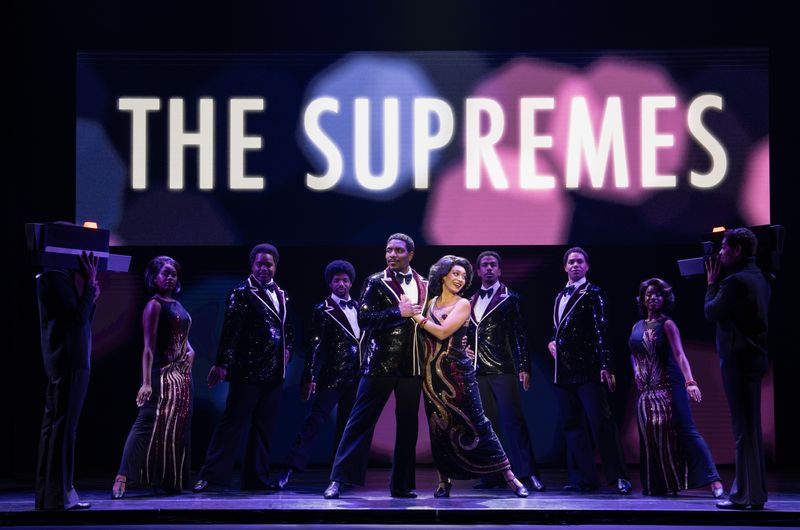
It might be hard for pop music fans to imagine, but not much longer than a half a century ago, the music business — and the airwaves — was very much in black and white.

For much of the 20th century, Black American popular music — though a fountain of inspiration for musicians everywhere — ran on a separate “race record” track from music aimed at white audiences.
All that began to change in the 1950s, as music labels found success marketing Black American stars to white audiences, and the civil rights era began to bridge the racial divide. A new generation of Americans became intent on breaking cultural barriers.
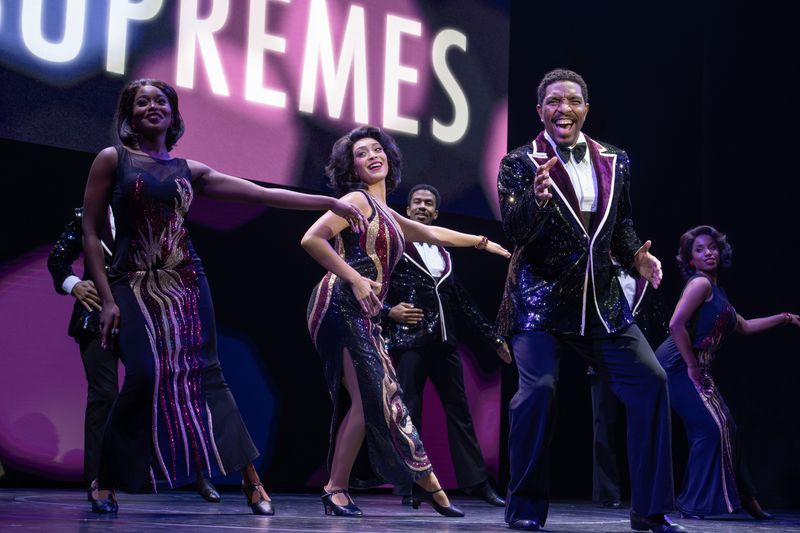
A big catalyst for that change was a small independent record label founded in Detroit in 1959. Motown Records introduced the nation to the Four Tops, the Supremes and to The Temptations, the group that may have provided the biggest cultural punch.
Their breakthrough hit was “The Way You Do The Things You Do,” in 1964, with Eddie Kendricks on lead vocals — a song written by Miracles members Smokey Robinson and Bobby Rogers.
What seems so natural today — five young Black men delivering soulful harmonies and sharp dance moves to multiracial audiences — was groundbreaking back then. On Tuesday, Palm Beach-area audiences will get a glimpse at the stories behind the transformative power of the era’s Black music and the movement that helped change American culture when a Tony-winning musical comes to the Kravis Center’s Dreyfoos Hall.
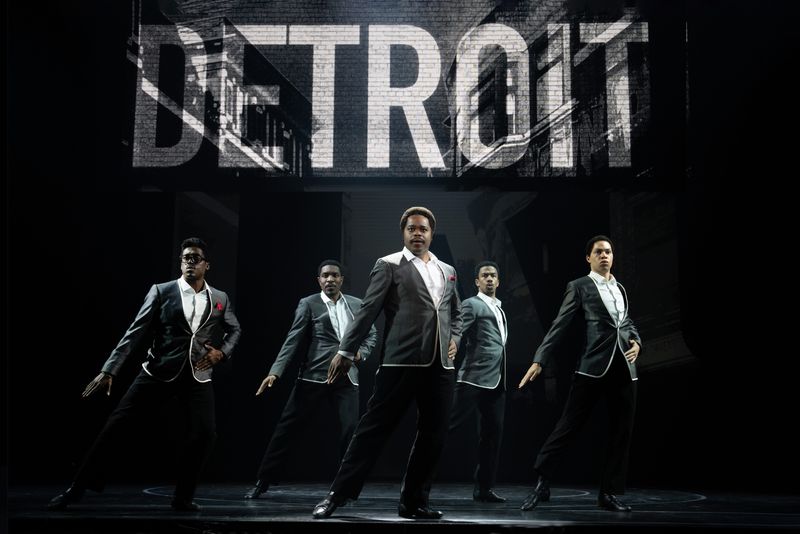
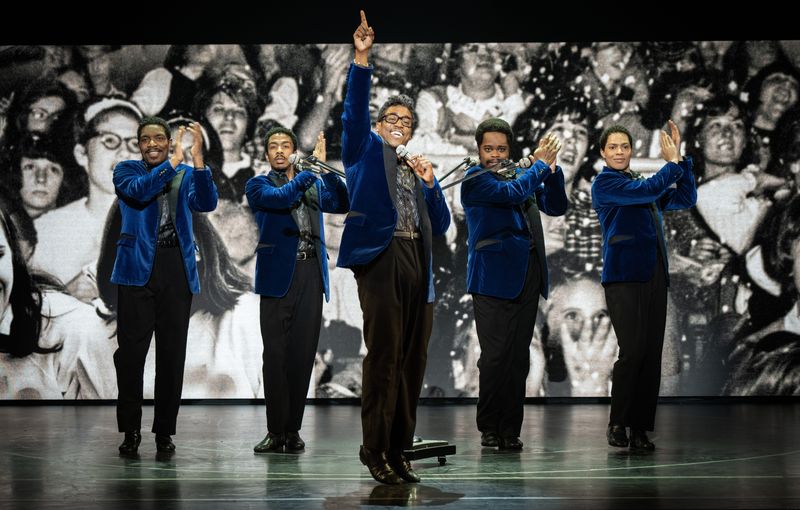
“Ain’t Too Proud: The Life and Times of the Temptations” tells the story of young Black men from Detroit who came of age during one of volatile times in U.S. history, when doors were just beginning to open for Black American artists, and how they created a lasting musical legacy. The Broadway jukebox musical documents their struggle for success and inclusion and their many hits — from “My Girl” to “Ain’t Too Proud to Beg,” “Just My Imagination” and “Papa Was a Rolling Stone.”
“The Temptations are such an integral part of the Motown sound,” said Rudy Foster, who plays Otis Williams, the sole surviving original member of the group. “It’s not just the story of Detroit and of Black America. It became the story of America — the sound of America.”
Based on the 1988 book by Williams, the musical recounts how the group started as The Distants before forming the classic 1960s group of Otis Williams, Melvin Franklin, David Ruffin, Eddie Kendricks and Paul Williams. They quickly drew attention for their harmony, style and dancing, particularly after joining the Motown label and working with choreographer Cholly Atkins, who worked with all of the label’s groups.
For Foster, 35, portraying Williams brings a chance to remind audiences of an important part of U.S. history, when the civil rights and feminist movements propelled young people into action and the war in Vietnam was a flashpoint. The Temptations released a string of successful albums from the mid- to late 1960s and the themes of those recordings changed with the times, from songs of love to “Ball of Confusion” in 1970, when protests against the Vietnam War reached a fever pitch.
“A lot of the songs are sort of a soundtrack for what was going on at the time and what was going on in the country,” said Foster, who grew up in Chattanooga and has been singing since he was a boy in church. “It’s important to keep that train going forward as you get into what was going on in the civil rights movement and in the ‘70s.”
The Temptations celebrated their 60th anniversary in 2022 and the current version of the band is still touring worldwide, performing for fans of multiple generations who remember the group’s music as an integral part of their lives.
The Motown sound is ubiquitous today. From modern political campaigns to movie soundtracks, commercials and society events, the hits from Detroit are a common frame of reference.
But in the 1950s, Black American music was not mainstream music for much of the country.
The music industry didn’t promote the music to the broader, mostly white, audience. Instead, white musicians would perform acceptable covers of songs by Black musicians for white fans. That explains The Kingsmen singing Richard Berry’s “Louie Louie” and Pat Boone singing Little Richard’s “Tutti Frutti.”
Things began to change starting in the mid-1950s, when Chess Records, considered a blues label, recorded Muddy Waters, Etta James, Chuck Berry and Bo Diddley. As soul and rock captured the imagination of young people, Atlantic Records cashed in on Black American music with hits by Otis Redding and Aretha Franklin.
In Detroit, Berry Gordy, a former boxer who had worked on the Lincoln-Mercury assembly line, recognized the success of those labels and saw music as a ticket to the mainstream. After founding Motown in 1959, he sought to market Black music to the widest audience possible with songs and an image that were palatable to white audiences, said Mark Anthony Neal, a professor of African and African American studies at Duke University.
At Motown, Neal said, Gordy envisioned the artists as “the sound of young America” and put artists through an etiquette school that would prepare them for international stardom, pushing a few acts to places where Black artists had never been before. “The idea was at some point the Supremes were going to meet the queen of England. At some point these artists were going to perform at the Copacabana. At some point they were going to be on ‘The Ed Sullivan Show,'” Neal said.
The Supremes were the flagship Motown act, and the Four Tops a marquee group, but the Temptations were perhaps far more important a cultural force, in large part because of the way they looked and carried themselves on stage. The group helped Motown to establish itself as cutting-edge Black style, Neal said, and make the look and sound of the label’s groups something fans would want to aspire to.
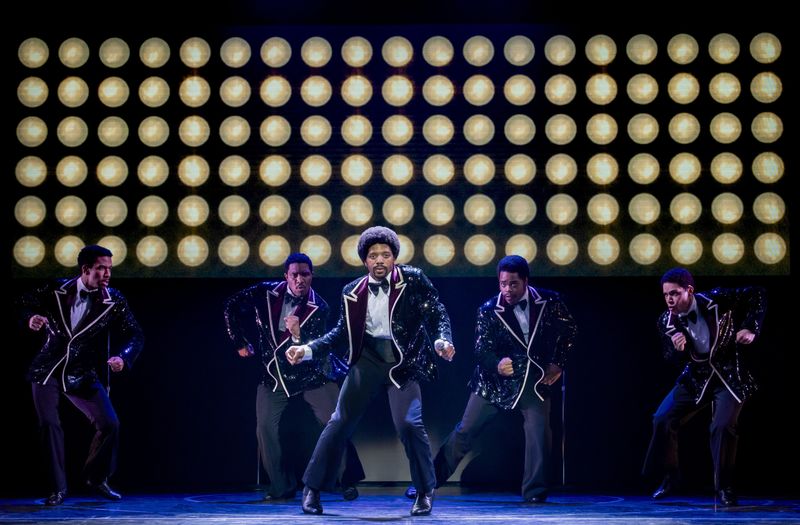
“The Temptations set a standard in terms of how folks wanted to carry themselves, how Black men wanted to carry themselves,” Neal said. “They moved with a certain kind of synchronicity and unison that was important to draw attention to the performance and not necessarily the bodies behind the performance.”
For Foster, who saw “Ain’t Too Proud” five years ago on Broadway, the show is moving because it reveals the relationship between young Black men, their joys and struggles. He’s enjoyed watching how people of different backgrounds respond to the music, each thinking of their own experiences. One fan told him he remembers singing the Temptations hit “I’m Gonna Make You Love Me” to a girl he was going to ask to the prom.
“We hit ‘My Girl’ maybe about 35 minutes into the show,” Foster said recently from Burlington, Vermont, a stop on the tour. “People do sing along to those numbers in the show. It’s wonderful to experience up close, that all over the country, people do have a great connection to this show.”
“Ain’t Too Proud” features a five-piece band recreating the music that the Funk Brothers performed to back most Motown recordings. Besides singing the Temptations’ hits, the biggest challenge for the cast was mastering the dance moves.
“It’s honestly a beautiful and stressful process all in one,” said Reyanna Edwards, who plays singer and record producer Johnnie Mae Matthews, who helped launch the Temptations, and singer Mary Wilson in the production.
“We’re dancing to award-winning choreography and wanted to keep the high standards just like it was done on Broadway,” Edwards said. “We put a lot of pressure on ourselves and we worked our butts off.”
Motown wasn’t just one label, but an umbrella of labels to suit different tastes among Black Americans. The Temptations long recorded on the Gordy label while Gladys Knight and Pips were on the Soul label.
That could owe to Motown’s efforts to compete with competitors like Stax Records, which fused rhythm and blues styles into its “Memphis sound” and was the musical home of Otis Redding and Isaac Hayes. It might also have been a response to critiques from some that Motown didn’t represent the fullness of the Black experience.
But the label’s handling of such tensions, and its innovations, paved the way for one of its biggest successes in the Jackson Five.
Edwards, 23, who first heard Motown’s music while watching the BET Awards as a child, agrees that the music of the Temptations was the blueprint.
“Without the Temptations we wouldn’t have Michael Jackson,” she said. “Without Michael Jackson we wouldn’t have all of the performers we have today. It’s really part of the foundation of Black music that we hear today. They’re all stapled to this.”
If You Go
What: “Ain’t Too Proud: The Life and Times of The Temptations”
When: June 24-29 at the Kravis Center for the Performing Arts. Show times vary. The June 24 show starts at 7:30 p.m.
Tickets: From $40.25. For information, call 561-832-7469 or visit kravis.org.
This article originally appeared on Palm Beach Daily News: A sweeter song: ‘Ain’t Too Proud’ brings story of the Temptations, Motown, to Kravis
Reporting by David Cazares, Palm Beach Daily News / Palm Beach Daily News
USA TODAY Network via Reuters Connect