

By Praveen Paramasivam, Sai Ishwarbharath B and Charlotte Van Campenhout
CHENNAI/BENGALURU/AMSTERDAM, July 20 (Reuters) – A. Shrinikheathan is breaking from his family’s tradition of studying in the United States, opting instead for a master’s degree in Germany.

The 22-year-old Chennai engineering graduate is learning German and taking a language proficiency test as he applies for courses, drawn by the low cost of studying in Germany and its traditionally strong industry links.
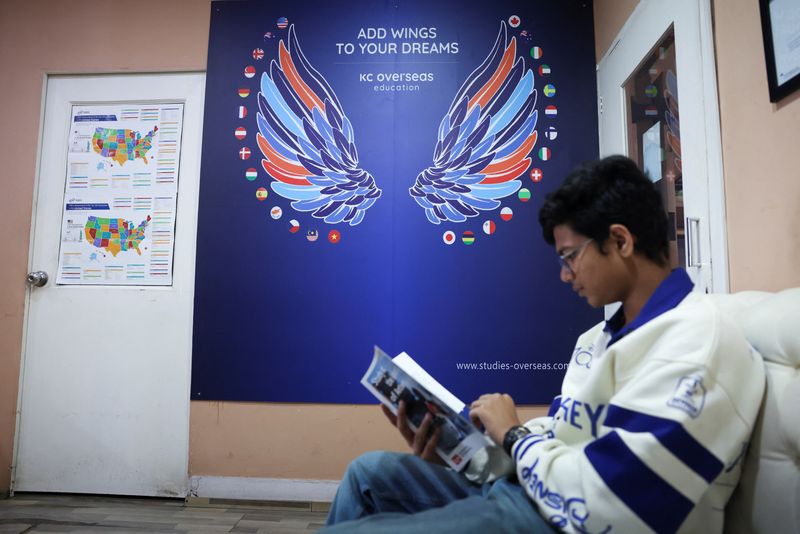
His decision reflects young Indians’ growing interest in European universities as the India-EU trade deal’s mobility provisions and tighter U.S. immigration rules prompt many to rethink the American Dream, a dozen students and education consultants said.
“The world is becoming more multi-polar. Earlier, the U.S. was all that everyone was talking about,” Shrinikheathan said, adding he was happy to have study choices beyond the “wildly more expensive” United States and Canada.
If sustained, the shift could reshape global student flows, with Europe emerging as a viable alternative to North America for Indian students as the EU seeks young talent to offset labour shortages from an ageing population.
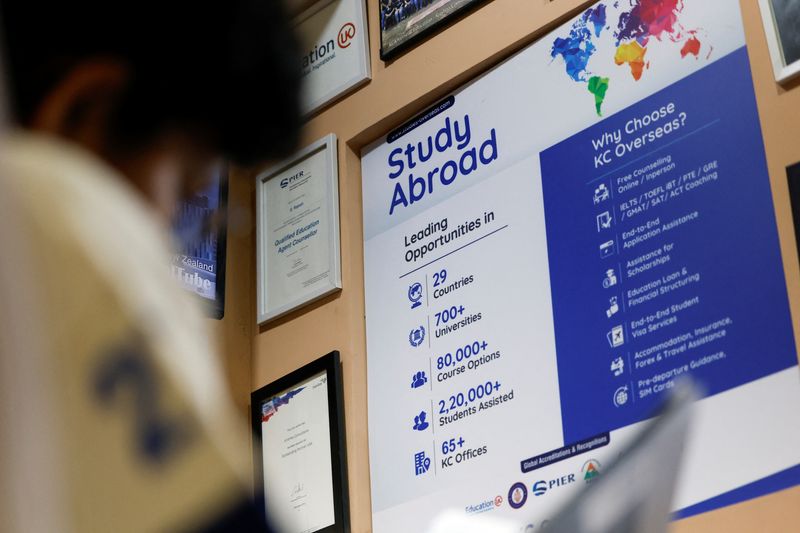
European tuition fees are typically 50% to 80% less than the U.S., according to education consultant KC Overseas, with lower living costs also reducing the bill.
“The European Union has become a leading destination for Indian students,” an EU official said in a statement to Reuters. “Indian students bring entrepreneurial spirit, cultural richness, and research excellence.”
He added: “(Indian students enrich) European campuses while deepening EU-India ties in innovation, trade, and diplomacy … this trend will continue to grow, benefiting Europe’s talent pool and India’s globally competitive workforce.”
India’s overseas student outflow fell to about 626,000 in 2025 from more than 908,000 in 2023, government data showed, with students wary of tougher visa rules and rising costs in the U.S. and other popular study destinations such as Australia and the UK. Last week, Washington moved to tighten the duration of visas for foreign students as part of a wide-ranging immigration crackdown that began after Donald Trump took office in January 2025.
WANTED: INDIAN TALENT AT SCALE
Indians’ interest in Europe has risen since the January trade deal, which aims to make it easier for students and skilled workers to move to Europe through easier visa pathways, clearer post-study work routes and improved recognition of Indian qualifications.
“The EU-India mobility framework is part of a broader set of initiatives aiming to make the EU a global magnet for attracting and retaining talent, including for Indian students and talent,” the EU official said.
“For the first time, a major economic bloc is saying, ‘We want Indian talent at scale’,” said Arnav Kumar, co-founder of study-abroad platform Leap.
India and the EU will work over five years on social security pacts with member states, initially setting up a tech-focused office to guide Indian students and professionals.
“Indian students have been growing in Europe without any overarching framework. Now, we have structured pathways from education to employment,” Kumar said, forecasting a 60% to 70% jump in student and worker flows over three to five years.
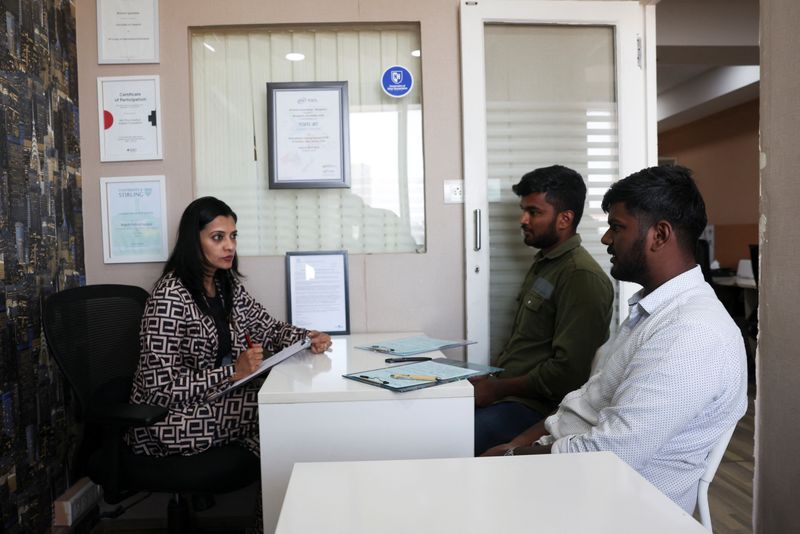
Consultants say students are increasingly matching destinations to career goals and lifestyle, choosing Germany for engineering, the Netherlands for work-life balance, Portugal for affordable postgraduate research and France for management.
The prospect of greater mobility across the EU and a growing number of English-language postgraduate programmes are also attracting Indian students and professionals to Europe.
Education consultancy Europe Study Centre has seen enquiries jump 25% to 30% since the trade deal, with director Sivaraman Pandian calling Europe the “red-hot destination” for families put off by rising costs and tougher visa rules elsewhere.
More than 121,000 Indians study in the EU, about half the U.S. total, but the bloc has steadily grown in popularity, emerging as a leading destination alongside the U.S., Canada and Australia, government data showed.
CHALLENGES APLENTY TOO
Challenges remain, however.
“If somebody says you will get a job in this country, don’t blindly believe it. Just because you studied in that country, it does not entitle you to get a job,” said Pandian.
“You study, and you develop a skill-set; your doors are open.”
Several students pointed to language barriers, housing shortages in major cities such as Amsterdam, intense competition for jobs, and the need for specialised skills.
Some others also acknowledged concerns about the rise in far-right political parties and hardening attitudes towards foreigners in parts of Europe, according to Reuters interviews and social media posts.
EARLY DATA SIGNALS EUROPE SHIFT
Still, Indian enrolment in the Netherlands climbed to about 3,700 in 2025/26 from 2,630 in 2018/19, making Indians the third-largest non-EU student group, Statistics Netherlands said.
Eindhoven University of Technology reported about 2,140 pre-enrolments from India for the coming academic year, up from roughly 1,390 a year earlier.
Leiden University’s Indian intake in regular master’s programmes, which are less demanding than its master’s by research courses, jumped to 120 this year from 70 in 2021.
Italy’s Padua University said partner agencies in India were reporting rising interest in Europe, including from regions that traditionally sent students to the United States.
However, whether the surge in interest translates into sustained enrolments will depend on how smoothly the agreement is implemented.
Chennai-based engineer T Suthir, who is exploring colleges in the Czech Republic and Italy, said perceptions were already shifting.
“Earlier, before the deal was finalised, my family was saying Europe is not good,” he said. “Now, they are saying it’s good.”
(Reporting by Praveen Paramasivam in Chennai, Sai Ishwarbharath B in Bengaluru and Charlotte Van Campenhout in Amsterdam; Additional reporting by Abhirami G in Bengaluru, Giselda Vagnoni in Rome, Bhanvi Satija in London and Saurabh Sharma in New Delhi; Editing by Dhanya Skariachan and Kate Mayberry)

By Praveen Paramasivam, Sai Ishwarbharath B and Charlotte Van Campenhout | Reuters | © Copyright Thomson Reuters 2026.
