

By Daniel Ramos and Cassandra Garrison
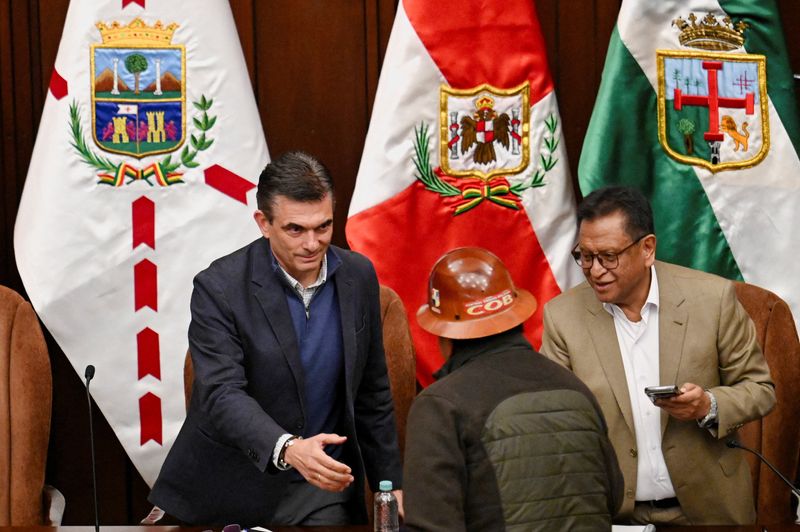
LA PAZ, June 19 (Reuters) – Bolivian President Rodrigo Paz on Friday reached a deal with the Bolivian Workers’ Confederation (COB), a step toward resolving a conflict that has paralyzed the country for 50 days.

Bolivians have faced long queues for fuel and challenges accessing food and medical supplies as a result of roadblocks during anti-government protests.
“I believe this is a ray of hope for all Bolivians,” President Rodrigo Paz said at a meeting inside the government palace in La Paz. “If we want to move forward, we must all work together. There are no owners. Everyone must play their part.”
“There is a country waiting for white smoke to appear today,” COB’s executive secretary Mario Argollo said, noting the agreement marked a first step to pacifying the country.
“We believe we must begin to iron out our differences; we must start building a country based on consensus, with workers participating in the decisions,” he added.
The conflict began with a workers’ strike in May that escalated into highway blockades which cut off access to the neighboring cities of La Paz and El Alto, home to some 2 million people.
Protesters, including labor unions and groups loyal to former leftist President Evo Morales, demanded Paz’s government roll back austerity measures and address rising living costs.
The agreement is far from the end of the conflict, however, as many roads connecting the South American nation’s main production center are under the control of rural associations aligned with Morales, who were not a part of the negotiations and are continuing to protest mainly in the area of Cochabamba, calling for Paz to step down.
One rural federation known as Tupac Katari, one of the most powerful such unions in the La Paz highlands, said it will continue its pressure tactics until the government addresses its demands, which include the release of prisoners detained during protests, respect for Indigenous organizations and responses to the economic crises their communities face.
The protests have sent the cost of living spiraling, with many truck drivers unable to transport food to markets and hospitals struggling to obtain medicines and other key supplies.
At least 14 people have died according to an ombudsman report as of Friday, including patients unable to get to hospital and transport workers who had medical emergencies.
(Reporting by Daniel Ramos and Cassandra Garrison; Editing by Alistair Bell)
By Daniel Ramos and Cassandra Garrison | Reuters | © Copyright Thomson Reuters 2026.
