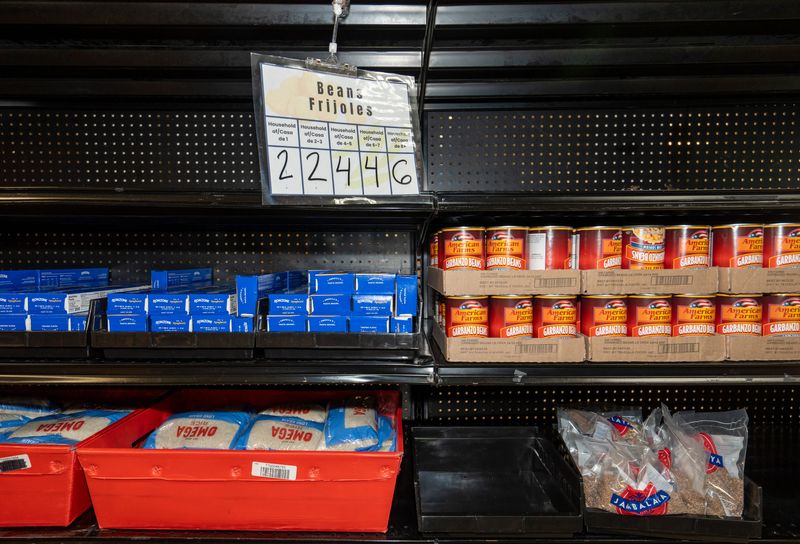
Every Wednesday is busy at WestCare Wisconsin when the Harambee-based food pantry opens to the public. But the line of more than 100 people waiting for food wrapped around the block Oct. 29.
The week before, roughly 20 fewer households came to them for help, said WestCare program director Felicia Williams. People who rely on federal food assistance payments are afraid ― and when the Milwaukee Journal Sentinel spoke with volunteers and community stakeholders Oct. 30, time appeared on the verge of running out.

For the last two weeks, Wisconsin Department of Health Services notified FoodShare recipients there’d be delays to benefits starting Nov. 1. But on Oct. 31, the eve of the disruption of benefits, two federal judges, U.S. District Judge John J. McConnell in Rhode Island and U.S. District Judge Indira Talwani in Massachusetts, ruled the Trump administration must distribute federal food assistance benefits to all 42 million SNAP recipients “as soon as possible,” McConnell said.
It remains unclear, however, when the funds will reach recipients. And the need for food services will likely continue, as Wisconsin’s nearly 700,00 FoodShare recipients will not see their benefits renew as usual Nov. 1.
In the face of that uncertainty, food pantries across Milwaukee have been working at a higher capacity as lower-income families scramble to get food on the table amid FoodShare delays. Milwaukeeans who rely on FoodShare benefits, Wisconsin’s food assistance program, told the Milwaukee Journal Sentinel they have to somehow make remaining October balances stretch into November. But how long they must make do is anybody’s guess.
Even with the two U.S. District Courts’ order, federal food assistance payments will not go out as scheduled on Nov. 1 as the U.S. government shutdown drags on.
All of Wisconsin’s FoodShare funds come from the federal government’s food stamp program, also known as the Supplemental Nutrition Assistance Program (SNAP), which is overseen by the U.S. Department of Agriculture.
Feeding America Eastern Wisconsin has supplied food to nearly 400 food pantry partners and represents the largest food bank in the state. But Matt Stienstra, director of Advocacy and Community Engagement for the organization told the Journal Sentinel editorial board that those contributions “don’t hold a candle to power the FoodShare program.”
“For every one meal we provide, the FoodShare program provides nine. And when benefits are delayed, it means thousands of more people are going to be going to another local pantry,” he said.
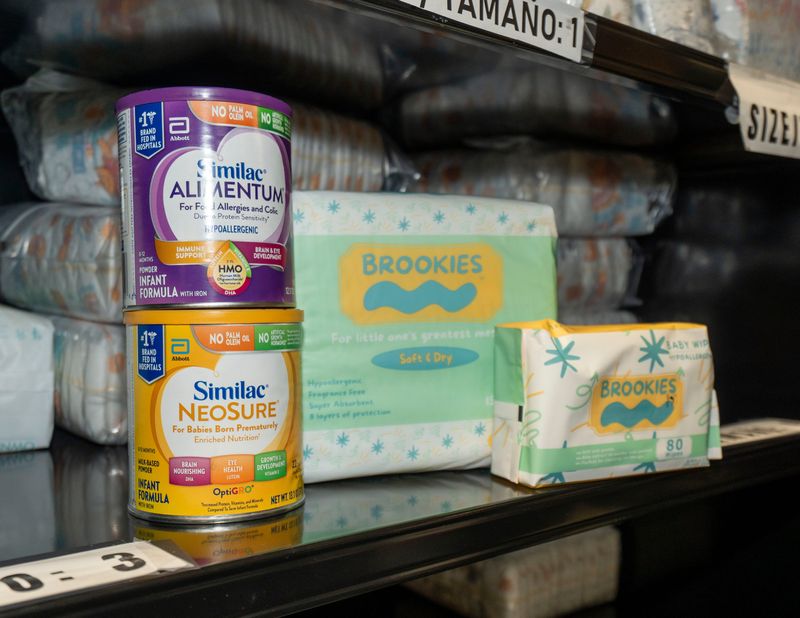
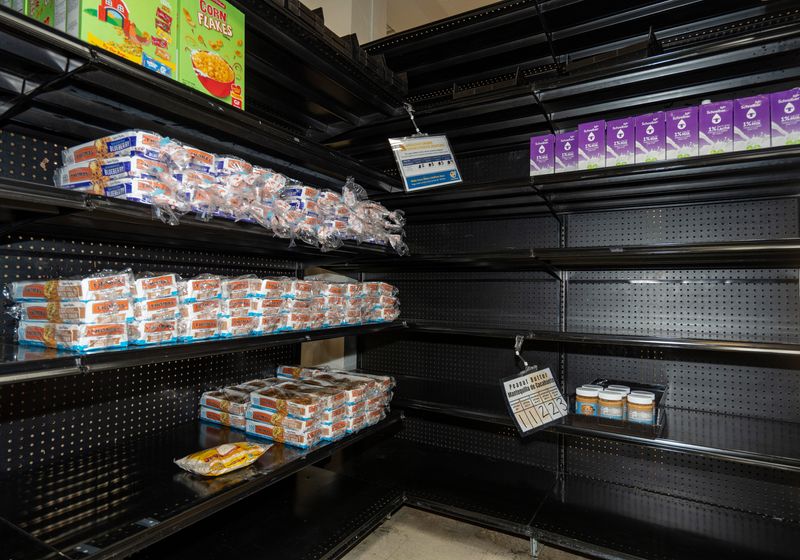
Still, food pantries remain focused on keeping their shelves stocked and families fed.
“We are not going to let any families go hungry,” Felicia Williams said.
At the El-Bethel Church food pantry, meanwhile, volunteers said they’ve seen three times as many people come in this week. On Wednesday alone, about 300 people came out for an event hosted in the church’s parking lot. They handed out toys, clothes and food.
“There’s been a big surge,” said Deacon Reginald Wallace, who serves as a supervisor at the pantry.
Just up the road from WestCare Wisconsin, Harambee resident Doris Williams loaded her cart on Oct. 30 with food items at Solomon Community Temple. Doris Williams relies on FoodShare funds and worries, like so many others, she will not have enough money in her account to make it through November.
“I just pray to God that they can put my stamps (benefits) back on,” Williams said ahead of the district court ruling.
Billie Burton, Solomon Community Temple’s food pantry coordinator, is concerned for the community members she sees regularly when the pantry opens every Thursday from 1 p.m. to 3 p.m. The number of people who have come to the pantry in the last two weeks has nearly doubled.
Despite the higher number of people looking for food assistance, Kimberly Burton, a pantry volunteer, said the pantry should have enough resources for anyone who comes. If they are unable to help, they can direct them to other nearby resources so they can get what they need.
Kimberly Burton described the pantry as an emergency pantry, where locals come once a month for a box of food filled with canned goods, meat, vegetables and other assorted items.
Most come to the food pantry when they run out of options; others make it a monthly trip.
And that’s the people who have the ability to show up. Billie Burton said she’s also nervous for those who do not utilize pantries at all.
More than one-third of FoodShare participants are in families with elderly or disabled adults, according to the Center on Budget and Policy Priorities. Many of the disabled adults ― and children ― Jill Jacklitz works with at Disability Rights Wisconsin have no means of getting to Milwaukee’s food pantries.
“The ability of people with disabilities to get to food pantries, there are all the compounding barriers,” said Jacklitz, executive director of Disability Rights Wisconsin.
What can members of the community do?
Meanwhile, food pantries in suburban communities like Sussex are also feeling the pressure.
According to Jennifer Waltz, executive director of Sussex Outreach Services, the food pantry added 10 new households within the past week, “which is a lot for us.” Sussex Outreach Services generally serves about 105 households a week and about one to two new households in a given week.
The Sussex pantry is working on getting the word out to people who may need food support. And the community has started donating food, too.
Waltz said they are looking for toiletries, rice, oatmeal, hamburger helper, peanut butter and jelly. Additionally, more people may be baking more with the holidays ahead, requiring baking ingredients such as vegetable oil, flour and sugar.
In Milwaukee, Vivent Health’s food pantry on North 6th Street bustled with volunteers and those in need when the Journal Sentinel visited on Oct. 30. The pantry, although well-stocked, could always use donations of non-perishable items and financial assistance, said Cindy Cooper, Vivent Health’s vice president of strategic communications.
In a press release Oct. 31, Milwaukee County Executive David Crowley said the county and city of Milwaukee are collaborating on a unified food drive in partnership with Nourish MKE and Feeding America Eastern Wisconsin. The food drive will continue until FoodShare benefits are restored.
Bins to donate non-perishable foods will be placed throughout Milwaukee at the following locations:
A map of food pantries, soup kitchens, where to get infant formula and senior stockboxes, among other resources, across Milwaukee County is available here.
Laura Schulte, of the Milwaukee Journal Sentinel, contributed to this report.
This article originally appeared on Milwaukee Journal Sentinel: ‘We’re not going to let families go hungry’: Food pantries focus on feeding community amid FoodShare delays
Reporting by Natalie Eilbert, Everett Eaton and Cathy Kozlowicz, Milwaukee Journal Sentinel / Milwaukee Journal Sentinel
USA TODAY Network via Reuters Connect