On April 18, I stood outside Ridglan Farms in Dane County with roughly 1,000 other people from Wisconsin and all over the country — a motley crew of grandparents, teachers, veterans, firefighters, students, and people like me: a rule-following desk jockey.
We weren’t there to protest from a distance. We were there to openly and nonviolently remove dogs from a facility where a judge had found probable cause of criminal abuse.

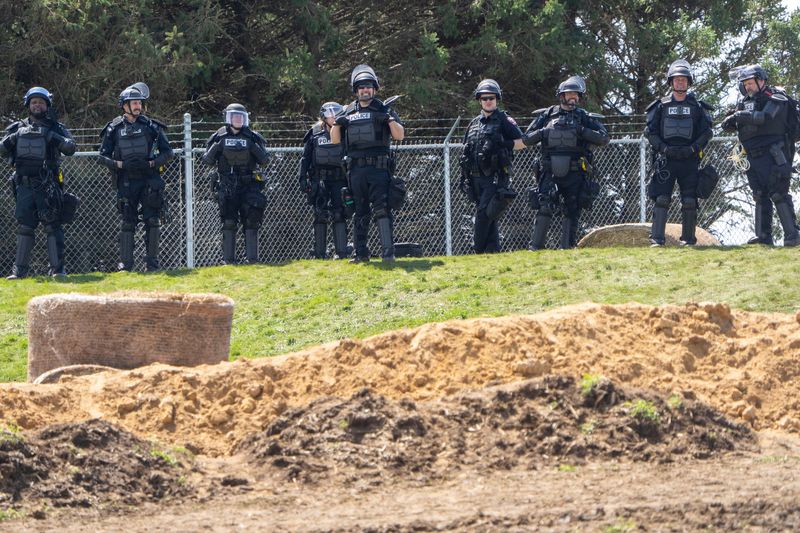
We were met with tear gas, rubber bullets, and hundreds of state and local police, many in riot gear. Multiple times that day, I would find myself doubled over, crying, my eyes and throat burning from the chemicals. I saw people kicked, pepper-sprayed, and shot with rubber bullets.
Why would so many people feel compelled to risk arrest — and serious injury — to rescue dogs?
Rescue based on principle of freeing dog locked in hot car
Imagine you see a dog locked in a hot car at risk of dying from overheating. After failing to find help, you break the window to save her.
Most people wouldn’t call that a crime. They’d call it a rescue — a dog’s life matters more than a car window.
The law generally reflects that concept. Many states, including Wisconsin, recognize that property damage may be justified to prevent serious harm to an animal.
Should that change when there isn’t just one dog in danger — but thousands?
Ridglan Farms is a facility that breeds and sells beagles for science experiments. Animal testing, however disturbing, is legal — and that alone wouldn’t have brought me to Wisconsin (remember, I’m a rule-follower).
What brought me there were reports of abuse that go beyond what the law allows.
In just two weeks in 2022, state inspectors cited Ridglan Farms with over 300 violations of animal cruelty laws. In 2025, a judge found probable cause of felony abuse, including employees surgically removing dogs’ vocal cords and parts of their eyes—without painkillers or veterinary supervision.
This systemic abuse occurred because, as the USDA’s own audit found, penalties for violating animal cruelty laws at breeding and research facilities are “basically meaningless.” As a result, facilities like Ridglan break the law as a matter of standard practice.
After years of misconduct, a special prosecutor threatened Ridglan with felony charges for mutilation of dogs, which later resolved in a settlement: To avoid prosecution, Ridglan agreed that by July 2026 it would relinquish its license to breed dogs for sale.
And yet, under that same agreement, Ridglan could keep, sell, and experiment on the roughly 2,000 dogs it had—and continue breeding more for its own experiments.
But if a facility facing felony abuse charges must give up its license to breed and sell dogs, why is it still allowed to keep them — and keep breeding more?
I have a dog at home. She’s part of my family — loyal, loving, and a source of immense joy. When I learned about the conditions of the Ridglan beagles, I couldn’t stop thinking about her — and what it would mean if she were trapped in those conditions.
On April 18, that disconnect became impossible to ignore.
People across political spectrum have spoken out against Ridglan
The force used against us was striking—but more striking was what it protected: not public safety or vulnerable animals, but a facility facing credible allegations of criminal abuse.
After hours of attempts, injuries, and two dozen arrests, we left Ridglan Farms, unable to rescue a single dog. That was devastating.
Yet in the days since, support has come from across the political spectrum. Fox News anchor Tomi Lahren called Ridglan a “torture chamber.” Wisconsin democratic gubernatorial candidate Francesca Hong said that she would “make sure a facility like Ridglan never operates in the shadows of state inaction again.” The president’s daughter-in-law Lara Trump, and Ridglan’s own democratic representative Mark Pocan, have both called for the release of the dogs.
Two animal rescue organizations have even stepped up to purchase 1,500 of Ridglan’s beagles and place them in loving homes. As for the remaining 500 dogs, Gov. Tony Evers and Attorney General Josh Kaul should act now to immediately remove them from harm and hold Ridglan accountable.
Families across the country have already stepped forward to offer the Ridglan beagles loving homes. Rescues are ready. All that’s missing is the decision to let them go.
Michael Freeman is a Los Angeles-based writer and volunteer focused on animal and environmental issues. Visit savethedogs.io to petition Wisconsin officials to rescue the dogs.
This article originally appeared on Milwaukee Journal Sentinel: We tried rescuing the dogs from Ridglan Farms for a reason | Opinion
Reporting by Michael Freeman, Special to Milwaukee Journal Sentinel / Milwaukee Journal Sentinel
USA TODAY Network via Reuters Connect