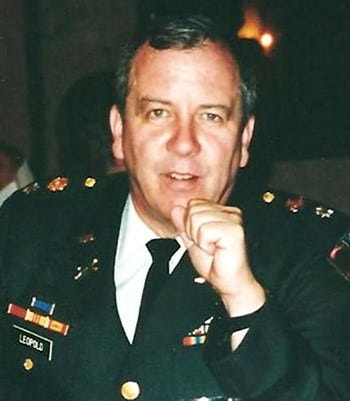
Milwaukee’s Col. Stephen R. Leopold survived nearly five years as a prisoner of war in Vietnam. He came home, traveled the world, entered politics, became a lawyer and spent the rest of his life advocating for veterans who he argued deserved more. He died April 7 at age 81.

Leopold was born June 19, 1944, in Jefferson City, Missouri. He grew up in Oklahoma City, before moving to Wisconsin as a teenager. He graduated from Shorewood High School and went on to Stanford University, where he graduated with honors and edited the student newspaper, according to his obituary.
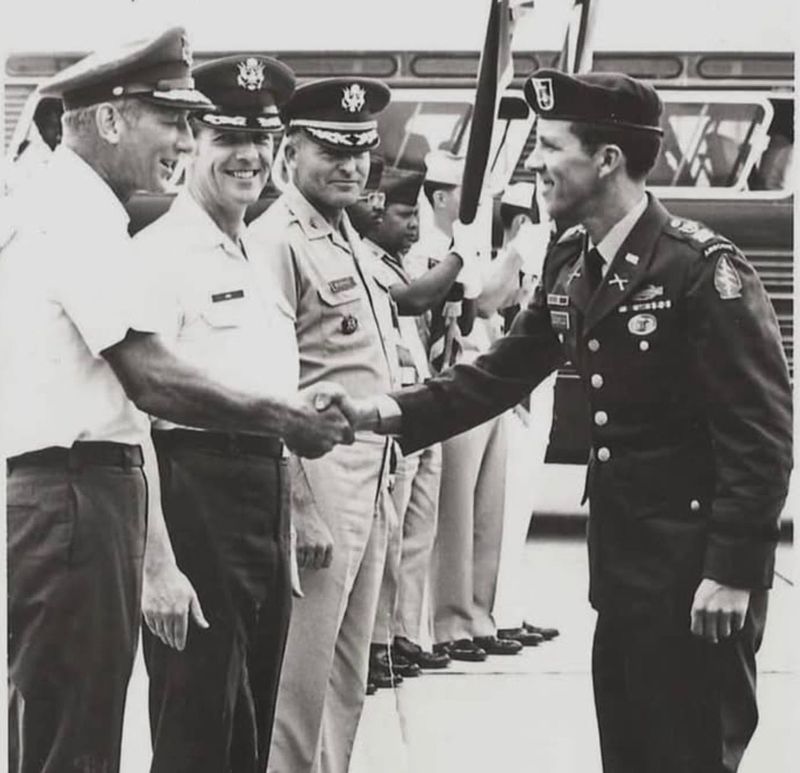
Shortly after his 22nd birthday, Leopold entered the Army. He completed airborne and Special Forces training before deploying to Vietnam.
On May 9, 1968, his obituary says, he was captured by the North Vietnamese Army near the Central Highlands of South Vietnam.
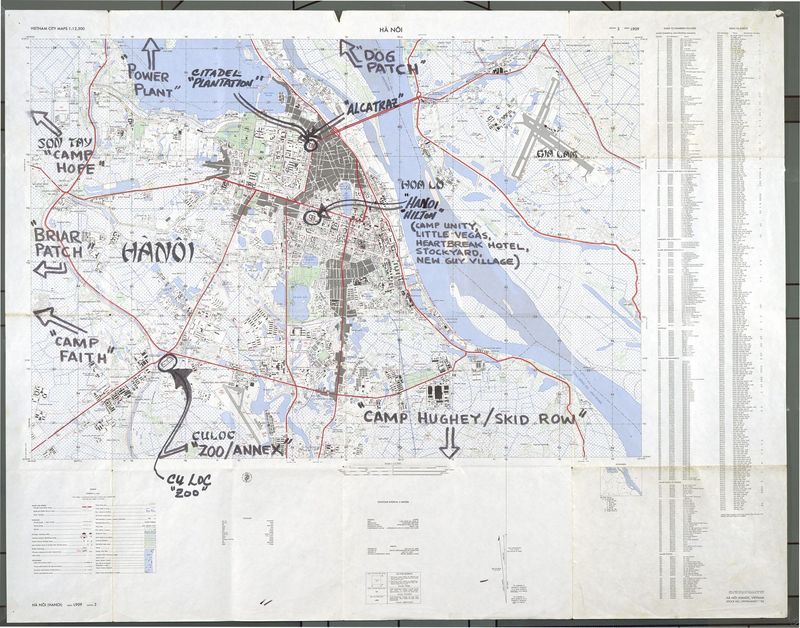
He was taken first to POW Camp 101, a facility 20 miles outside Hanoi where, according to a 2011 article in War Tales, roughly 100 American soldiers were being held without the knowledge of the U.S. military or their families.
He would spend time in two more camps, including the notorious Hanoi Hilton, known for its brutal conditions.
He was released March 5, 1973, after nearly five years in captivity.
According to his obituary, Leopold had an “eidetic memory,” sometimes known as a photographic memory. During his imprisonment, he used it to document the names, dates and movements of prisoners – including soldiers listed as missing in action – across the camps where he was held.
Returning POWs were often the military’s best source of information about who had been captured or killed, according to a U.S. Army account of Operation Homecoming, because so many had memorized the names of prisoners who passed through the camps.
Military Times’ Hall of Valor records that Leopold earned a Bronze Star for secretly compiling a list of prisoners while captive, hiding the documents and smuggling them past guards when he was released – information that helped account for soldiers whose families had no idea where they were or whether they were alive.
Among his many military honors, he received a Silver Star for his conduct as a prisoner, as well as two Purple Hearts.
“My POW experience was the most educational thing that ever happened in my life,” he later said in an oral history interview archived by the Library of Congress.
When he came home, he channeled that experience into everything that followed.
Back in Milwaukee, he worked as a teaching assistant at the University of Wisconsin-Milwaukee and entered local politics.
He was elected to the Wisconsin State Assembly in 1976, serving three terms, and sat on the Veterans and Military Affairs Committee, where he worked to represent returning soldiers.
In a statement included in his obituary, Leopold said the country owed its disabled veterans at least as much as it owed its former prisoners of war.
“If we as prisoners sacrificed years, they sacrificed limbs,” he said. “Their rewards should at least equal ours.”
He later earned a law degree from Marquette University. For years he worked as a defense attorney in Milwaukee, handling both adult and juvenile criminal cases, while remaining in the Army Reserve.
He was promoted to colonel before retiring from the Reserve in the late 1990s.
In retirement, he remained active with his local Special Forces chapter and the Disabled American Veterans, volunteering to drive transport vans to bring disabled veterans to VA appointments.
“He was an even better person than he was a soldier,” said his son, Christopher Leopold.
To his three grandchildren, he was Grandpa Steve.
His obituary describes him taking his grandchildren to Milwaukee Brewers games, the zoo, the symphony, the ballet and the Wisconsin State Fair – and to Arlington Park Race Track to bet on the horses.
Stephen Leopold was a lifelong Brewers fan who received a lifetime pass from Major League Baseball for his service, his son said. He made sure his great-granddaughters attended their first Brewers games within the first two months of their lives.
He also brought all three grandchildren along on donation drives benefiting disabled American veterans, pairing the adventures with a lesson in perspective.
He is survived by his children, Christopher and Ellen Leopold and Cassandra and Allain Daigle; his grandchildren, Noah, Analeigh and Maxine; his great-grandchildren, Lianiese and Mona; his niece, Sager; and numerous friends from his military service and his years as a winter resident of Puerto Vallarta, Mexico.
Quinn Clark is a Public Investigator reporter for the Milwaukee Journal Sentinel. She can be emailed at QClark@gannett.com.
This article originally appeared on Milwaukee Journal Sentinel: Vietnam POW who smuggled prisoner records, Stephen Leopold, dies at 81
Reporting by Quinn Clark, Milwaukee Journal Sentinel / Milwaukee Journal Sentinel
USA TODAY Network via Reuters Connect