MADISON – In a few short weeks spring will arrive and our lawns will start to green up again, reminding us of a chore we may have pushed to the back of our minds during winter – mowing the lawn.
The average American spends about 70 hours a year on lawn care and maintenance, according to Green Pal. This breaks down to roughly 30 to 45 minutes of mowing per week during the five-month growing season, with some estimates indicating two to three hours of total yard work per week. Those with bigger properties invest even more valuable time.

What if you never had to physically mow your lawn again? That sounds like an attractive option and one that is fully in reach thanks to technology. Enter robotic lawnmowers. The virtually controlled lawnmowers not only frees someone from mowing their lawn, but has little to no environmental impact.
Are robotic lawnmowers something new?
Not really. The first robotic mower, dubbed the MowBot, debuted in the U.S. in 1969. Over the ensuing decades, robotic mowers would evolve from needing a boundary wire to keep the machine on course to using real-time Kinematic Base Station guidance and GPS technology.
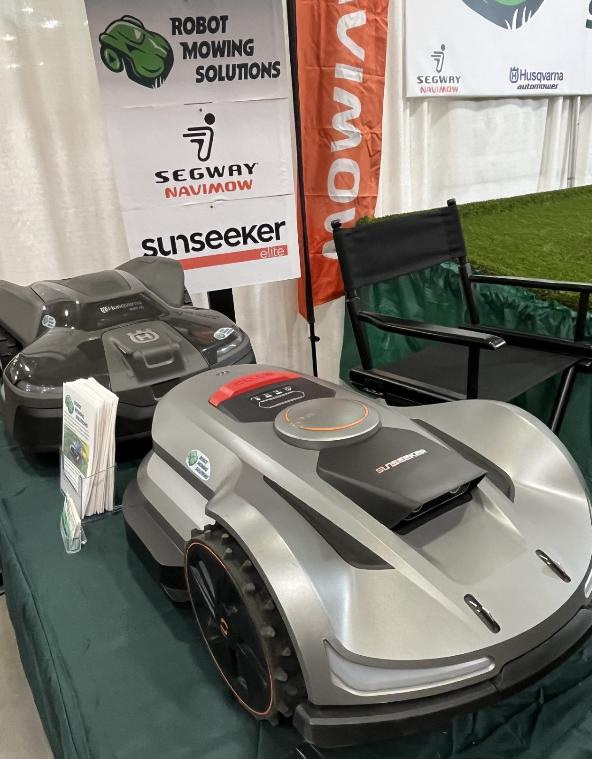
Like a giant Roomba vacuum cleaner, a technician from a dealership maps out the property boundaries and all obstacles, including trees, gardens, fire pits, structures and swimming pools. The antenna and base station [where the robot docks and recharges] will also be set up.
Of course, owners need to scout the lawn for small debris, like small branches, before each mowing session.
“The mower also has other ways of identifying those obstructions with cameras on the front and slopes using sensors and other detection methods,” said Philip Thompson, lead installer for Robotic Mowing Solutions of Madison.
Safety features include obstacle sensors to help mowers avoid people or pets, and tilt and lift sensors that instantly stop the blades if a mower is picked up or tipped over.
What demographic do robotic mowers appeal to?
Some love spending time outside on the weekends sporting headphones and breathing in the scent of fresh-cut grass as they zoom around the yard atop their gas-powered lawnmowers, while some resort to hiring a lawn service or the kid next door. The third option is to get the lawnmower to cut the lawn for you.
Thompson says robotic mowers appeal to a wide demographic of consumers, from those with physical limitations to retirees, tech-savvy users interested in smart home technology, and time-constrained users who have better ways to spend their free time.
“We see a lot of young professionals who have plenty of money but no time,” Thompson said. “And there are those looking for quiet, emission-free electric alternatives to gas mowers.”
Those with allergies to dust, grasses and pollens kicked up by conventional mowers may also opt for the smaller machines.
“A conventional mower has a suction to draw grass up and then it cuts it off and sprays all your clippings into the air,” Thompson said. “The robotic mower cuts around a quarter-inch off and instantly drops it into the lawn.”
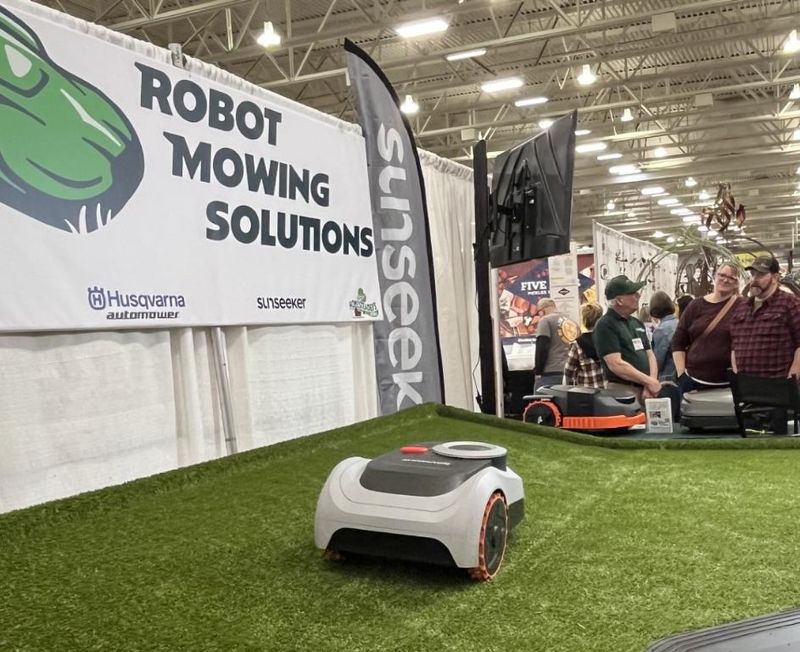
Consumers are purchasing models from brands like Husqvarna, Segway, Mammotion, Worx and Eovax. The market is expanding into professional and commercial applications, with significant growth in autonomous, wire-free solutions.
Sales and capabilities of robotic mowers are on the rise
Thompson says the market for robotic mowers has increased over the years. According to JdC Garden Trends, in 2021, the size of the global robot mower market was estimated $1.5 billion and is expected to rise to $3.9 billion by 2027.
Robotic mowers come in varying sizes depending on the property owners’ needs. Smaller mowers priced around $1,000 with a cutting width of approximately 7 inches and weighing around 25 pounds can easily handle a typical city lot, and require a charge after two hours of mowing. Larger models with higher-end technology can easily handle a 2- to 4-acre lot with uneven terrain and can range in cost from $2,800 to $7,000. As the technology becomes widely available, robotic mowers are also becoming more affordable.
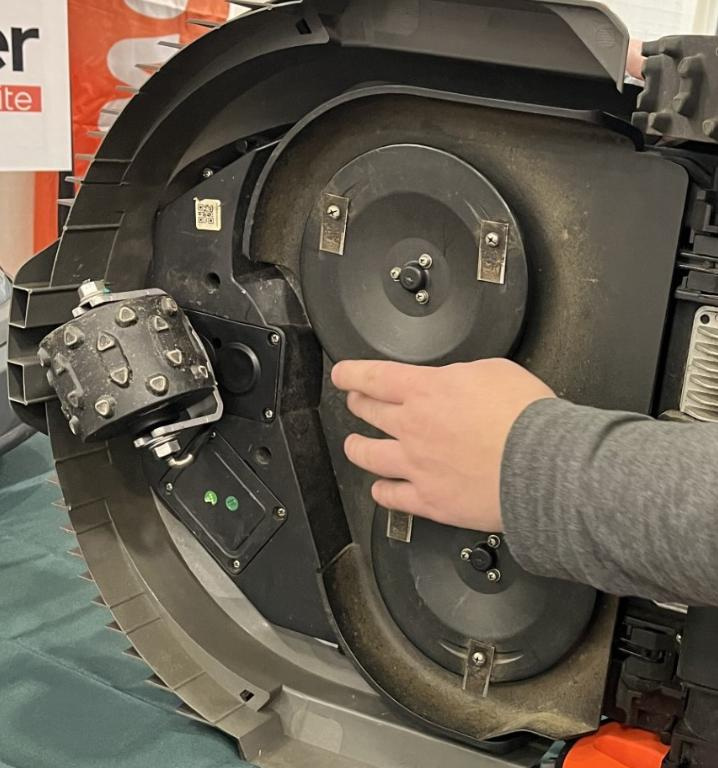
Many program their lawnmowers to run on a 24-hour cycle. Most robotic mowers use small, pivoting razor-like blades attached to a spinning disc to cut grass rather than a single, large rigid blade. The lightweight blades act like a razor, shearing only the top ⅛-inch off. By trimming grass frequently and finely, Thompson says it encourages grass density and reduces conditions favorable for weeds. Manufacturers recommend blade replacement every few months to maintain cut quality. A set of replacement blades cost about $10.
Most robotic mowers use relatively little electricity, typically between 0.5 to 2kWh per week, or around $15 to $20 annually at average rates – a fraction of the fuel cost for gas mowers. A battery replacement is needed every two to three years ($100-$300). According to Consumer Reports, a well-maintained robotic mower can last eight to 10 years or longer.
Robotic lawnmowers in Wisconsin can be purchased through specialized dealers and major retailers, with options for professional installation. Top local dealers include:
This article originally appeared on Wisconsin State Farmer: Tired of mowing? Robotic lawnmowers offer a quiet, emission-free solution
Reporting by Colleen Kottke, Wisconsin State Farmer / Wisconsin State Farmer
USA TODAY Network via Reuters Connect