MADISON – In the wake of World War I, the 1920s earned their roaring reputation in the United States as the decade brought a flush of cultural change, prosperity and optimism.

Cars began replacing horse-drawn buggies, more homes enjoyed electrical power.
The way the country received its news and information was being transformed, too, with printing becoming faster and radios in most households.
But with little to no regulation of environmental matters such as taking of wildlife, the country’s natural resources were being depleted and degraded at an astonishing rate.
And in a trend that mirrors current social media and cable television troubles, misinformation was becoming common.
“(W)riters who had won their spurs through experience griped at the counterfeit, the phony and the bunkum which crept into so-called outdoors columns and magazine articles as well,” according to a description of the 1920s journalism landscape by Jimmy Stuber in the Pittsburgh Press. “The reading public was being duped by pikers, quack writers and clip artists.”
So on April 9, 1927 a group of eight concerned professionals decided to form the Outdoor Writers Association of America.
Gathered for the annual Izaak Walton League convention in Chicago, they signed their pledges on the back of a banquet menu and set their sights on a new standard in outdoor communications.
The OWAA founding members were: Morris Ackerman of Cleveland, Ohio; Peter P. Carney, Bridgeport, Conn.; Hazel Clements, Chicago; Cal Johnson, South Bend, Ind.; Jack Miner, Kingsbury, Ontario; Buell A. Patterson, Chicago; Walter Shelley Phillips, also known as “El Comancho,” Chicago; and Edward G. Taylor, Chicago.
The organization accepted only vetted, accredited writers for membership. It created a regular newsletter for its members and held an annual conference, mostly in the U.S. but also in Canada and Mexico. It sometimes lobbied issues and always provided fellowship and resources for writers and other outdoor communicators.
It worked.
The organization grew to become the largest group of its kind in North America.
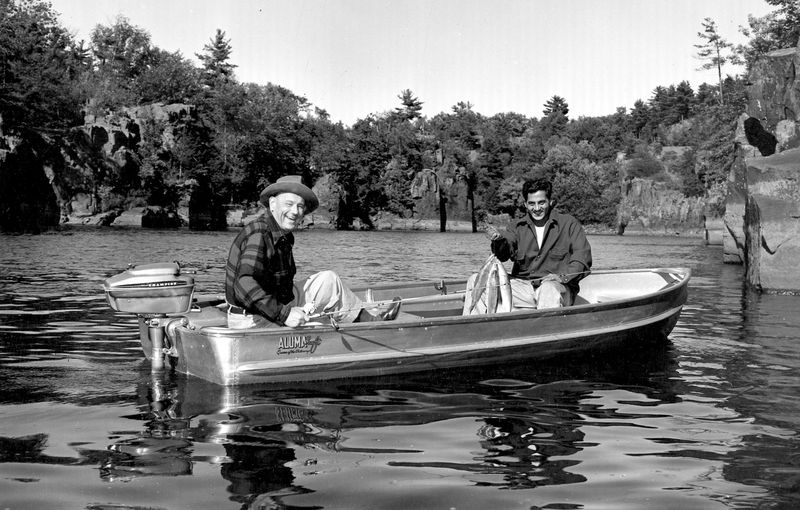
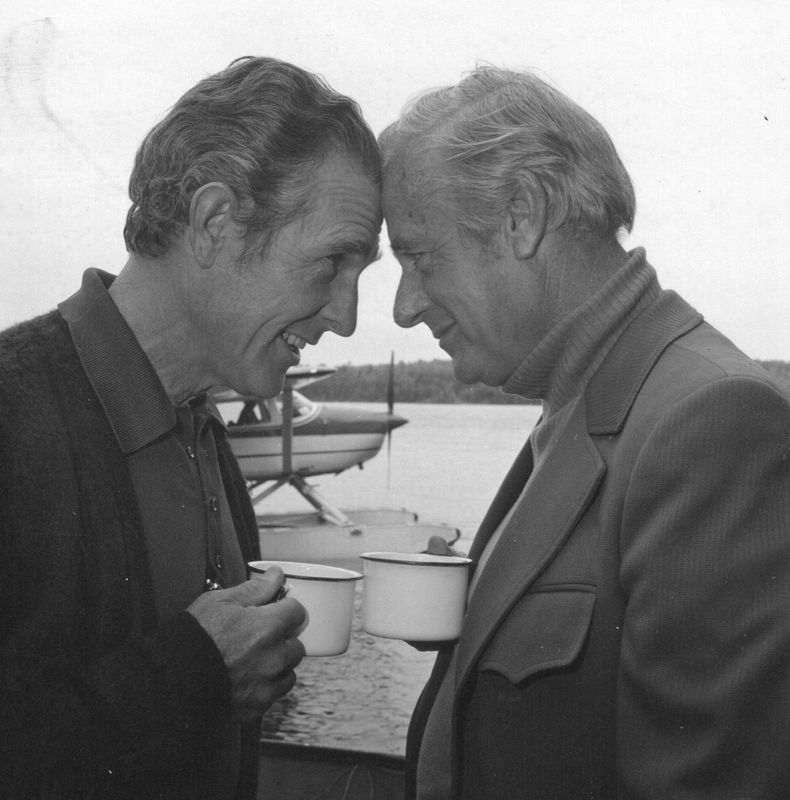
Its Wisconsin-linked members have included luminaries Sigurd Olson, Gordon MacQuarrie and Don Johnson. Other famous members have included Fred Bear, Nash Buckingham, Homer Circle, Ding Darling, Grits Gresham, Curt Gowdy, Olaus Murie and Joan Wulff.
And as OWAA gathers for its 2026 conference in Madison from Aug. 22 to 24, the organization will celebrate a remarkable 100-year history.
As full disclosure, I’ve been an OWAA member since 1994, the year I joined the ranks as a newspaper outdoors writer with The Journal Times in Racine. As a young and relatively inexperienced writer, I wanted to learn from and collaborate with the best in the industry.
At my first conference, Don Johnson, then the recently-retired Milwaukee Sentinel outdoors writer and one of my heroes, walked up to me and introduced himself. We developed a friendship and corresponded often over the years about issues.
In 2001 OWAA awarded me the John Madson Fellowship and I studied writing that summer at Sterling College in Vermont.
Later I served a term on the OWAA board of directors and also several years as chairman of Newspaper Section and the National Affairs and Environment Committee.
Rubbing elbows with professionals working in the same field has taught me much.
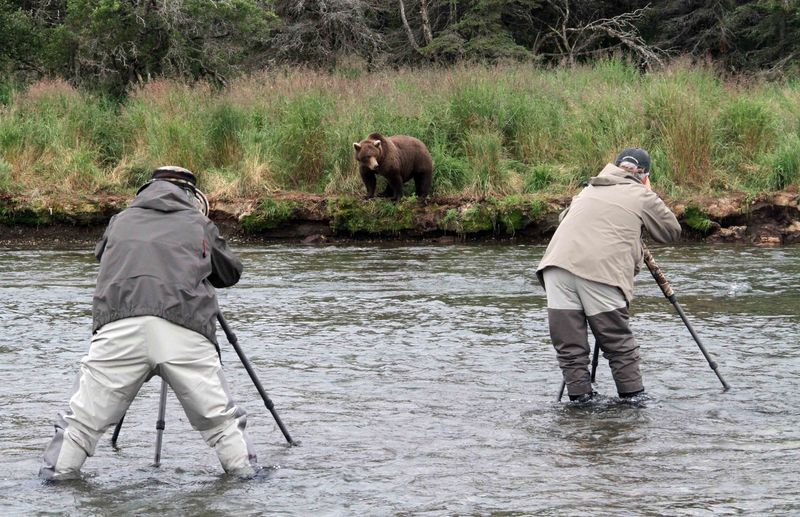
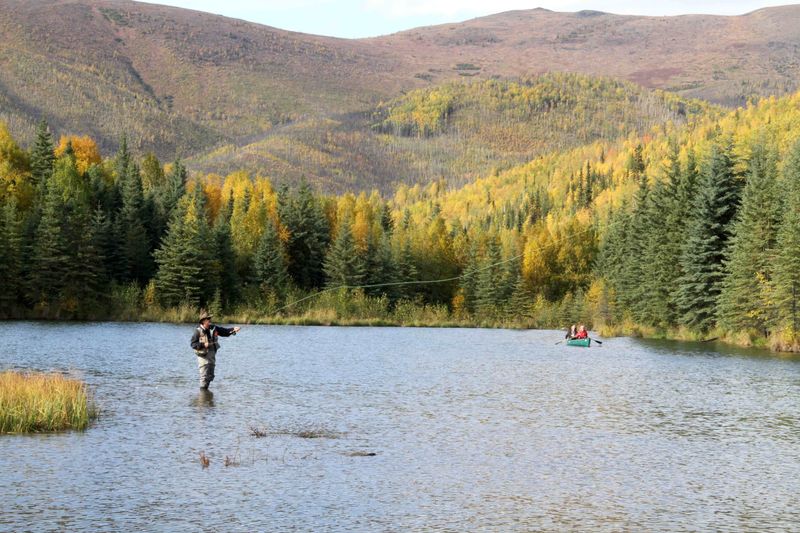
It has also taken me to Alaska to fish the Brooks River in Katmai National Park and Preserve in Alaska and to Lake Placid, New York where I made a side trip to a place I always wanted to visit, Paul Smith’s College in Paul Smith’s, New York. As hard as I tried, I couldn’t convince college officials I was the founder.
But suffice it to say OWAA has been a very positive part of my life for 32 years.
Like any group marking its centennial, OWAA has faced its share of changes and challenges, including the Great Depression, World War II, the Internet, more sedentary lifestyles, loss of newspaper readership and most recently artificial intelligence.
“One word can best describe OWAA’s history,” said OWAA past president Phil Bloom of Ft. Wayne, Ind. “Resiliency.”
Bloom is retired after 33 years as a newspaper reporter, including 18 as outdoors editor at the Ft. Wayne Journal Gazette, and served two terms as OWAA president. He also worked as communications chief for the Indiana Department of Natural Resources.
Bloom’s knowledge of OWAA history is unsurpassed.
He said the organization has survived in the face of global stresses such as world wars to those on more national or local scales, including dramatic changes in the media landscape that have seen traditional outlets dry up.
And of course there have been internal debates about issues such as membership qualifications, organizational direction, conference speakers and budgets.
“But we’re still standing,” Bloom said. “In fact, we’re seeing new communication formats blossom and we’re attracting a more diverse membership.”
The mission of OWAA is to “improve the professional skills of our members, set the highest ethical and communications standards, encourage public enjoyment and conservation of natural resources, and be mentors for the next generation of professional outdoor communicators.”
The organization says it offers “world-class resources, support, and inspiration for our members as they inform the public about outdoor activities, issues and the responsible use of our natural resources. Through OWAA membership and adherence to its creed and code of ethics, members are commissioned to provide honest, thorough, informed, responsible and unbiased outdoor coverage.”
The organization has a current membership of 600 vetted outdoors media, said Chez Chesak, OWAA executive director. The group is expecting about 235 people to attend its 2026 conference in Madison.
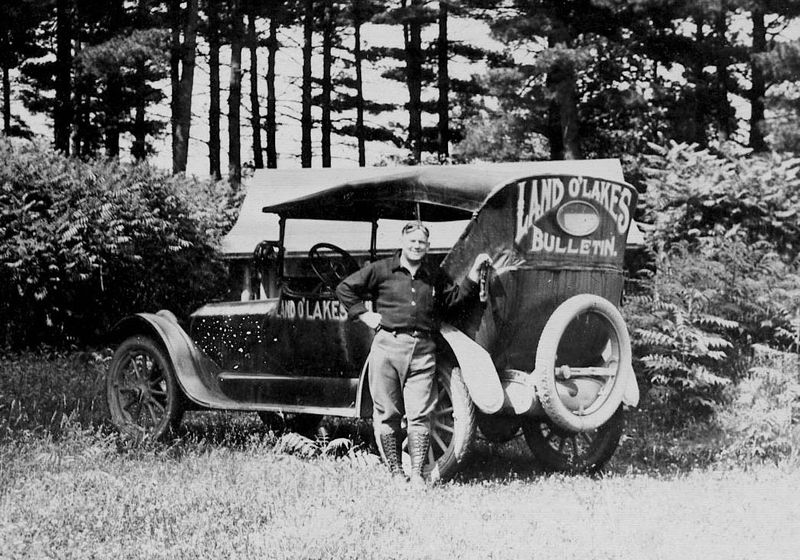
A couple notes about two of its founders. Cal Johnson was a native of Phillips, Wis. who worked as a game warden, writer and editor for the Land O’ Lakes Bulletin in northern Wisconsin and sold articles to the Milwaukee Journal before his career took him to Indiana and Illinois.
He became famous for his work for the Chicago Daily News and various Chicago radio stations. Diagnosed with a heart ailment, Johnson later moved back to northern Wisconsin where he continued his outdoors ways and on July 24, 1949, he caught a 67 pound, 8 ounce muskellunge on Lac Courte Oreilles near Hayward. The fish was certified as the world record.
“The outdoors is the greatest doctor in the world,” Johnson said. “If you feel yourself slipping, go fishing – it is the world’s most soul-satisfying pastime.”
And the only OWAA founding member who resided outside the U.S., Jack Miner became one of the early 20th century’s most important conservationists. He founded the Jack Miner Bird Sanctuary and pioneered bird banding, helping track migratory patterns of ducks and geese.
He was also a charismatic public speaker and an early advocate of game protection. Honored with the Order of the British Empire in 1943, Miner’s work continues today through Canada’s annual National Wildlife Week, held in his honor.
Although the founders were almost exclusively writers, contemporary OWAA members cover a broad range. They include: writers, authors, publishers and editors; broadcasters; film and video producers; photographers; fine artists; lecturers/speakers; bloggers and new media communicators; and communications and public relations professionals.
For Bloom, OWAA became a surrogate “newsroom” of like-minded individuals where “we could exchange ideas, learn from each other, and be inspired by the great work of colleagues from across the country,” he said.
Annual conferences, such as the one Aug. 22 to 24 at the Monona Terrace in Madison, have become venues for members to learn new skills, polish existing ones, network with other professionals, and carry on the tradition of camaraderie that keeps OWAA afloat, Bloom said.
Keynote addresses have always been a highlight of OWAA conferences. The list of keynote speakers includes Interior Secretary James Watt, U.S. Congressmen John Breaux and Berkley Bedel, authors William Least-Heat Moon, Ted Kerasote, Tim Cahill, and Carolyn Finney and many directors of the U.S. Fish & Wildlife Service, U.S. Forest Service and National Park Service.
Richard Louv, author of Last Child In the Woods, is the only two-time keynoter, 2007 at Roanoke, Virginia, and 2012 at Chena Hot Springs, Alaska.
The 2026 conference in Madison will feature a keynote by Trout Unlimited president Chris Wood, as well as a speech by U.S. Rep. Bruce Westerman (R-Arkansas), chairman of the House Committee on Natural Resources.
OWAA continues its support for students and young professionals, too. The organization’s Bodie McDowell Scholarship Fund is closing in on the $1 million mark of support for college students, Bloom said.
As things change in the media landscape, OWAA has provided a valuable sense of stability for me and many other members.
I’m looking forward to seeing the OWAA flock in Madison.
One thing will be different this year. In an homage to its centennial, OWAA is asking members to dress in 1920s garb for the awards night dinner.
I’ve lived through a good number of decades and fashion periods, but nothing in my closet fits the description. I’ll have to do some shopping.
And I hope OWAA is around to serve and nurture outdoor communicators, no matter the medium, for 100 years more.
For more information, visit owaa.org
This article originally appeared on Milwaukee Journal Sentinel: Smith: ‘Voice of the Outdoors’ celebrates 100th anniversary
Reporting by Paul A. Smith, Milwaukee Journal Sentinel / Milwaukee Journal Sentinel
USA TODAY Network via Reuters Connect
By Paul A. Smith, Milwaukee Journal Sentinel | USA TODAY Network