Changemaking begins in increments.

That’s the lesson passed along by Carol Polk and Flamond Hightower, two Milwaukee residents who are working to improve their neighborhoods.
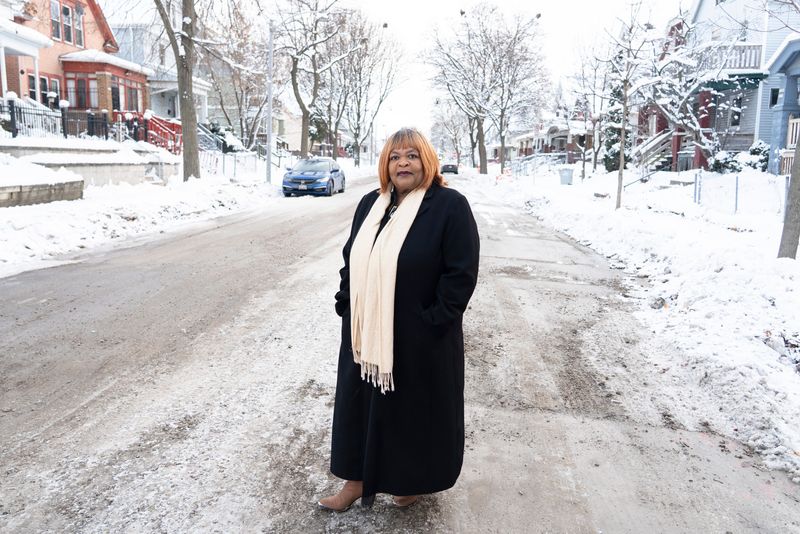
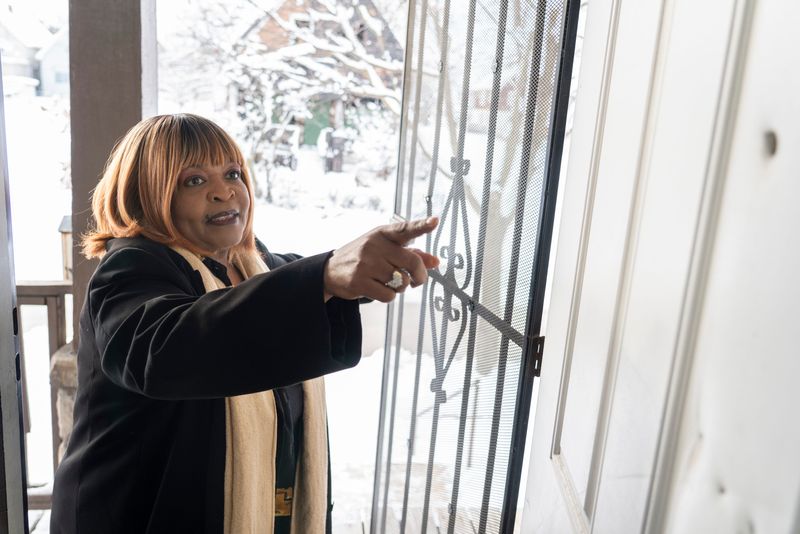
Polk, who lives in Franklin Heights, began by just picking up trash and getting to know her neighbors on North 28th and West Burleigh streets. Now she is organizing with businesses in her area to support programs to stengthen the neighborhood.
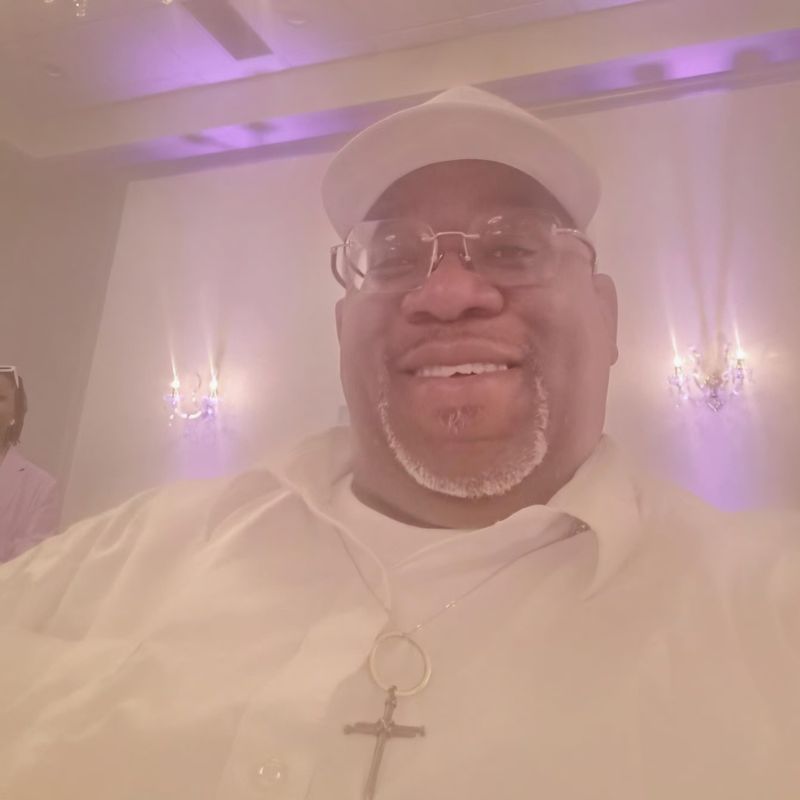
Hightower, who lives in Harambee, moved back into his childhood home last year. Soon after, he realized his block on North Phillips Avenue had become much less safe and stable since his childhood.
“When I grew up here, a neighborhood was a neighborhood,” Hightower said. “I knew all my neighbors, we had friends, we did things together, and now that is all gone.”
Today, he runs a neighborhood Block Watch and does outreach with the area homeless.
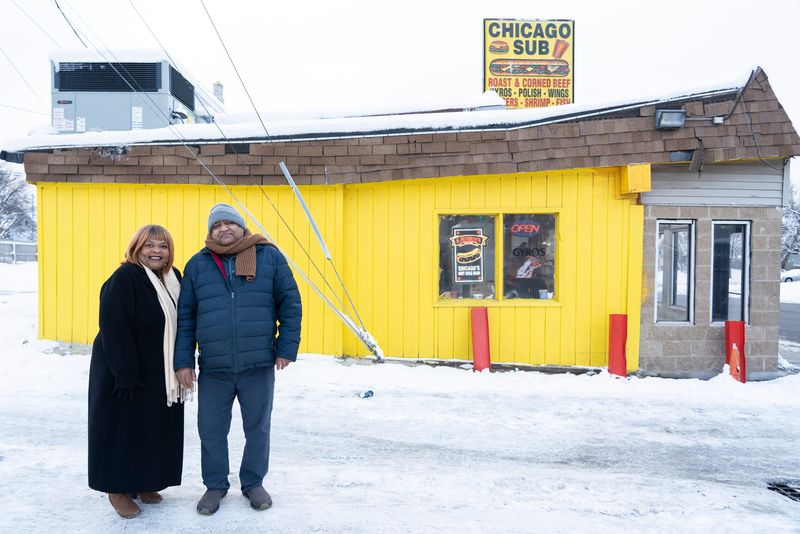
Polk and Hightower started small, meeting those around them, then having larger conversations in the area, asking for help from nonprofits and local representatives. Both ultimately included nearby businesses, which they agree was a critical – and often overlooked – element of building change.
At a time when what divides us often seems greater than what unites us, their experiences offer critical lessons in rebuilding bonds at the micro-local level.
Reaching out to neighbors, businesses
Polk was sitting in her living room in 2014, shortly after moving in, when a barrage of bullets tore through her front wall. No one in the house was injured, but after that, she wanted to see what changes she could make in the neighborhood.
She began conversations in passing with neighbors about violence, littering and other disturbances. Some neighbors liked spending time outside, talking with family, friends and passersby, but weren’t sure they could do it safely.
One day, she took those random conversations a step further.
“I said, ‘Hey everyone, come here,'” Polk recalled.
Neighbors and some others just hanging out walked over to her. She introduced herself and told them she wanted to help improve the neighborhood.
“That’s when they started calling me “Moms,'” she said.
The first business owner she spoke to was from Gas Depot, which operates behind her house on North 27th and West Burleigh streets.
Polk said some of the people who cause trouble tend to frequent businesses like the gas station, and nearby liquor stores.
Her first thought was to ask the Common Council to make the 24-hour station close at midnight. After speaking with the owner, Polk decided to ask him to sponsor community programming. In September, Gas Depot sponsored a neighborhood cookout and provided ingredients for the food.
Today, Polk has 11 business owners who have agreed to help with future community projects. The owners also attend Block Watch meetings where they discuss potential programming and other ideas for the neighborhood.
“It helps when you have others working with you,” Polk said.
Finding help with Safe & Sound
Hightower was uncertain how to take the first steps when he began his work in the Harambee neighborhood. He was not sure who to call about the problems surrounding a BP gas station at the corner of West Center Street and North Phillips Avenue, like gunfire, drug dealing and theft.
The issues would mostly occur after midnight, Hightower said, when the gas station was one of the only stores open.
“Once the night falls, people came over here because that gas station is open at night,” he said.
He called the police, and was referred to Safe and Sound, a local organization that works to empower neighborhoods. He was put in touch with Tony Harris, Safe and Sound neighborhood safety coordinator for Police District 5, who helps with neighborhood issues in the district – which includes Harambee.
Harris worked with Hightower to get police data showing an unusually high number of police calls to the gas station after midnight. They took that information to the City of Milwaukee Common Council Licenses Committee.
The council decided not to renew the gas station’s extended hours license in May 2025, and it now must close at midnight.
“I used to tell people I had 10 bullet holes in my house over a period of time, and now I haven’t had any more,” Hightower said.
Changemakers need to make compromises
Polk said improving a neighborhood is not a quick turnaround.
She had to learn that others are around to help. She also had to accept imperfect results.
When Polk first moved in, drug dealing took place in front of her home. As she got to know those engaged in illegal activity, Polk would ask them not to sell by her home. Once she was trusted, they agreed.
“There is a scripture that says, ‘despise not the days of small beginnings,”‘ Polk said. “And those were small beginnings when I had to get introduced to those guys. I had to learn they were OK. They just made mistakes.”
Change in Hightower’s neighborhood was a culmination of seeing problems, and working with a local organization to help navigate government processes.
Milwaukee is home to numerous nonprofits and neighborhood groups. Many specialize in a specific problem; many are multifaceted.
According to Harris with Safe and Sound, if someone reaches out to a nonprofit or a group that is unable to help, it can direct them to another one that is more suitable.
Residents need to get connected
Residents who want to become involved over the long term should regularly attend Milwaukee police crime and safety meetings, Common Council meetings and town halls, Harris said. In other words, get connected.
Safe and Sound offers a program called Block Watch, where residents can sign up to meet their neighbors and act as a neighborhood watch. Both Hightower and Polk are Block Watch captains for their respective neighborhoods.
Finally, those who want to follow in the path of Polk and Hightower should get to know their council member. There are many city programs in which residents can engage.
The City of Milwaukee offers the Alert Neighbor Program, for example, headed by Alderwoman Milele Coggs and Alderman Russell Stamper.
It offers groups of eight residents or more the opportunity to get cameras, signage or other safety improvement measures to combat crime. According to Coggs, three groups have been through the program so far. Applications are available on the city website.
Everett Eaton covers Harambee, just north of downtown Milwaukee, for the Journal Sentinel’s Neighborhood Dispatch. Reach him at ejeaton@gannett.com. As part of the newsroom, all of Everett’s work and coverage decisions are overseen solely by Journal Sentinel editors.
Neighborhood Dispatch reporting is supported by Northwestern Mutual Foundation, Journal Foundation, Bader Philanthropies, Greater Milwaukee Foundation, and reader contributions to the Journal Sentinel Community-Funded Journalism Project. Journal Sentinel editors maintain full editorial control over all content. To support this work, visit jsonline.com/support. Checks can be addressed to Local Media Foundation (memo: “JS Community Journalism”) and mailed to P.O. Box 85015, Chicago, IL 60689.The JS Community-Funded Journalism Project is administered by Local Media Foundation, tax ID #36‐4427750, a Section 501(c)(3) charitable trust affiliated with Local Media Association.
This article originally appeared on Milwaukee Journal Sentinel: Residents are changing their neighborhoods, and sharing how to do it
Reporting by Everett Eaton, Milwaukee Journal Sentinel / Milwaukee Journal Sentinel
USA TODAY Network via Reuters Connect