As summer temperatures rise, dairy cows are at greater risk for heat stress. Heat-stressed cows suffer from reduced dry matter intake, reducing milk production. Farmers may also notice reduced fertility or pregnancy loss and increased metabolic and lameness issues. Combating heat stress in the herd requires an action plan to prevent and address heat stress-related issues.

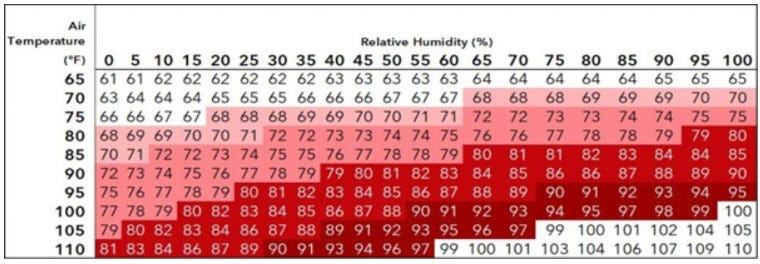
Cattle aim to maintain their internal core body temperature within a narrow range. They exchange heat with their environments to regulate body temperature, gaining and losing heat. The air temperature and relative humidity surrounding the animals are important factors affecting cows’ ability to lose heat. Temperature Humidity Index (THI) is commonly used within the dairy industry. This index combines air temperature and relative humidity to approximate the heat stress cattle experience. The chart is color-coded according to categories of heat stress ranging from mild (lightly shaded) to severe (darkly shaded) for lactating dairy cows.
Important caveats to keep in mind about THI:
Despite these limitations, the THI chart can be a useful tool for planning activities when cattle are expected to experience heat stress.
Tune in to the signs of heat stress in dairy cattle
Even when planning, sometimes when cattle are handled, the level of heat stress they experience can worsen. This is because greater activity levels increase the production of body heat.
When working with animals, look for signs of heat stress they may exhibit. A clear indicator of severe heat stress is panting. Look for animals breathing with their mouths wide open, tongues out, drooling, or a combination of these signs.
Before severe panting begins, cattle will show elevated respiration (breathing) rates. The resting respiratory rate for adult cattle ranges from 25 to 50 breaths per minute. As the environmental conditions get warmer, the cattle will begin breathing faster as they use respiration to cool themselves. This effort may be seen as their rib cage rises and falls while standing, and their body begins to rock. The rule of thumb to identify heat stress in lactating cows is 60 breaths per minute or one breath per second. When you notice cows breathing that quickly or even faster, this indicates they are struggling to cope adequately with the heat, and additional cooling would be beneficial. By the time panting occurs, cows breathe at an average of 100 breaths per minute.
A guide to keeping cows cool and comfortable
When cattle breathe faster, pant, and sweat, they lose moisture. This needs to be replenished by increasing water intake. Therefore, the animals must access a plentiful supply of clean drinking water.
If cattle show signs of heat stress while being handled, you can provide emergency relief using a combination of methods.
Provide the following strategies when cattle begin to show signs of heat stress:
Handling dairy cattle in heat: Move smart to limit stress and losses
The THI chart is an important consideration when moving cattle. To prevent cattle losses during handling, refer to the THI chart to determine the likelihood of heat stress during high temperature and humidity conditions.
However, dairy animals can experience discomfort and poor welfare associated with heat stress in milder weather before production losses occur.
Limit the length of time animals spend in headlocks or other handling equipment. Their stress from confinement may compound with the stress from hot environmental conditions. To prevent added heat stress, handle animals during the early morning hours before the temperature rises to the risky THI level. When THI is 72 or higher, consider postponing animal handling-related tasks that can be performed in cooler weather. An animal’s internal temperature peaks approximately two hours after the environmental temperature peaks, and it takes the animal four to six hours to lower its temperature back to normal.
If possible, the evening hours should be left for the animals to cool down and not used for handling unless necessary. Cattle will eat more and show reproductive activity during the cooler evenings. If possible, do not interfere with their comfort during this time.
Use caution while vaccinating cattle during high THI levels. A typical reaction to a vaccine is a mild fever (increase in core body temperature by one or two degrees). Vaccine-induced heat stroke may occur when this elevated core body temperature coincides with high THI levels. To prevent induced heat stroke, vaccinate early in the morning. This practice enables the cattle to control their immune response to the vaccine before the ambient temperature rises. Another option is to vaccinate cattle in the evening, six hours after the peak daytime temperature. Using this option, the normal vaccine reaction (an increase of one or two degrees of the cattle’s internal temperature) will occur during the cooler evening hours.
Extra care should be taken if the evening temperatures do not drop below 70°F as the cattle cannot recover before another day of heat and humidity. The longer the heat stretch lasts, the more stressful it is on the cattle.
When animals become nervous and stressed, their core body temperature naturally rises. To keep this temperature down, always remember to use low-stress handling techniques. Move cattle slowly, calmly, and for only short distances, if possible. Plan and avoid any unnecessary movements or stressful handling.
Make a note of any compromised cattle. Cattle that are sick, lame, heavy, weak, recently calved, or newly purchased are all at high risk for heat stress. Watch these cattle closely for signs of heat stress and take extra precautions to cool them down if needed.
Check and clean waterers to ensure cattle have adequate clean water. Check hoses, pumps, floats, and all parts of the water supply system to ensure water is always available. In the summer heat, cattle’s water intake increases, and many may drink simultaneously. Ensure the refill rate is adequate, enabling all cattle to drink. To ensure proper access to water, consider adding additional temporary tanks if needed.
Cattle will also congregate around the waterer to capture evaporative cooling from the water. This leads to manure build-up and flies around the waterers. Remove manure build-up around water tanks and locate the tanks in a high, dry area. If puddling occurs at the base of the water tank, move the water tank to higher ground.
Handling dairy cattle in heat: Move smart to limit stress and losses
During hot and humid weather, the temperature inside the trailer is much higher than the outside temperature. Avoid transporting cattle in moderate to severe THI conditions. Monitor the weather forecast and plan accordingly. If possible, postpone transport until cooler and less humid weather arrives.
Additionally, summer’s high temperatures and humidity can result in severe stress. Remember to check the weather before loading cattle and along the way. This will help ensure a safe and uneventful trip.
Here’s a checklist on hot weather factors:
Special needs of non-ambulatory cows, and assessing down cows
Increased temperatures cause a chain reaction, compromising a dairy cow’s ability to tolerate heat stress. One of the first changes we may see is less time resting. When a cow lies down, its internal temperature increases. Cows tend to stand to regulate their internal temperature. Increasing standing time puts additional stress on their feet, which leads to an increased possibility of lameness. Compared to healthy counterparts, lame cows are more susceptible to falling and injuring themselves.
If a cow is down, it is essential to assess the situation to determine the best outcome for the animal before addressing it. What caused the cow to fall? If the cow falls due to an environmental issue such as slippery floors or a tripping hazard, rectify that situation so other cows and people can pass through the area safely.
If the cow fell due to an existing injury, assess its injury and any new injuries that may have occurred due to the fall. If the cow appears capable of standing, encourage her to do so independently. Providing aid such as sand or straw bedding can provide better footing for standing. If the cow needs assistance with hobbles, lifting apparatus, or float tank, carefully follow the equipment’s use guidelines and refer to the farm’s animal handling protocols before moving or assisting the animal. Hitting, tail-twisting, or inappropriate/incorrect use of equipment is considered abuse and is unacceptable.
If a cow is down on concrete, she must be moved within six hours to prevent pressure damage in the legs. A disabled animal should be moved to a stable surface such as a dirt/sand pack, pasture, or straw-bedded pack. If a cow is moved to an outside location for recovery, always provide shade, food, and water.
Moving and caring for a down cow
If a cow cannot stand and needs to be moved by equipment, it should be coordinated between the equipment operator and the person or people working with the cow. The farm’s animal handling protocols should be followed carefully to ensure the safety of the animal and the people working with it. A tractor bucket deep enough to hold the cow’s entire body or a sled wide enough to keep the cow without her body hanging off the surface is appropriate for moving a non-ambulatory animal. In both cases, a sled or bucket should be at least six to eight feet long to accommodate the length of the cow. A cow should never be dragged on any surface. Move the cow by rolling her onto the sled or bucket; never attempt to scoop the cow up with a bucket.
A cow should never be pulled or moved by her legs or head. Before rolling a cow onto the sled or bucket, her head should be secured with a halter tied to a rear leg.
Once the cow is relocated to a location with sound footing, allow her to stand independently. Down cows should be provided with deep, dry bedding and fresh water. If a cow is moved to an outside location for recovery, shade and protection from the elements should be provided.
If a cow is down for more than 12 hours, a veterinarian should be consulted on further treatment or euthanasia. Down cows should have dry, deep bedding to aid in standing. Encouraging a cow to stand should be done in short bursts and should not cause or prolong pain to the animal. Thoroughly evaluate the cow for proper diagnosis. Common reasons for cows to be down are metabolic (milk fever), musculoskeletal (nerve damage, injury, hip injury, muscle/tissue damage from being down), toxic mastitis (especially common due to heat stress), and toxic metritis.
Diagnosis and subsequent care are critical to a cow’s recovery. Work with the farm’s veterinarian on a treatment plan. Frequently re-evaluate the cow’s progress and adjust treatment accordingly. Be sure to keep accurate records of treatment and outcome.
Aerica Bjurstrom is a regional dairy educator in Northeast Wisconsin and focuses on herd health and animal welfare. Jennifer Van Os is an Associate Professor and Extension Specialist in Animal Welfare in the Department of Animal & Dairy Sciences at UW-Madison.
This article originally appeared on Wisconsin State Farmer: Reduce heat stress impacts on dairy cows with proactive management
Reporting by Aerica Bjurstrom and Jennifer VanOs, UW-Madison Division of Extension / Wisconsin State Farmer
USA TODAY Network via Reuters Connect
By Aerica Bjurstrom and Jennifer VanOs, UW-Madison Division of Extension | USA TODAY Network