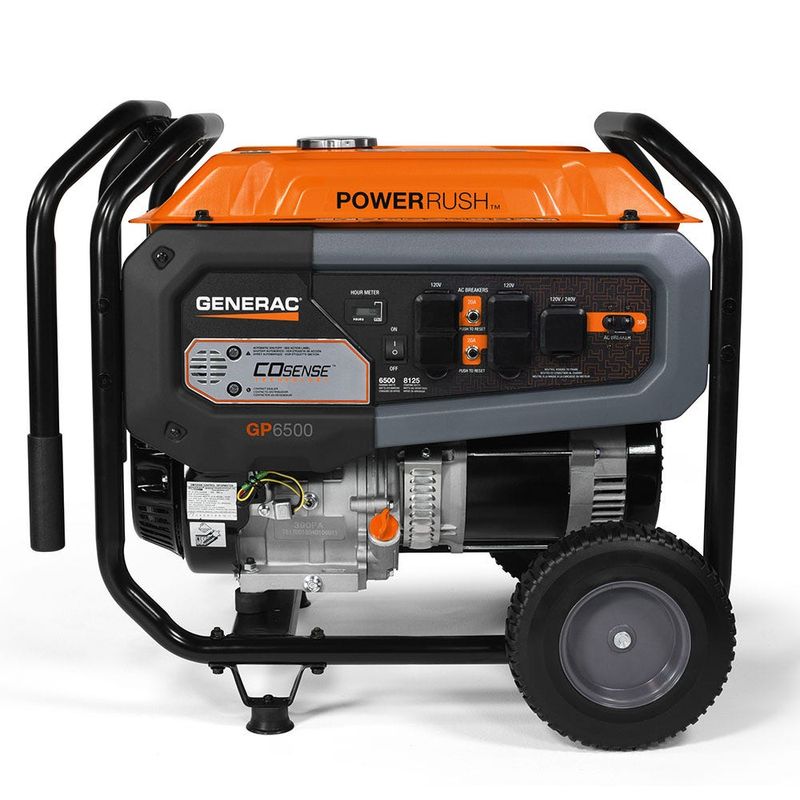
When the power goes out during a heavy rainstorm, having a portable generator can keep your sump pump running and the basement dry. It’s also handy for keeping food from spoiling in a refrigerator and for other purposes.
Here are some things Consumer Reports, and Waukesha-based generator manufacturer Generac, have to say on the topic.

How can portable generators help homeowners?
Portable generators are generally stored in a garage, basement, or shed and wheeled into position when needed. Smaller models use extension cords to power a few small appliances, while larger portables connect to your electrical panel via a transfer switch to power hardwired appliances like well pumps and water heaters, according to Consumer Reports.
An increasing number of models run on gasoline or liquid propane, the fuel many homeowners use for barbecue grills and other appliances.
But during a widespread power outage, often the only portables available in stores will be gasoline-fueled ones. Ninety percent of consumers are going to use gasoline anyway, even if they have a dual-fuel unit, said John Quast, vice president and general manager of Generac’s portable generator group.
How do homeowners determine proper generator size, what do they cost?
To determine the size generator you need, make a list of the appliances you want to power and add up their wattages. With a portable unit, you don’t need to pay for one that produces a lot more power than you will be using.
Prices for portable generators vary widely, from around $400 to $3,000 depending on the size and features.
For running just a sump pump, a portable generator that produces up to around 2,500 watts would probably be fine. A unit with “inverter” technology will be smaller, easier to handle, and quieter. It’s also better suited for sensitive electronics, according to Generac.
What are best safety practices for home generators?
If you use a portable generator during inclement weather, such as a rainstorm, you’ll need to protect it from the elements with a model-specific cover or a freestanding canopy while being mindful of the unit’s carbon monoxide emissions, Consumer Reports says.
With any generator, it’s extremely important to follow safe practices. Never operate a portable generator indoors, including in a garage or carport. Instead, run it a minimum of 20 feet from your home with the exhaust directed away from it as well as from any windows, doors and air conditioner units.
To reduce the risk of carbon monoxide (CO) poisoning, new generators often feature a built-in sensor that triggers an automatic shutoff if CO builds up to dangerous levels in an enclosed space.
Consumer Reports recommends portable generators only if they pass its carbon monoxide safety technology test.
Proper storage of a portable generator is important to ensure it will start when you need it.
“What I do, personally, is just run the fuel out to zero,” Quast said, and then use fresh fuel when it’s time to deploy the generator.
Another option is to use fuel stabilizer which will help keep the gasoline fresh and the generator’s fuel system in good shape. Also, if the unit has an electric starter, keep a charge in the battery so it’s ready to go when needed.
How do ‘whole house’ generators work?
A whole-house generator, also called a standby or stationary generator, is permanently installed outside by a professional and has an insulated cover that helps to protect it from the weather and keeps it relatively quiet. It kicks on automatically when the lights go out and can power everything in your home at once. It can operate for days or even weeks on a full whole-house propane tank or indefinitely in the case of natural gas, according to Consumer Reports.
“Home standby generators are expensive, but they’re the gold standard in backup power, and they outperform all other types of generators in our ratings,” Dave Trezza, who heads Consumer Reports’ generator testing program, says on the group’s website.
“If you can afford it, I’d tell you to pick a home standby generator every time,” Trezza said.
This article originally appeared on Milwaukee Journal Sentinel: Portable generators can keep sump pumps running, basements dry. What homeowners need to know
Reporting by Rick Barrett, Milwaukee Journal Sentinel / Milwaukee Journal Sentinel
USA TODAY Network via Reuters Connect