After successfully ending a two-decade-old mystery of unidentified human remains, a new, informal Milwaukee task force is seeking the public’s help to identify human remains found in the Milwaukee River over 40 years ago.
The group, which consists of members from the Milwaukee Police Department, the Milwaukee County Medical Examiner’s Office and a forensic anthropologist, are working to solve cases of human remains that remain unidentified in the city. Over a dozen such cases exist in Milwaukee County.

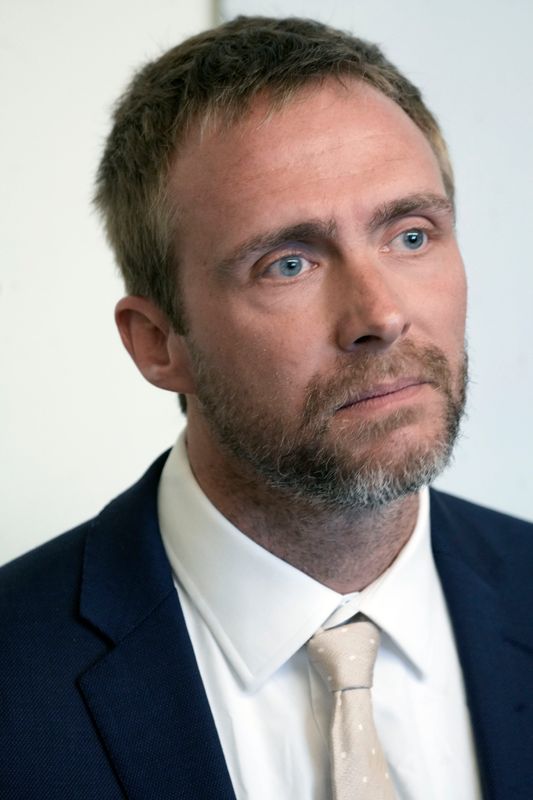
“It’s important to be able to restore the identity to people,” said Dr. Jordan Karsten, a forensic anthropologist with the Wisconsin State Crime Lab and a professor at University of Wisconsin-Oshkosh. “Everybody deserves that – to have that level of human dignity restored to them.”
The group, which members noted is informal, started regularly meeting in the fall of 2025 and began with the case of Thomas Schaeffer, who was reported missing in 2005.
It wasn’t until February – with the assistance of Karsten, Milwaukee police missing person investigator Jamie Sromalla and county death investigation manager Mike Simley – that Schaeffer’s identity was presented to his daughter Pam, who had long wondered what had happened to him.
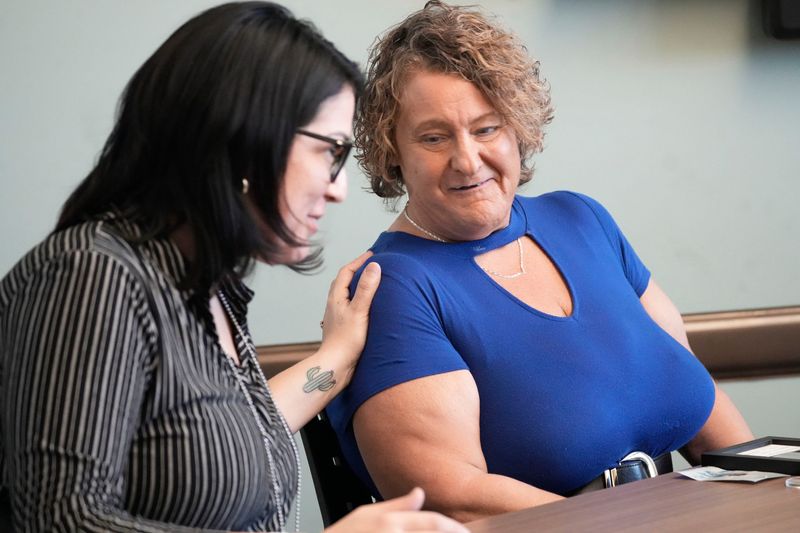
“Not knowing haunted me,” Pam said in an interview. “I thought about him every day.”
Remains found in 2008, 2020 eventually lead to identification
Pam last saw her father around five to six months before he was reported missing. He was homeless and, like herself and others in the family, battled addiction. But the two still saw each other with some regularity, when she would host him for dinner.
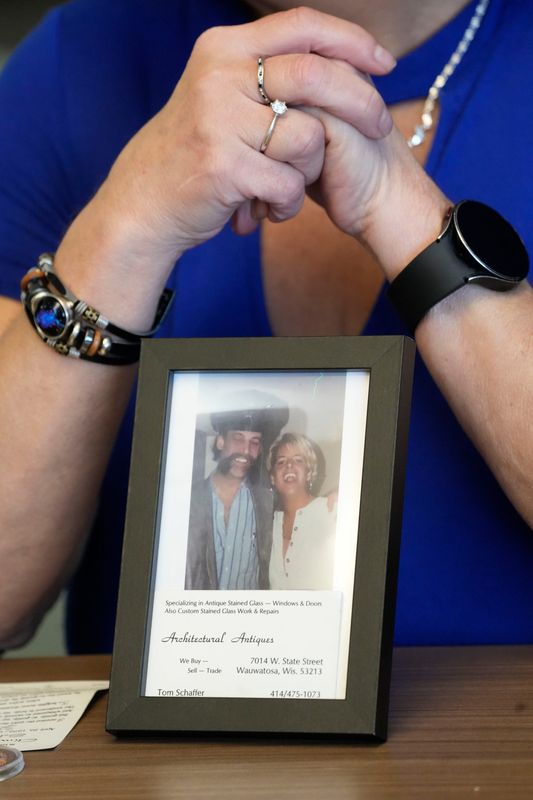
There, they would talk about efforts to break addiction, as she had, and how they loved one another. Pam remembered her father as an artist and how he would make stained glass windows.
It was in 2005 Thomas was reported missing to police and, as time went on, she assumed he had gotten involved with the wrong people. Perhaps something bad had happened to him and he was dead. At times, she would have nightmares about what could’ve happened to him.
But she never knew.
On April 15, 2008, a human skull was recovered, and authorities tested the DNA for it but couldn’t find a match. Twelve years later, an arm bone was found. Authorities were able to discover the skull and arm matched but still had no identity.
Karsten, who has a history of helping solve cold cases, reviewed the skull and noted a small bump on it. He found it matched a known characteristic of Thomas. Additional medical records would later provide further evidence that the remains were that of Pam’s father – although the task force is still awaiting official confirmation from the state Department of Justice Wisconsin State Crime Lab.
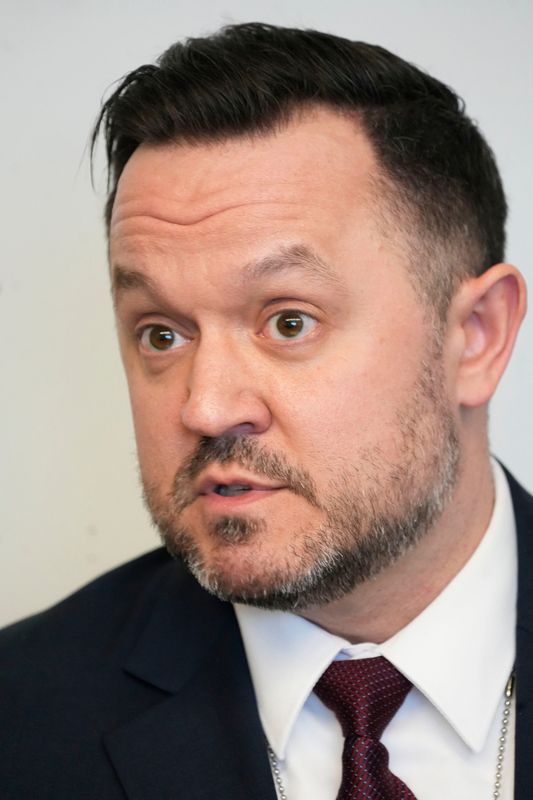
“It feels fantastic to give people closure. That’s why we do it,” said Simley, who works for the Milwaukee County Medical Examiner’s Office. “We never give up.”
Pam now plans to cremate the remains of her father that are left and place them alongside her sister Amiee’s ashes. She keeps a picture of the two of them at her bedside table, she said.
“I thought I was going to my grave not knowing,” she said.
Group seeks public’s help with latest case
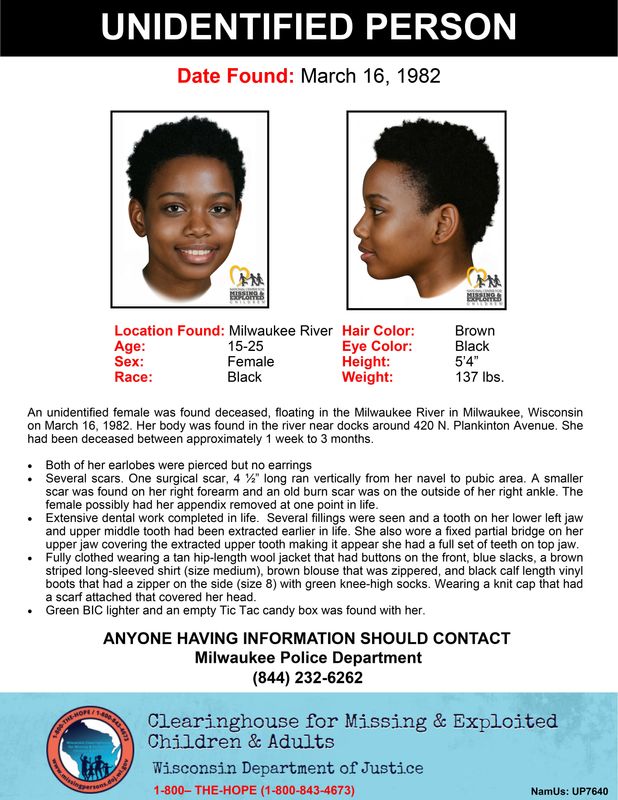
The task force is now turning to the public for help in identifying the remains of a 15-to-25-year-old woman.
This case is significantly older than the group’s last one, with the person being found in the Milwaukee River on March 16, 1982. The cause of death is officially labeled accident due to probably drowning, after an autopsy found nothing “remarkable” in how she died, Simley said.
It’s difficult as well, with there being no matching missing person cases in local police files and Sromalla continues to explore surrounding states for possible matches of people who went missing around the same time.
But the details authorities know are striking and offer a possible path to identification, they said.
The woman’s attire is known: a tan wool jacket, blue slacks, brown striped long-sleeved shirt, brown zippered blouse, and black calf-high vinyl boots, with a zipper on the side, along with green knee-high socks.
Distinctive physical features as well: she had extensive dental work done, including a partial denture on one of her teeth.
The case has been investigated since 2010, Sromalla said. But that was before this group began to meet monthly to attempt to solve cases like this.
“Right now we’re just kind of stuck at a roadblock,” Sromalla said.
Anyone with information on the identity of this unidentified woman is asked to contact Milwaukee police at 844-232-6262.
David Clarey is a public safety reporter at the Milwaukee Journal Sentinel. He can be reached at dclarey@gannett.com.
This article originally appeared on Milwaukee Journal Sentinel: Milwaukee police group is identifying remains. Now, it wants the public’s help
Reporting by David Clarey, Milwaukee Journal Sentinel / Milwaukee Journal Sentinel
USA TODAY Network via Reuters Connect