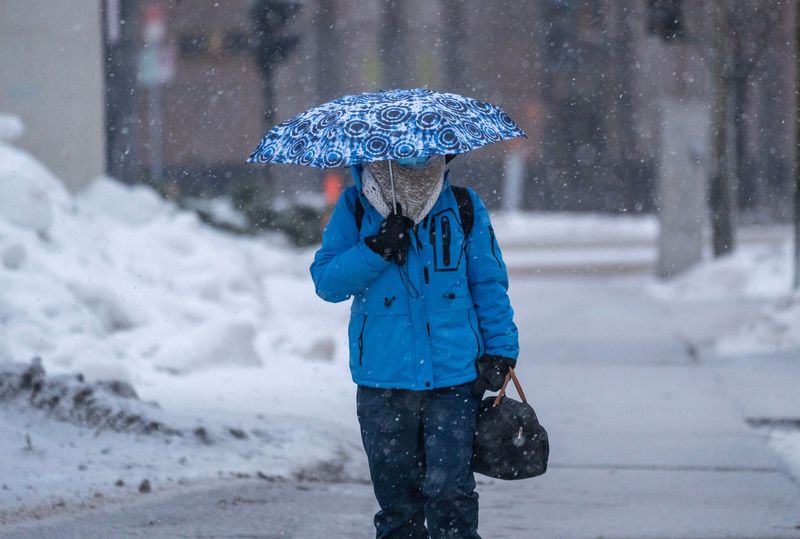
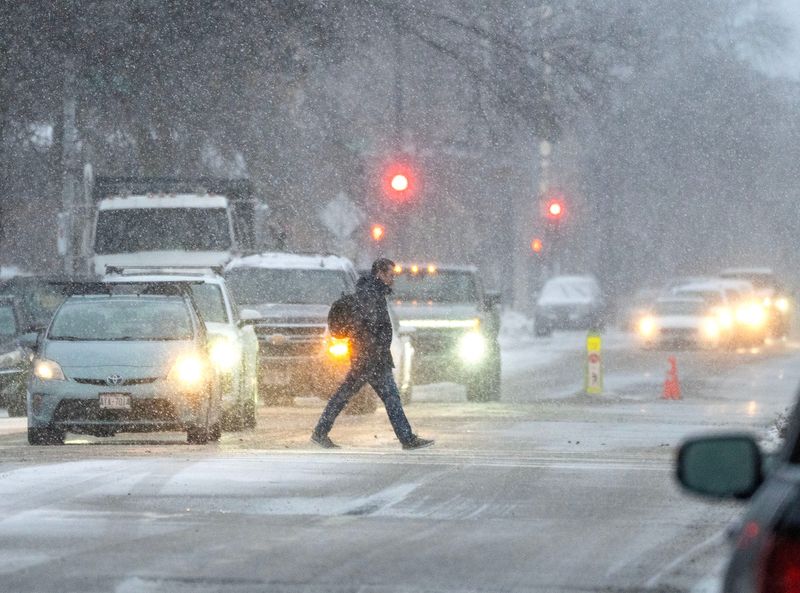
If it feels like winter weather has arrived early this year in Milwaukee, it’s not your imagination.
The first 10 days of December were Milwaukee’s coldest and snowiest start to the month since 2008, according to J.J. Wood, a meteorologist with the National Weather Service in Milwaukee/Sullivan.

When you compare that 10-day period in December to past years, it’s the 17th snowiest and 23rd coldest since the weather service began collecting data in 1871, Wood told the Journal Sentinel.
The frigid December comes on the heels of Milwaukee’s snowiest November in 50 years, when the city logged 8.7 inches of snow thanks to a Thanksgiving weekend storm. As cold air from Canada continues to move down through Wisconsin, the cold weather is unlikely to relent anytime soon, Wood said.
Here’s what to know about Milwaukee’s snowy December and what’s ahead for the rest of winter:
How cold and snowy has December 2025 been so far in Milwaukee?
So far in December, Milwaukee has seen both above average snowfall and below average temperatures, according to the National Weather Service.
As of Dec. 10, the city had recorded 6.6 inches of snow for the month, Wood said. That’s 3 inches above normal for the first 10 days of December.
The average temperature in Milwaukee was 21.8 degrees during the first 10 days of the month, which is 10.7 degrees colder than the historical average for that period.
In 2008 – the last time Milwaukee saw a December start this cold and snowy – the average temperature was 21.7 degrees and total snowfall was 14.1 inches for month’s first 10 days.
Why has this winter been colder and snowier in Milwaukee?
Cold jet streams from Canada are largely to blame for Milwaukee’s frigid December start.
Throughout the month, northwest winds have been pushing cold air from northern Canada down toward Wisconsin, Wood said. The jet streams – narrow bands of strong wind – have been consistently sweeping through the state since the Thanksgiving weekend storm.
The United States is also experiencing a La Niña winter this year, which means ocean surface temperatures are cooler than normal in the central and east-central Pacific Ocean. However, Wood said that has not been a significant factor in Milwaukee’s colder weather.
“The La Niña we’ve having this winter is weak, so generally speaking that’s not influencing our weather in southern Wisconsin a whole lot,” he said.
What is the forecast for the rest of the winter in Milwaukee?
Given the frigid December start, Wood said the Climate Prediction Center is forecasting an increased chance of cold temperatures from December to February in Milwaukee.
“It doesn’t mean we can’t get some warmer temperatures,” he said. “It just means the chances for lower temperatures are higher. It’s leaning in that direction for the rest of the winter.”
Next week may bring some relief from the cold jet streams, but that’s likely to be fairly short-lived, Wood said. And before then, Milwaukee residents should brace for another blast of freezing weather over the weekend.
A polar vortex system slated to hit the central and eastern United States this weekend could bring wind chills between 15 and 30 degrees below zero to the Milwaukee area between Dec. 12 and Dec. 14, Wood said. The coldest periods will be from Friday night to Saturday morning and Saturday night to Sunday morning.
“We’re going to have some negative wind chills across all of southern Wisconsin,” Wood said. “Bundle up and prepare for the bitter cold.”
Milwaukee’s snow records
While it’s been a cold start to December, Milwaukee is still nowhere near its all-time snow records.
Here are some of the city’s notable snow records, according to the Wisconsin State Climatology Office:
This article originally appeared on Milwaukee Journal Sentinel: Milwaukee just recorded its snowiest and coldest start to December since 2008
Reporting by Maia Pandey, Milwaukee Journal Sentinel / Milwaukee Journal Sentinel
USA TODAY Network via Reuters Connect