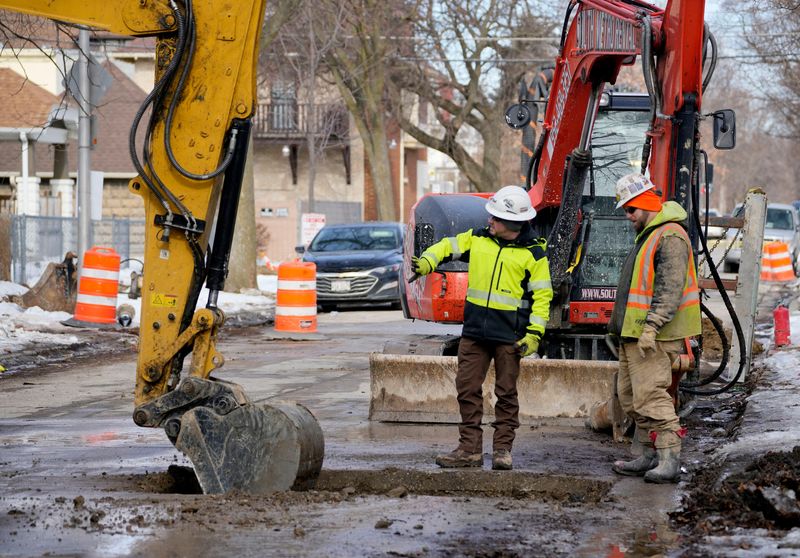
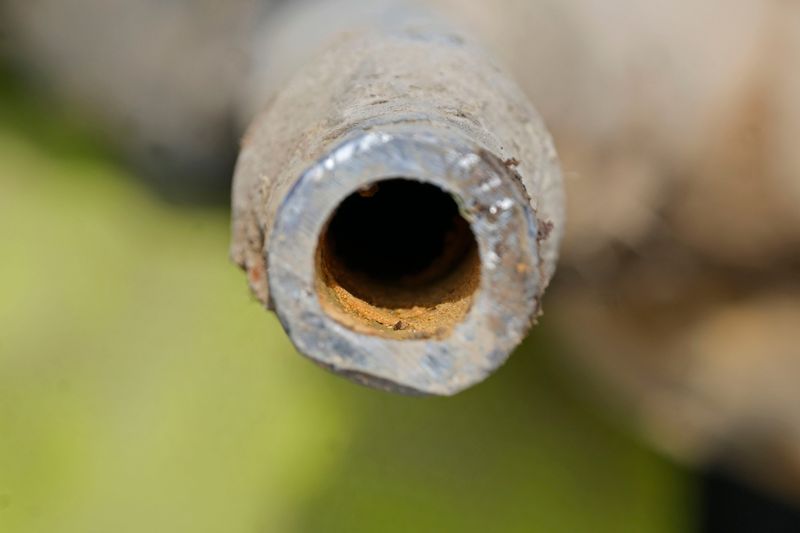
On a cold morning earlier this year, Eddie Christoffel and a crew of workers dug nearly four feet into frozen soil to remove a lead pipe in Milwaukee.”I think it’s important to get that lead out of the ground,” Christoffel, the foreman, said.
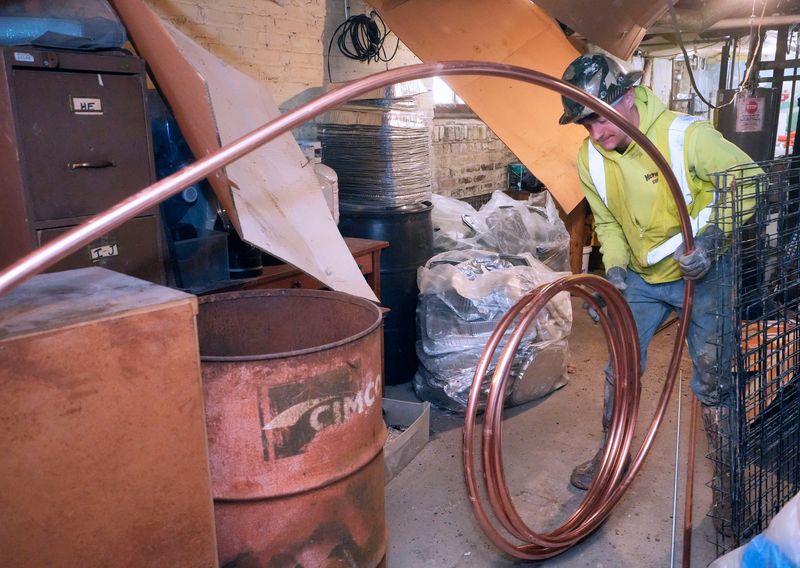
“Copper’s a lot safer to drink out of, especially if you have little kids,” he added. “I have three, so before I bought my house, I made sure it was switched over.”

In Milwaukee, every pipe counts as the city races to meet a federal deadline for replacing the lead service lines that carry water from mains under streets to residents’ homes.
But meeting the 2037 deadline will become more difficult as federal funds to support the effort dwindle over the next few years.
Lead, a heavy metal, has long been known to be harmful to human health, particularly for small children whose bodies and brains are still developing.
Researchers point to lead-based paint as the primary culprit for childhood lead poisoning cases. However, lead pipes have dominated public discussion of lead over the last decade, ever since the lead water crisis erupted in Flint, Michigan.
Here’s what to know about Milwaukee’s ongoing effort to replace lead pipes.
Milwaukee still has about 65,000 lead pipes to replace
Since 2017, the city has replaced more than 10,000 pipes with copper. More than 65,000 lead pipes remain.
Since 1996, the city has treated its water with orthophosphate. The chemical prevents corrosion and lowers the risk of lead particles leaching into the water.
Lead pipe replacements and water treatment cost $122.7 million from 2017 through 2025.
Milwaukee Water Works has used federal funding to subsidize the cost.
It costs about $10,000 to replace a lead service line
It costs an average of $10,000 to replace a lead service line.
In 2021, the federal Bipartisan Infrastructure Law increased funding available to communities for the replacements.
Last year, Milwaukee received more than $50 million to fund replacements in 2026.
Milwaukee used federal funds to accelerate the replacement work
The city plans to replace 5,000 pipes in 2026.
The goal is about 50% increase from the roughly 3,300 pipes it replaced last year, and almost double the replacements in 2024.
The city will prioritize 23 neighborhoods in 2026
This year, Milwaukee’s lead pipe replacement program will focus on a large stretch of North 20th Street, from Center Street to Capitol Drive, and parts of Washington Park, Sherman Park, Arlington Heights and North Division neighborhoods.
On the south side, the program will target areas of Silver City, Lincoln Village, Layton Park and Forest Home Hills.
To see if a property is a priority area, go to city.milwaukee.gov/water/LeadPipes/CheckAddress.
It’s unclear if the federal deadline will change under the Trump administration
The federal deadline was set in 2023 under President Joe Biden. It’s unclear if President Donald Trump will change it.
Since taking office, the Trump administration has drastically overhauled other policies from the U.S. Environmental Protection Agency.
The most significant was eliminating the central scientific finding that served as the basis for much of the nation’s climate policy, regulating everything from emissions standards in vehicles to limiting pollution from power plants.
An EPA spokesperson did not directly answer questions about the administration’s plans for the lead service line replacement effort.
Milwaukee would struggle with loss of federal funds
Federal funding has allowed the city to eliminate its earlier cost-share agreement with nearly all property owners for the pipe replacement. The city also focused on replacing pipes serving childcare facilities and damaged service lines.
Without federal help, Milwaukee will struggle to meet the deadline and would have to return to the cost-share agreement, said Milwaukee Water Works Superintendent Patrick Pauly.
The price tag to replace Milwaukee’s remaining lead pipes? $650 million.
If the city misses the deadline, it could face penalties
If Milwaukee misses the deadline, the city will be in violation of federal law. The consequences would be primarily determined at the state level by the Wisconsin Department of Natural Resources.
The state agency is working closely with the city, said Ann Hirekatur, a program manager at the Department of Natural Resources.
The city could face penalties. A likely option is a binding agreement that outlines specific steps the city must take to come into compliance.
Advocates have warned of political consequences if the city misses the deadline.
“I think that there will be a lot of outcry and anger if the city falls short,” said Tony Wilkin Gibart, executive director of Midwest Environmental Advocates. “That may be the most significant consequence, is that it would be an embarrassment for the city to not meet this goal.”
Milwaukee exploring other funding options
The federal infrastructure money expires on Sept. 30, but money left unused by other cities will likely be available through 2028.
This is the final year Milwaukee Water Works expects to receive full funding from the Bipartisan Infrastructure Law. In the next few years, the utility expects to receive lesser amounts from cities that didn’t use their full allocations.
The city also could return to its earlier cost-sharing program with property owners.
What to do if you have a lead service pipe to your house
The city notifies residents living on a property with a lead service line. To reduce the risk of lead exposure:
This article originally appeared on Milwaukee Journal Sentinel: Milwaukee has to replace its lead pipes by 2037. But 65,000 remain
Reporting by Joey Schamber, Special to the Journal Sentinel / Milwaukee Journal Sentinel
USA TODAY Network via Reuters Connect