The only experience most people have had with microgreens is as a sprinkling on an entrée at a restaurant or as a farmer’s market curiosity. But to Casey Buhr, owner of Folkvangr Farms in Algoma, it’s his business.

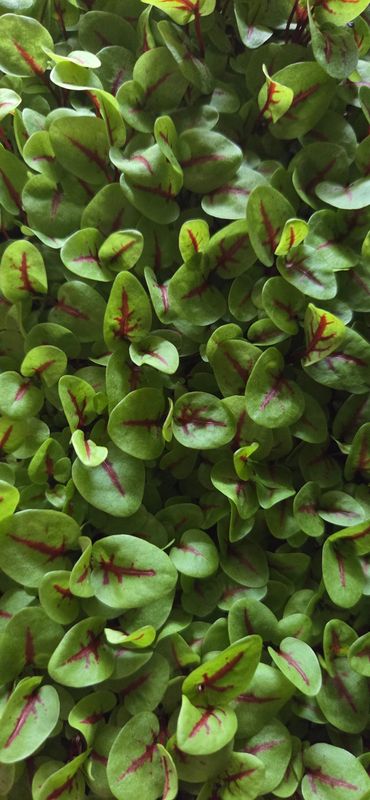
Microgreens are defined as a type of plant in between a sprout and baby green. In recent years, the tiny leaves have grown in popularity due to their dense nutritional content, variety of colors and textures, and aromatic flavor. Harvesting is typically just seven to 21 days after germination once the first leaves emerge. The nationwide market is predicted to reach $5 billion to $6 billion by 2032.
Becoming part of the industry was something that Buhr says was the result of life experiences. As a humanities graduate from the University of Wisconsin-Green Bay, he said that he learned how to think but that didn’t translate easily to a career.
“After graduating, I spent years in the hospitality field,” he said. “I worked as a barista, dishwasher, and customer services representative. One or two of the jobs made me question, ‘Why am I doing this?’”
But those jobs were providing useful experiences that would lead to where he is today. An interest in food was spiked when working at a high-end restaurant in the area. A perk of the job was that employees were allowed to pick something from the menu at the end of their shift.
“I was amazed at the freshness, ingredients, and style of the food. It is like a foretelling when you look back at junctures in your life and see the pinch points where something happened for a reason,” Buhr said.
The reason was a burgeoning interest in food and our food systems.
After meeting his partner, Kristen Knudtson in 2011, they spent hours talking about improving food processes. That led Buhr to go back to school. In 2012, he graduated from Northeast Wisconsin Technical College with a certificate in sustainable food and agriculture.
He said, “Before that, I knew almost nothing. Valerie Dantoin, one of the instructors, was like a mentor and I was learning all of this cool stuff about how bugs are actually good and pesticides aren’t needed. She and her husband, Rick, had a farm where they were doing rotated grazing. They were pioneers in organic growing.”
In 2016 Buhr discovered microgreens. What impressed him most was finding out about the greater availability of nutrients – four to 10 times more dense than full-size plants. In 2017, he and Kristen decided to start a farm. (She continued to work at her full-time job.) The first plan was to plant a market garden and offer a CSA (Community Supported Agriculture) on a subscription basis.
Over the next several years, they sold at markets in Door County; even serving as coordinators for the Algoma Market for four years.
“We kept trying to plunge forward with what we had, but the markets can be a hard beast. Every year, we felt like we were on the cusp of success, but then had kind of a setback,” Buhr said.
That led to a change. Instead of selling a broader line of produce, they focused on microgreens. He built a hydroponic-type system in his house and discovered a rack system at Garden Supply Guys, a hydroponics supplies business in Green Bay.
“With their insight, my production increased to about 60 trays weighing 25 to 40 pounds every week,” he said.
Marketing began in 2019, the year the couple’s daughter, Lucy Knudtson, was born. The business name was suggested by Kristen, who has a Norwegian heritage. It comes from an Old Norse word meaning Field of the People, a name that reflects their mission.
Buhr made some restaurant connections in Door County and acquired his first four orders. Those orders led to 11 more. Then the pandemic hit in 2020, and unlike many businesses, his prospered.
“It was a gigantic year. The restaurants wanted to draw customers and I delivered 30 pounds alone to just one of the accounts,” he said.
He continues to work at building his list of accounts by dropping off samples and promoting the freshness of the microgreens. They are picked right before delivery so that they have a longer shelf life. The main customers are high-end restaurants and cafes that specialize in a healthier menu.
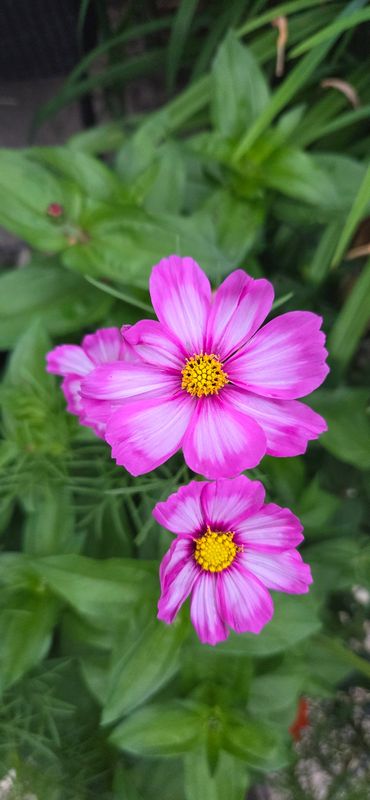
Another area of expansion has been at outlets such as Terry Naturally stores where clamshells of greens are sold. He still plants and sells produce, and is moving into the edible flowers market. Greens can also be purchased via his Facebook page.
Buhr said, “I am always trying new things. I took an herbalism and health class and am reading books to know what’s edible. I can market edible flowers like pansies, nasturtiums, borage, and squash blossoms.”
Research is also being done into freeze drying to provide more longevity to the produce. It is part of his goal to be part of a more secure food state and nation. And he wants to do it better than other providers.
He said, “My microgreens are the best microgreens. This is about quality of life and quality of product with a recognition that no one does anything alone in this world. I am very versatile and am interested in teaching people how to do this themselves.”
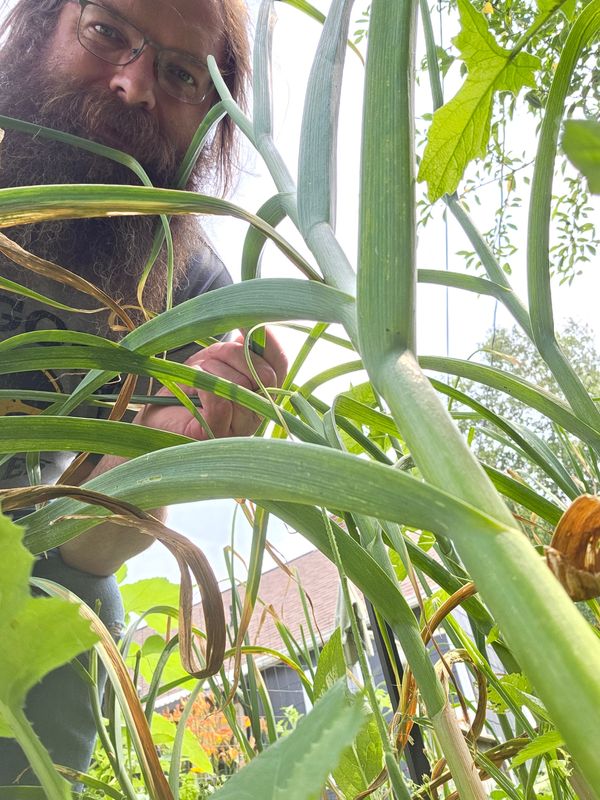
There are other goals as the business evolves. This year, a farm stand is planned, and within the next five years, a stand-alone facility. In addition to microgreens, there will be the other produce and garlic. All of this comes with the encouragement to make good food choices.
“The best advice is to eat the closest to the ground – grass-fed beef or milk and whole foods. But don’t overthink it. Eat as fresh as possible, but when you can’t, do the best you can,” Buhr said.
He brings that same attitude to his business and is trying to do his part, often with his daughter’s help. He teaches her to appreciate the land and what it can do for you; to put passion and time into growing a good product.
“In an ideal world, we would have more localized food systems to connect the strengths of food providers,” he said. “There are vulnerabilities in the system and impediments in that it is easier and cheaper to eat processed food. But everybody should have the opportunity to have good food.”
There is a recognition that none of this can be accomplished by one person and he is compelled to do his part. And, he says that building relationships is a big part of it whether in the food industry or even when performing in the other venture that he’s part of. He sings, plays the guitar, and has produced albums with the band, Hue Blanc’s Joyless Ones.
“By having my own business, I am able to dictate life on my own terms,” he said. “Don’t stress the small stuff. You want to be passionate, but you have to use your personal strengths. If you feel stressed, step back and ask yourself if that’s justified. Then look for an easier solution.”
Tina Dettman-Bielefeldt is co-owner of DB Commercial Real Estate in Green Bay and past district director for SCORE, Wisconsin.
This article originally appeared on Green Bay Press-Gazette: Life experience helped Casey Buhr get into marketing microgreens
Reporting by Tina Dettman-Bielefeldt, For Green Bay Press-Gazette / Green Bay Press-Gazette
USA TODAY Network via Reuters Connect
By Tina Dettman-Bielefeldt, For Green Bay Press-Gazette | USA TODAY Network