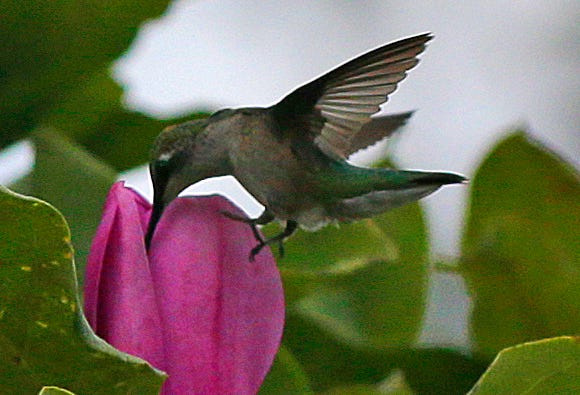
Hummingbirds have started to arrive in Wisconsin during their annual migration.
The birds have been spotted in southern and central Wisconsin, with a few sightings as far north as Sturgeon Bay, according to Hummingbird Central’s spring migration tracker. The first reported sighting happened April 13 in Madison, but many more new sightings occurred around the state April 21 and 22.

The only hummingbird species spotted in Wisconsin so far this year are ruby-throated hummingbirds. That’s expected, though, because they’re the only hummingbirds that nest east of the Mississippi River.
Hummingbird migration map
Hummingbird Central’s map below tracks bird sightings across the country during the migration season.
How long do hummingbirds stay in Wisconsin?
After spending time in Wisconsin for the state’s warmer months, hummingbirds usually head back south between August and October.
Late April is right on the mark for the typical start to Wisconsin’s hummingbird season. In 2025, the birds arrived in the state about that same time, with sightings peaking in late May.
What kind of hummingbirds can I see in Wisconsin?
The only common hummingbird in the Midwest is the ruby-throated hummingbird, according to the University of Wisconsin-Madison and Cornell University,
While other hummingbirds can sometimes be spotted, they’re rare and sightings usually happen by accident after a bird ventures off its typical path.
Ruby-throated hummingbirds are about 3 inches long with green backs and white underbellies.
Male birds have the titular red necklines, but the iridescent red can appear black when seen at the wrong angle. Female birds do not have the red markings.
If you saw hummingbirds this winter, you might have snatched a rare look at a Rufous hummingbird. According to Cornell University’s eBird project, there were more than 50 reports of Rufous hummingbirds in Wisconsin as of 2018.
How to encourage hummingbirds to your yard
The best way to encourage hummingbirds to your yard is to plant plenty of food resources for them.
You should ideally grow a variety of nectar-producing flowers, with feeders to supplement when blooms are in short supply, according to the UW-Madison Department of Horticulture.
The department recommends staggering bloom times to make sure hummingbirds have a food source for the entire season, as well as providing a source of water and trees or tall shrubs for nesting and perching. Make sure to avoid using pesticides that kill small insects hummingbirds regularly eat.
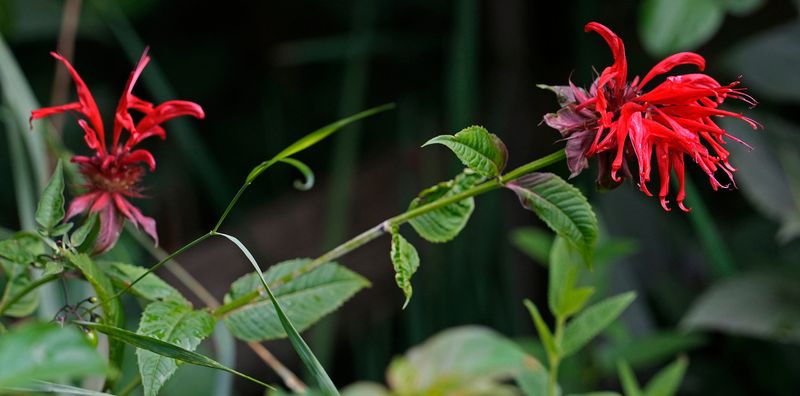
Some of the plants that attract hummingbirds include cuphea, cardinals, coral honeysuckle, beebalm, blue anise sage and Texas or scarlet sage.
Find a full list of hummingbird plants here.
How to track bird sightings in Wisconsin
Amateur birders can report and track daily bird sighting on the following sites:
What do hummingbird nests look like?
Ruby-throated hummingbirds nest in North America to hatch and raise their young before returning south.
Their nests are small cup-shaped clumps typically 10 to 20 feet above the ground. Female birds build nests with grass, tree fibers, plant down and spider webs to hold it together. The birds also camouflage nests with lichen and dead leaves.
The females typically lay two eggs per nest and have been observed maintaining two nests at once: one for newer-hatched young and another for a second brood of eggs.
If possible, leave hummingbird nests alone. Females will abandon their nests if they feel unsafe because of human presence. Hummingbirds also reuse and recycle nests if the nest remains intact until their return, so removal of inactive nests is not necessary.
Milwaukee birding hotspots
Hummingbirds can be seen all around, but gravitate towards semi-open areas like riversides, city parks and edges of forests. Milwaukee and adjacent municipalities are all recognized as Bird Cities with these 11 parks touted as ideal birding locations, according to Visit Milwaukee:
This article originally appeared on Milwaukee Journal Sentinel: Hummingbirds have arrived in Wisconsin. See how to track their migration
Reporting by Caden Perry and Maia Pandey, Milwaukee Journal Sentinel / Milwaukee Journal Sentinel
USA TODAY Network via Reuters Connect