Starting March 26, visitors to the History Museum at the Castle can see and learn about dinosaurs, glittering stones and other ancient wonders alongside local history exhibits.
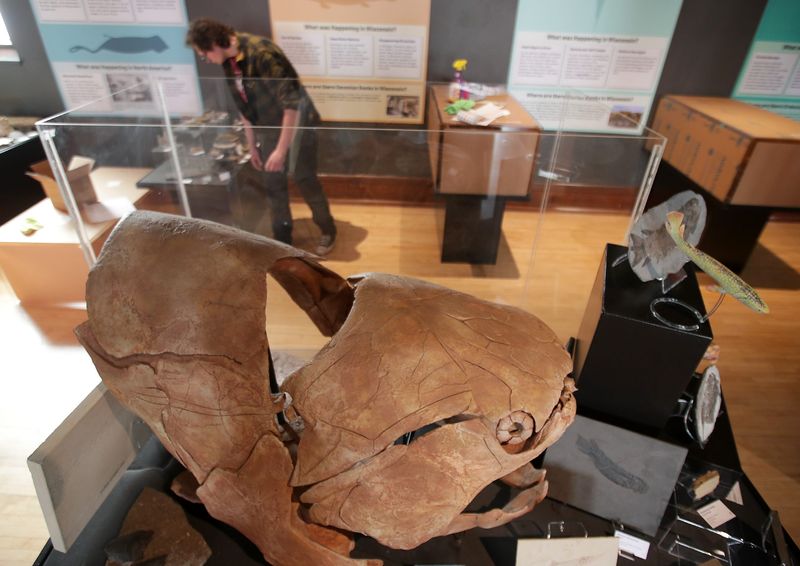
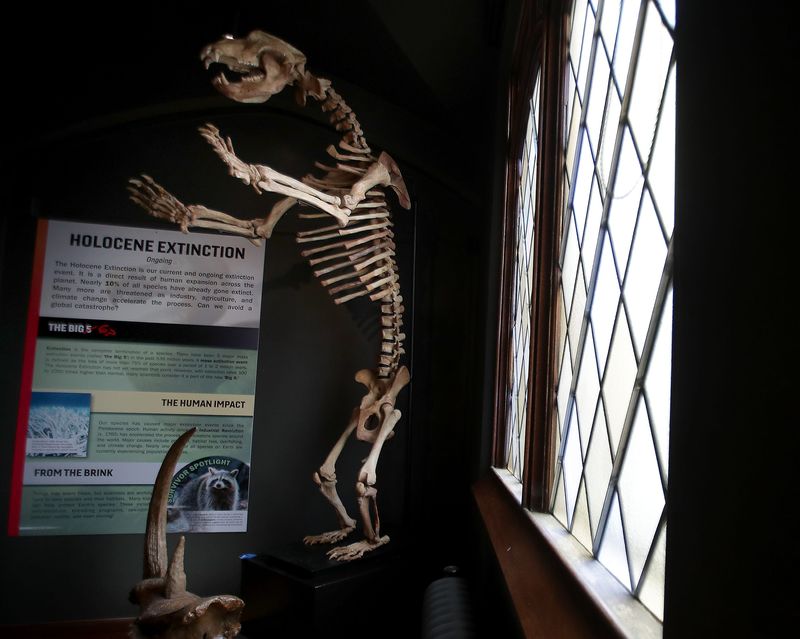
After months of relocating, cataloging and setting up the exhibits, the collection of fossils and rocks formerly housed at the Weis Earth Science Museum has moved into the local history museum in downtown Appleton. The Bruce Danz fossil collection and Weis geological timeline is now housed in the Leonard and Donna Weis Gallery on the main floor. Upstairs, F. John Barlow’s collection of rocks and minerals − plus an unopened can of Bubbl’r − has made its home in a room off to the side from the Houdini exhibit.

After the University of Wisconsin-Oshkosh Fox Cities announced it would close June 2025, Outagamie County leadership agreed to allow Winnebago County to become the sole owner of the campus, which had been jointly owned by both counties since 1960. In exchange, Outagamie County received the Weis collection, which was then donated to the History Museum.
The Weis Earth Science Museum closed May 2025; the museum’s artifacts finished moving out of the former UWO Fox Cities campus that December. From there, History Museum staff and volunteers got to work, with two new employees, Chase Shelburne and Amelia Zietlow, to manage the collection.
New ‘Prehistoric Wisconsin’ exhibit came together in less than a year, with nods to Weis museum
While some aspects of the new “Prehistoric Wisconsin” display on the main floor might feel familiar to Weis Museum visitors, the exhibit reworked many aspects of the old displays.
On the wall, the geologic timeline now includes all of the prehistory, including extinction events and eras where most of Wisconsin has gaps in the fossil record due to glacial activity. The timeline’s signs were redone to fit the walls and simplify and update the information, Mack said. While the signs look different, the History Museum kept the timeline’s pastel color scheme and information about how each prehistoric era impacted the local landscape and presence of fossils. As she took a Post-Crescent reporter through the display, Zietlow pointed out how the sign colors for each era matched the colors used in chronostratigraphic charts.
A Milwaukee native, Zietlow said she wanted to “carry forward” the Weis Museum’s Wisconsin focus, using local and Midwestern specimens whenever possible. She also chose a trilobite for the exhibit’s logo, since trilobites are Wisconsin’s state fossil.
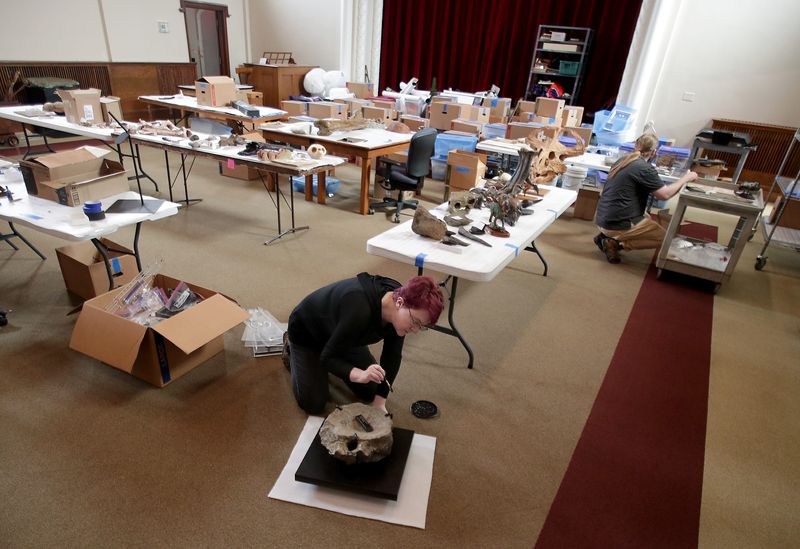
In the meantime, the rest of the Weis collection is still being cataloged in a room next to the rock and mineral displays. Shelburne said the process of cataloging the collection involved “tactically unwrapping boxes,” ensuring each specimen isn’t damaged, documenting each one, identifying it if necessary, and preparing exhibits for display.
Shelburne estimated that the total Weis collection contains between 20,000 and 50,000 specimens. The full catalog will likely take years to complete, he said, but they’re well on their way to finishing a basic inventory. Mack said it’s typical for a museum to display only 5% to 10% of its collection and for cataloging to be “never-ending.”
As natural history collection unveils, History Museum staff already thinking ahead
Over the next few years, Mack says he hopes to gather community feedback on the museum exhibit and use it to inform longer-term plans for the collection.
He said he also enjoyed seeing reactions from visiting school groups who got a sneak peek at the new exhibits. The unopened can of Bubbl’r, which sits under glass as an example of an aluminum product, excited one student so much he tried drawing his classmates away from the Houdini exhibits, Mack said.
Mack has some ideas for improving the new exhibits already, such as giving Prehistoric Wisconsin extra polish in the hands of a professional firm. Zietlow also sees opportunities to add educational aspects, such as more interactive exhibits and using parts of the collection to teach the process of scientific discovery.
But for now, Stephen Weis, whose parents Leonard and Donna Weis founded the original Weis Museum, praised the History Museum staff for their work and the community for their support.
That support, he said, is “something very special that you don’t see in most communities, and I’m very appreciative of that.”
“It’s exciting for me to see the continuation of [my parents’] dream here,” he added.
Rebecca Loroff is an education reporter for the USA TODAY NETWORK-Wisconsin. She welcomes story tips and feedback. Contact her at rloroff@usatodayco.com.
This article originally appeared on Appleton Post-Crescent: History Museum at the Castle unveils new natural history exhibit
Reporting by Rebecca Loroff, Appleton Post-Crescent / Appleton Post-Crescent
USA TODAY Network via Reuters Connect