The U.S. Environmental Protection Agency will reconsider a 2024 decision to more strictly penalize southeast Wisconsin for failing to meet national air quality standards for ozone pollution.
State environmental agency leaders and business groups had come together to push for the reconsideration, saying it created “costly and burdensome requirements” that wouldn’t address “the root cause” of why Wisconsin doesn’t meet the standards.

They say out-of-state polluters should be held accountable instead, as large amounts of the area’s ozone pollution drifts over Lake Michigan from other states.
Southeast Wisconsin’s air quality has for years held what’s called “nonattainment” status for ozone, which forms when gases released from cars, power plants, chemical plants and other sources mix with sunlight and heat. Nonattainment status is given when an area does not meet federal standards and thus faces stricter regulations, including the vehicle emissions tests drivers are required to get before they can renew their license plates each year.
Statewide ozone concentrations have decreased by more than 20% over the last two decades, but progress has slowed, according to the Wisconsin Department of Natural Resources. The issue has new urgency as utilities in the state extend coal plant operations to serve growing electricity demand, including from data centers.
In December 2024, the EPA reclassified Milwaukee, Sheboygan County and Kenosha County’s nonattainment areas from Moderate to Serious, which comes with more regulations for businesses, because the areas had failed to meet the standards.
In a July 28 letter to DNR leadership, EPA Region 5 Administrator Anne Vogel said the reconsideration will be given a public comment period. A spokesperson for the EPA said the agency cannot currently provide more details about the reconsideration process or when a decision will be made.
Dale Kooyenga, president and CEO of the Metropolitan Milwaukee Association of Commerce, said having the DNR’s support for reconsidering the reclassification means “it’s based on the science.”
“They have the same concerns we do. [The EPA is not] applying the right enforcement mechanisms to the right set of businesses,” Kooyenga said.
In September 2025, a federal appeals court granted the state’s request to temporarily postpone the stricter regulations under the “serious” nonattainment classification. That will stay in effect while the EPA reconsiders.
Kooyenga said under the “serious” classification, more Wisconsin businesses would be under regulation and would need to cut emissions by a larger percentage. He said his group supports the enforcement of emissions reductions “where they’re coming from.”
Amy Barrilleaux, communications director for Clean Wisconsin, said regardless of where the ozone is coming from, it’s affecting people’s health throughout the region. Clean Wisconsin won a 2018 lawsuit against the EPA to keep parts of the region classified as nonattainment areas.
Being exposed to too much ozone in the air can cause health problems like a sore throat, shortness of breath, coughing and headaches. Long-term ozone exposure can produce new cases of asthma, a particular concern in Milwaukee, where public school children are about twice as likely to have asthma as their school-aged peers across the U.S. It’s also linked to other respiratory health issues and premature death.
“We often hear about the cost of pollution controls on power plants, but we don’t often hear about the cost of hospitalizations or missed work and school days,” Barrilleaux said. “These standards are aimed at protecting people and saving lives. When you disregard that … that doesn’t help anybody.”
Warming temperatures due to climate change also mean there will be more chances for unhealthy summertime ozone levels.
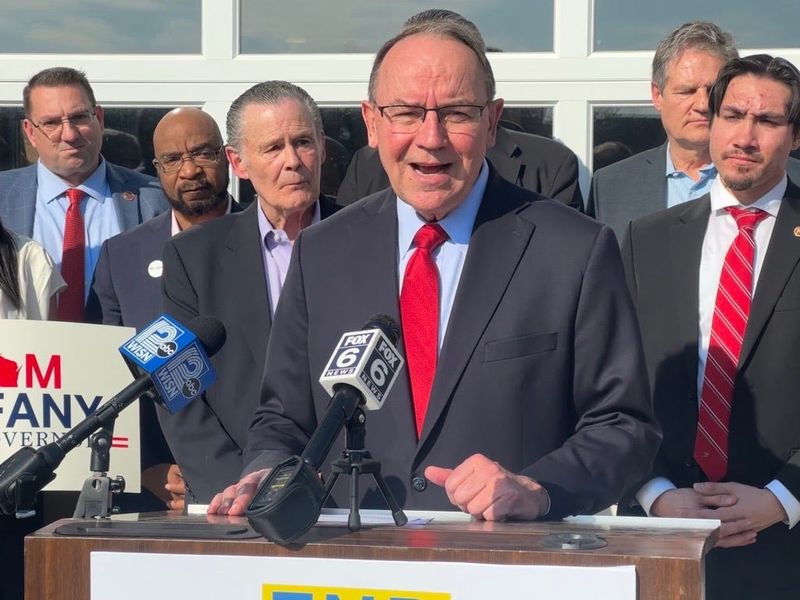
Wisconsin’s Republican lawmakers are also closely watching the region’s ozone regulations, including likely Republican nominee for governor Tom Tiffany, who said in March he would ask the EPA to end the emissions testing requirement.
Madeline Heim covers health and the environment for the Milwaukee Journal Sentinel. Contact her at 920-996-7266 or mheim@usatodayco.com.
This article originally appeared on Milwaukee Journal Sentinel: EPA to reconsider southeast Wisconsin’s ozone pollution status
Reporting by Madeline Heim, Milwaukee Journal Sentinel / Milwaukee Journal Sentinel
USA TODAY Network via Reuters Connect
By Madeline Heim, Milwaukee Journal Sentinel | USA TODAY Network