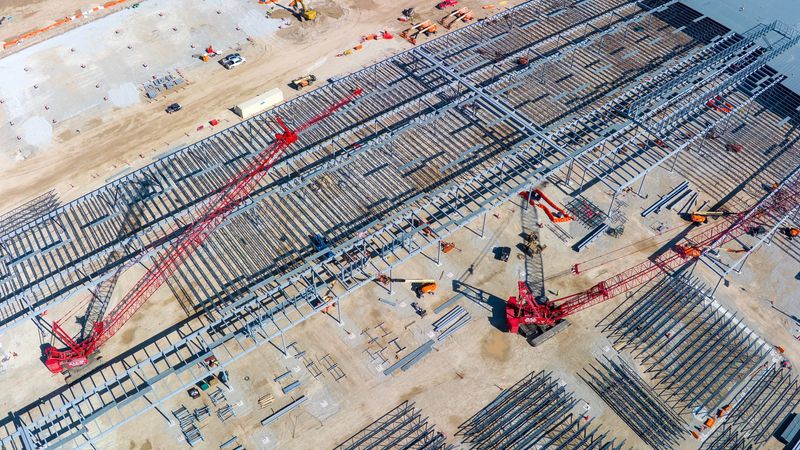
Across Wisconsin and the Great Lakes region, a consequential shift is underway. Regardless of political party, voters are highly concerned about the surge of AI-data centers being proposed across the region. Polling conducted in early 2026 found that 70% of Wisconsin voters believe the costs of large data centers outweigh the benefits, citing water impacts most often.
We are a team of academic water policy researchers studying the water demands of AI-data centers. Industry is proposing massive centers at a scale and speed new to local and state government. These hyperscale, AI‑driven facilities are fundamentally different from prior data centers, placing unprecedented demands on water supplies, power production, electric grids and local infrastructure while largely escaping public scrutiny.

These new demands have exposed significant gaps in our water policies. Regulatory oversight has not kept pace with these impacts on the public. Lacking a coherent federal framework, states and local communities are scrambling to understand how to regulate an industry whose cumulative impacts threaten to impose unchecked strain on shared natural resources across the country, even for the relatively water-rich Great Lakes region.
Model legislation aims to create more sustainable future
At this inflection point, the Center for Water Policy at the University of Wisconsin-Milwaukee School of Freshwater Sciences released model legislation to assist states that seek to create a more sustainable future for AI-data center development. The model is organized around five core legislative goals that respond directly to the concerns communities and policymakers are grappling with today:
For each goal, we outline legislative options designed to help local and state lawmakers achieve their objectives. Drawing on approaches already underway in multiple states and adding original provisions where appropriate, the model presents a range of options, from requiring reporting on water and energy use to holding Big Tech companies accountable for costs to any infrastructure upgrades.
Unprecedented demands for resources drive need for legislation
As AI investment balloons, so do the resource demands of new AI-data centers. In 2023, U.S. data centers are estimated to have directly consumed 17 billion gallons of water for cooling these hot, thirsty facilities. Significantly more water (211 billion gallons in 2023) was indirectly consumed to generate electricity. Electricity demand in the Great Lakes region is projected to grow rapidly —and if powered by fossil fuels or nuclear- that will mean a substantial increase in water demand as well.
Wisconsin is already seeing the resulting increase in electricity demand. According to Clean Wisconsin, two proposed projects alone — Microsoft’s data center in Mount Pleasant and Vantage’s facility in Port Washington — are expected to require a combined 3.9 gigawatts of power. That amount exceeds the electricity used by every home in Wisconsin combined, underscoring how a small number of AI-focused data centers can rival or surpass the energy needs of millions of residents statewide.
Rapid data‑center expansion is already driving up electricity costs in some regions, prolonging reliance on fossil‑fuel power plants, re-opening nuclear plants and placing new pressure on public water infrastructure. In Wisconsin and across the Great Lakes region, utilities face mounting requests to expand electricity and water supplies to serve AI-data centers, raising urgent questions about who ultimately bears these increased costs.
Investigative reporting exposed that developers routinely rely on nondisclosure agreements that limit what public officials can share about water use, energy demand or infrastructure costs, leaving community members disempowered and undermining transparent, democratic decision-making. At the same time, states still compete to attract AI-data centers through tax exemptions and expedited approvals—policies designed for an earlier era of smaller, less resource‑intensive facilities.
Our model legislation offers tools for AI and beyond
That mismatch between voter concern and policy frameworks has become a major point of friction in siting new AI-data centers. Earlier this year, several states began reexamining tax incentives or proposing moratoria, recognizing that existing laws do not reflect the scale, speed or cumulative impacts of today’s AI-data center boom. Lawmakers throughout the country are considering how to create policies that protect the public interest while they attract these technology developments to their communities.
Many of the model’s policy tools are intentionally structured to apply beyond AI-data centers. Governments can adapt these options to cover all large water and electricity users, ensuring consistent treatment of high‑impact resource demands across industries.
Taken together, these measures reflect a simple but overdue premise: communities deserve full information, fair cost allocation, and long‑term safeguards before committing their water, energy systems, and public finances to facilities of this scale. With the emergence of the AI industry, legislators have a responsibility to respond to voters’ overwhelming concerns and a historic opportunity to shape a more sustainable approach in the Great Lakes states.
Melissa Scanlan, Tressie Kamp, Emilie Washer, and Will Matuska are researchers at the University of Wisconsin-Milwaukee’s Center for Water Policy.
This article originally appeared on Milwaukee Journal Sentinel: AI’s giant resource demands drive need for model legislation | Opinion
Reporting by Melissa Scanlan, Tressie Kamp, Emilie Washer, and Will Matuska, Special to Milwaukee Journal Sentinel / Milwaukee Journal Sentinel
USA TODAY Network via Reuters Connect