The deadline is nearing and we know the Milwaukee Brewers will once again be buyers.
But to what degree?

If we are to go off of history, chances are the Brewers will follow their blueprint of MLB trade deadlines prior when they acquired the likes of Mark Canha, Carlos Santana, Nick Mears, Frankie Montas and Danny Jansen, all decent contributors but far from flashy additions.
Here’s why: Milwaukee’s midseason trade acquisitions from June and July over the past three years have added 4.7 Wins Above Replacement in the seasons in which they were acquired (and 6.8 WAR combining all years with the Brewers).
Process-wise, this has actually worked out quite well in the Brewers’ favor. The average contender adds roughly 1.0 WAR at the deadline. The Brewers are averaging more than a win and a half added per deadline, and doing so without sacrificing any real prospect capital; Jadher Areinamo and Jhonny Severino are the two best prospects they’ve parted ways with in that span.
“But what about winning the World Series?” you may ask. “That’s, after all, the main goal. Not just making the playoffs.”
According to one study, World Series winners add slightly less WAR than non-champions.
Like it or not, this is the line of thinking that president of baseball operations Matt Arnold and company follow with their deadline approach.
To date, there has been no internal indication to believe the Brewers will operate any differently than in years past. Could the Brewers surprise us all and take a big swing? They could, especially if it’s for a player with multiple years of control.
But is this the year the Brewers decide to break from their mold? With a murkier line between buyers and sellers than perhaps ever before, that could make it cost even more to acquire impact players.
With this in mind, let’s peruse who may be available to the Brewers at positions of need.
Below is a (nearly) a complete rundown of options available to Milwaukee that also make sense as a roster structure and contractual fit. (For example: The Brewers are not going to take on Matt Chapman’s contract, so he’s not listed.)
STARTING PITCHERS
The Brewers have Jacob Misiorowski. They have Kyle Harrison. They have questions after that.
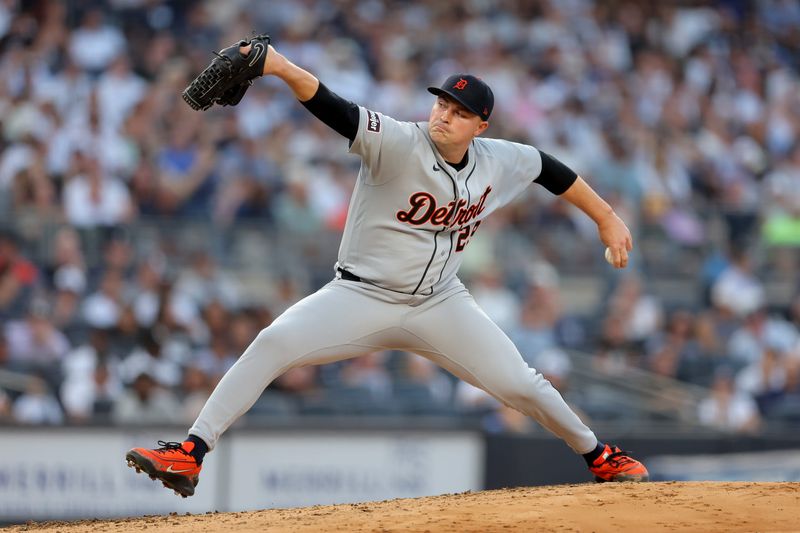
Tarik Skubal, Detroit Tigers
Stats (at All-Star break): 3.09 ERA (earned-run average), 3.06 FIP (fielding independent pitching; accounts for only events pitcher has control over − strikeouts, walks, hit batters, home runs), 3.20 xERA (expected ERA; adjusts for ballpark differences)
Age/contract: 29/free agent after 2026 (appx. $16 million remaining)
Case: Skubal is not only the best player potentially on the market, but could be the best rental arm ever. Not much more needs to be said about the value of adding the two-time reigning Cy Young winner, although it would cost a fortune – and the Brewers haven’t been willing to dance in those trade waters before.
Cost: Multiple non-Jesús Made top-100 prospects.
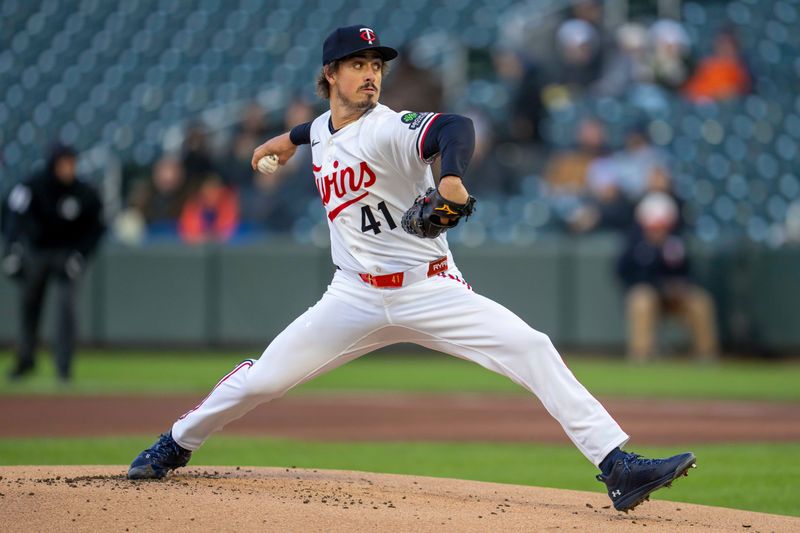
Joe Ryan, Minnesota Twins
Stats: 2.85 ERA, 2.77 FIP, 3.20 xERA
Age/contract: 30/through 2027 ($13 million mutual option or final year of arbitration)
Case: Ryan is a frontline starter with another year of control and wouldn’t cost quite as much as Skubal, but with the Twins firmly in playoff contention (despite a losing record) they may not move him.
Cost: Andrew Fischer and Braylon Payne
Casey Mize, Detroit Tigers
Stats: 2.79 ERA, 2.69 FIP, 3.08 xERA
Age/contract: 29/free agent after 2026 (appx. $3 million remaining)
Case: Injuries have plagued Mize, including even this year, but he’s now living up to his prospect hype as the former first overall pick. Over 37 starts the past two years, he has a 3.48 ERA with peripherals to match. His Baseball Savant page is littered with dark red (that’s good). Milwaukee has taken its chances on pitchers with injuries at the deadline recently but it hasn’t worked out well. Perhaps Mize would be different.
Cost: Someone in the lower second-tier or upper third-tier of the system. JD Thompson? Ethan Dorchies?
Reid Detmers, Los Angeles Angels
Stats: 4.39 ERA, 3.35 FIP, 3.38 xERA
Age/contract: 27/free agent after 2028
Case: Detmers has been so much better than his numbers show and comes with a high pedigree. Sounds like an ideal fit for the Brewers.
Cost: Braylon Payne, JD Thompson and Craig Yoho
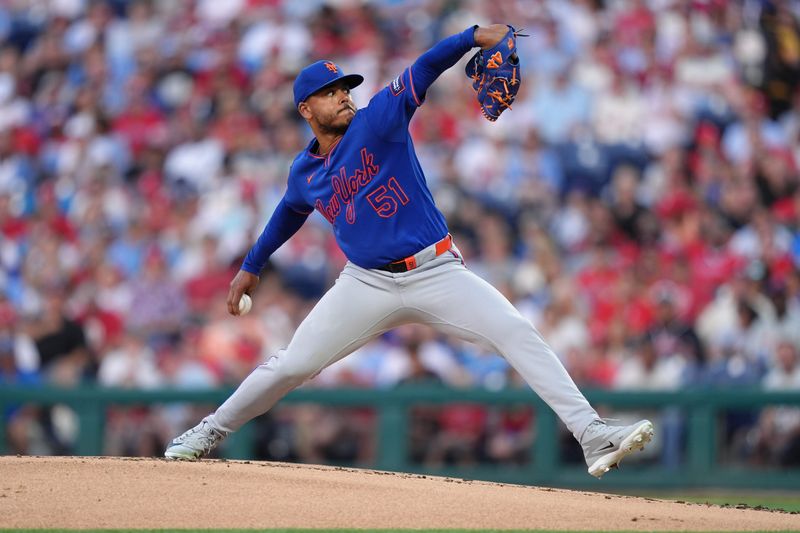
Freddy Peralta, New York Mets
Stats: 4.66 ERA, 4.38 FIP, 3.82 xERA
Age/contract: 30/free agent after 2026 (appx. $4 million remaining)
Case: The Brewers know what Peralta is capable of better than anyone. He’d be a seamless clubhouse fit, with a return that would raise the vibes in the room better than anyone else could. But is the ability still there?
Cost: A lot less than Brandon Sproat and Jett Williams
Michael Wacha, Kansas City Royals
Stats: 3.77 ERA, 4.00 FIP, 4.13 xERA
Age/contract: 35/signed through 2027 ($15 million) with team option for 2028 (2 years, $28 million)
Case: Wacha has quietly been one of the most-consistent starters in baseball the past five years with a 120 ERA+ (adjusted ERA with 100 as the average) and 3.84 FIP. His worst season in that span is a 3.86 ERA, which makes the remainder of his contract reasonable.
Cost: Josh Knoth and Tate Kuehner
INFIELDERS
Cooper Pratt has been called up to play shortstop, but that doesn’t mean the Brewers should necessarily settle. They could still benefit from an upgrade at either left side position on the infield.
Jeremy Peña, Houston Astros
Stats: .287 batting average/.347 on-base percentage/.426 slugging percentage, 6 home runs, 8 stolen bases, 1.7 WAR (wins above replacement)
Age/contract: 28/one year of arbitration remaining
Case: A 5.7 WAR player last year, Pena likely would end up as the best position player traded if the Astros decide to move him. The Brewers sure could use the help.
Cost: Logan Henderson and a mid-level prospect
CJ Abrams, Washington Nationals
Stats: .275/.352/.510, 20 HR, 15 SB, 2.5 WAR
Age/contract: 25/free agent after 2028
Case: Abrams is the big shortstop bat for whom the Brewers yearn. The problem is the Nationals are suddenly wild-card contenders … and Abrams would likely have cost too much, anyway.
Cost: Wishful thinking.
Isaac Paredes, Houston Astros
Stats: .256/.349/.417, 12 HR, 0 SB, 2.2 WAR
Age/contract: 27/free agent after 2027 ($13.4 million club option for 2027 or arbitration-eligible if declined)
Case: Milwaukee poked around on Paredes before the season when it dealt Caleb Durbin to Boston, but it wasn’t a good fit. He’s had an OPS+ of 114 (100 is average) or better every year since 2022
Cost: It was too high this spring, so why would it suddenly be different now?
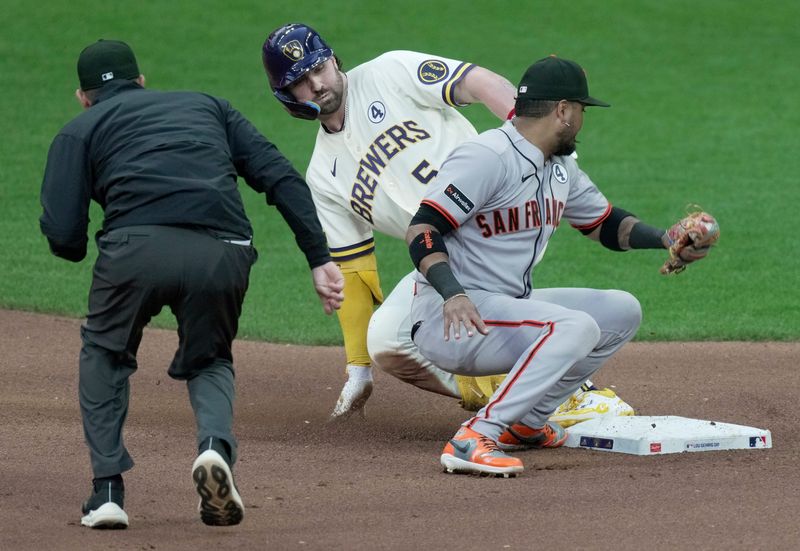
Luis Arraez, San Francisco Giants
Stats: .330/.369/.460, 4 HR, 8 SB, 3.7 WAR
Age/contract: 29/free agent after 2026 (appx. $6 million remaining)
Case: With Arraez, the Brewers would go from the most-pesky team in baseball to full-on needing mosquito alternate uniforms. The only question is where he would play. First and second base are locked, as is DH. Arraez’s defense is much improved this year, but could he handle learning third base on the fly?
Cost: Could maybe get away without losing any top prospects and instead utilizing deph, headlined by a Jaron DeBerry or Coleman Crow type?
Willi Castro, Colorado Rockies
Stats: .260/.331/.378, 7 HR, 6 SB, 0.5 WAR
Age/contract: 29/free agent after 2027 ($7.3 million next season)
Case: We did this dance last July. Castro is versatile and a decent hitter who’s solid in every area but great in none. Do the Brewers really want to commit to paying him next year given the state of their farm system, though?
Cost: Depth arms
Isiah Kiner-Falefa, Toronto Blue Jays
Stats: .277/.344/.361, 2 HR, 7 SB, 1.1 WAR
Age/contract: 31/free agent after 2026
Case: The year is 2045. Isiah Kiner-Falefa is 50. The Brewers still seem like an optimal fit to acquire him. He instead signs with his 29th team.
Cost: Is Josh Knoth too much?
OUTFIELDERS
Milwaukee doesn’t have a shortage of options in the outfield, plus the emergence of Garrett Mitchell and Sal Frelick returning to form would seemingly make it unlikely the Brewers add here. Never say never, I guess?
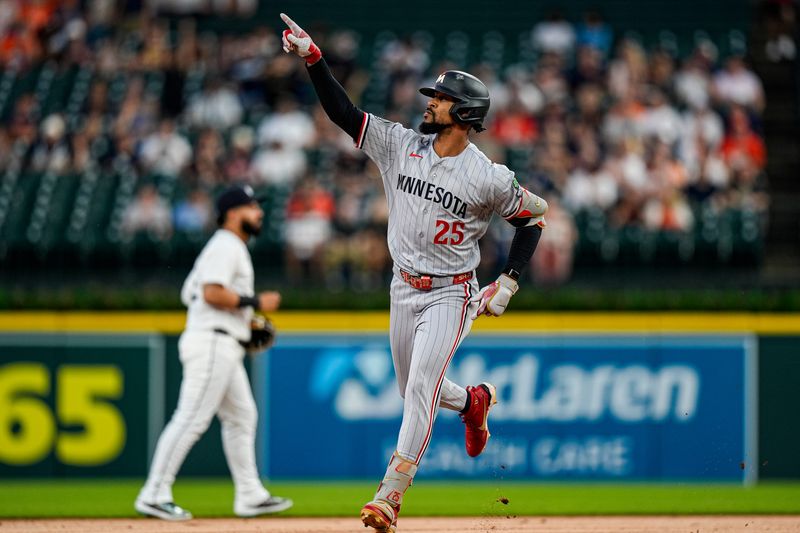
Byron Buxton, Minnesota Twins
Stats: .271/.328/.575, 25 HR, 7 SB, 2.9 WAR
Age/contract: 32/two years, $30 million remaining
Case: Buxton singlehandedly would raise the lineup more than anyone on the market. But here’s the thing: He may not be on the market. Buxton has a full no-trade clause and hasn’t expressed interest in waiving it.
Cost: A lot. Luis Pena, Josh Adamczewski and Tyson Hardin?
Taylor Ward, Baltimore Orioles
Stats: .255/.387/.359, 6 HR, 3 SB, 1.6 WAR
Age/contract: 32/free agent after 2026
Case: His bat and on-base skills more than make up for mediocre defense. If the Brewers would contemplate slipping Christian Yelich into a platoon, Ward could also DH against lefties, too.
Cost: Jayden Dubanewicz
Trevor Larnach, Minnesota Twins
Stats: .289/.379/.451, 7 HR, 2 SB, 1.8 WAR
Age/contract: 29/entering final year of arbitration
Case: A 112 wRC+ (weighted runs created plus; average is 100) the past three seasons, but he doesn’t play very good defense.
Cost: Sean Episcope and Rylan Mills
Mickey Moniak, Colorado Rockies
Stats: .278/.326/.574, 15 HR, 1 SB, 1.3 WAR
Age/contract: 28/entering final year of arbitration
Case: Moniak’s surface stats are great (.948 OPS this year, .824 last year) but he’s probably not sustaining it. This doesn’t seem like a likely fit.
Cost: Eric Bitonti
RELIEF PITCHERS
You can never have too many bullpen weapons. Milwaukee’s bullpen results have been solid, but do they have enough arms that have earned Pat Murphy’s trust?
We can pretty safely assume the Brewers will get someone from this list, but guessing who that will be would take a dart throw. Here are five relievers we feel fit the Brewers well.
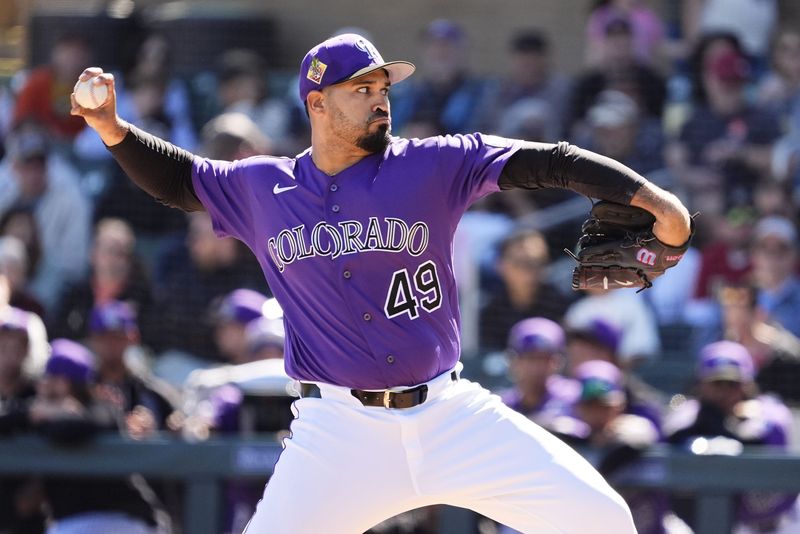
Antonio Senzatela, Colorado Rockies
Stats: 3.31 ERA, 3.22 FIP, 3.52 xERA
Age/contract: 31/free agent after 2026 (club option for 2027 with no buyout)
Case: Armed with a deep mix, Senzatela has become dynamite pitching in the bullpen at Coors this year.
Cost: Would Tyler Black and a mid-tier prospect do the trick? It’s easy to see the Rockies getting a stronger haul that the Brewers wouldn’t pay.
Greg Weissert, Boston Red Sox
Stats: 3.82 ERA, 4.35 FIP, 3.30 xERA
Age/contract: 31/three years of team control remaining
Case: Equipped with multiple solid fastballs and a good sweeper. The Brewers may be able to get more swing and miss from Weissert.
Cost: Not much.
Steven Okert, Houston Astros
Stats: 2.31 ERA, 3.38 FIP, 2.62 xFIP
Age/contract: 35/free agent after 2026
Case: Okert has been dynamite in 2026, especially against lefties. His slider could make him a real weapon against the tops of opponents lineups in the playoffs.
Cost: Tate Kuehner or other advanced-level depth piece
Daniel Lynch IV, Kansas City Royals
Stats: 2.35 ERA, 3.15 FIP, 3.35 xERA
Age/contract: 29/two years of team control remaining
Case: This would make all the sense in the world for the Brewers. Lynch has a lethal sinker-slider combo for left-handers and also has options for righties. Lefties are hitting .127 against him and he’s under team control through 2028.
Cost: Marco Dinges and Bryce Meccage
Adrián Morejón, San Diego Padres
Stats: 3.42 ERA, 2.40 FIP, 2.49 xFIP
Age/contract: 27/free agent after 2026.
Case: Morejon has some of the best stuff from the left side in baseball.
Cost: Kenny Fenelon and Eric Bitonti
This article originally appeared on Milwaukee Journal Sentinel: A complete guide to the MLB trade deadline for the Milwaukee Brewers
Reporting by Curt Hogg, Milwaukee Journal Sentinel / Milwaukee Journal Sentinel
USA TODAY Network via Reuters Connect
By Curt Hogg, Milwaukee Journal Sentinel | USA TODAY Network