No amount of lead is safe, particularly for children.
And yet, each year about 2,000 of Milwaukee’s youngest residents are identified as having been poisoned by the heavy metal − with potentially devastating, lifelong consequences.

Childhood lead poisoning was an issue Milwaukee once confronted head-on and helped the nation learn to combat.
But that was before the city’s lead program fell into chaos and disarray. The rebuilding has taken the better part of a decade, and now program leaders face another challenge as federal pandemic aid runs dry.
Here are six takeaways from the Milwaukee Journal Sentinel’s lead investigation:
Milwaukee’s lead program was once the ‘strongest in the nation’
In 2001, officials from the U.S. Centers for Disease Control and Prevention visited Milwaukee to learn how the city’s lead program could be replicated elsewhere.
The program, housed in the city’s Health Department, was the “strongest in the nation,” they said.
Milwaukee gained notice for both testing children for lead and removing lead hazards from homes at a time when many cities were doing one or the other.
Leadership, strong community partnerships and enforcement led to success
By the time the CDC visited, the city had been working to combat childhood lead poisoning for at least a decade.
Milwaukee and Wisconsin had been two of just 14 cities, counties and states to take part in a groundbreaking federal evaluation of new methods to address lead hazards from deteriorated paint, dust and bare soil.
The city’s lead program, helmed by Amy Murphy, had spent years working with advocacy group Citizen Action of Wisconsin to build bonds with local groups to reach Milwaukee’s diverse communities.
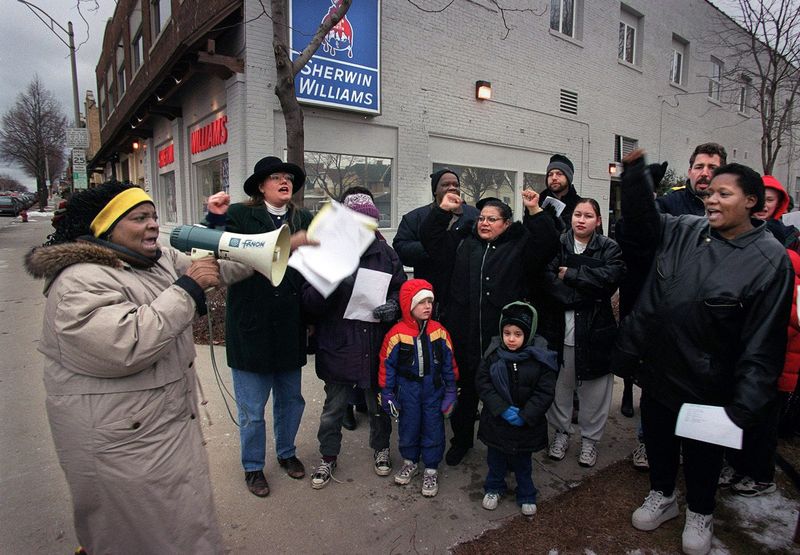
The community action led to a three-year pilot ordinance that made Milwaukee one of the first cities in the country to try to clean up homes before a child was poisoned instead of in response. A lawsuit against paint companies also eventually came about.
The Health Department’s lead team also expanded, adding more inspectors among other positions. They received detailed training on writing orders for property owners to clean up hazards and making sure the owners followed through.
Lead program unraveled after key leaders left
Murphy left in 2006.
Her departure came after newly elected Mayor Tom Barrett appointed Bevan Baker as the city’s health commissioner.
Under new leadership, the lead program gradually collapsed. It pulled back from relationships with community groups, devolved into internal strife and dysfunction, and failed to consistently and adequately respond to children who had been lead poisoned.
The problems became public in early 2018, prompting a reckoning that included a series of internal and external reviews in addition to a criminal investigation that ended without charges.
The fallout also included Baker’s forced resignation and the firing, resignation or discipline of program employees.
Reached recently by phone, Baker declined to comment. In the past, the former commissioner has blamed then-mayor Barrett and other departments for the lead program’s problems.
Federal pandemic aid helped rebuild the program but that funding ends soon
It has taken years – and millions of dollars – to rebuild the lead program.
An historic influx of federal pandemic aid helped. City leaders decided to spend about $23.7 million on removing lead paint in homes.
The funding has allowed the Health Department to respond to children with blood-lead levels below the minimum threshold required by state law and build ties with other organizations.
So far, the city has fixed nearly 200 properties with the pandemic funds and expects to repair another 100 this summer.
The pandemic-era funding must be spent by the end of this year.
Department leaders are exploring other options. They pointed to a new $7.7 million federal housing grant as progress. A consultant also is researching how philanthropic organizations or healthcare systems could build a lead fund, similar to an effort that has raised about $92 million in Cleveland.
Separate federal funding has helped the city replace lead pipes
In directing the federal pandemic dollars to lead paint removal, city leaders bet correctly that then-President Joe Biden’s infrastructure bill would pass. That legislation offered millions more to replace lead pipes that carry water to properties across the city.
The lead pipe replacement project is overseen by Milwaukee Water Works and has cost about $117 million from 2017 through 2025.
Over decades, same neighborhoods have highest rates of elevated lead levels
Fewer children in Milwaukee today have the extraordinarily high lead levels seen in the last century and early 2000s. But the neighborhoods where children are most likely to have high lead levels remain largely the same.
While many worry about the risk of lead pipes, data shows children have lower lead levels in neighborhoods with the highest concentration of lead service lines, such as Bay View. The data points to housing and deteriorating paint as the most likely source of poisoning.
In Milwaukee, housing cannot be untangled from the city’s history of racial residential segregation.
Black children growing up in properties, often rentals, in the central and north side of the city have higher rates of lead poisoning than White children in other parts of the city, even though the ages of the homes are comparable. A similar disparity appears in the city’s predominantly Latino near south side.
This article originally appeared on Milwaukee Journal Sentinel: 6 takeaways from our investigation into Milwaukee’s lead program
Reporting by Alison Dirr, Milwaukee Journal Sentinel / Milwaukee Journal Sentinel
USA TODAY Network via Reuters Connect