The title of this piece has only four words, so one can assume there is a phrase different from the title. You’ve assumed correctly!
The six words are: “It seemed right at the time.” I want to pull my hair out just thinking of that sentence.

My husband, a rational and practical man, is one of a few people who uses that sentence frequently when I go on a rant declaring, “I shouldn’t have [fill in the blank]” or “why did I [fill in the blank]?”
When we make New Year resolutions and don’t keep them, or vow to move through life a bit differently and then don’t follow through, many of us have laments.
I grew up with a dear family friend who constantly second-guessed herself about most of her actions. If she turned on one street, she wondered why she hadn’t waited until the next light. If she made a certain kind of cake, she claimed that a different one would have been more satisfactory.
On and on. It seemed there was very little she did that she didn’t bemoan. I am not blaming her for doing this, but I wonder how and why I (or any of us) fault our actions so often.
Even an interpretation of Genesis 6:6 reads that “it repented the Lord that he had made man on the earth, and it grieved him at his heart.”
Is it nature or nurture that turns us into regretting machines?
John Greenleaf Whittier, the 19th century American Quaker poet and staunch abolitionist, wrote: “Of all sad words of tongue or pen, the saddest are these: ‘It might have been.”
Our continued focus on a different outcome can be more than just disruptive. It can turn into obsession and play a role in making our mental health fragile.
By the same token, we can blame life’s “normal” struggles on a diagnosis that may not even exist for us.
Sometimes it is OK to be anxious about an upcoming event. A “fight or flight” instinct is normal. It can also be fine to feel sadness that an expectation wasn’t met or a job interview wasn’t the best. These feelings are also normal.
Clay Routledge, a research psychologist who directs a mental health public education initiative, noted:
“Start with our expanding conception of mental illness. The more fixated we are on mental health, the more sensitive we become to anything that might qualify as a symptom and the more we use clinical language to describe normal emotional experiences like grief, burnout and loneliness. “
Dr. Routledge states that concept creep is “a phenomenon … to over-pathologize experience and behavior,” and he adds that, “these trends not only increase the number of people who are identified as having mental health problems and seek treatment for them, but may also worsen mental health through a range of self-fulfilling processes.”
So, how do we go about lessening our thoughts of “should have” or “shouldn’t have?”
One way can be to lighten them by self-care messages to oneself. Remember that a mistake can help analyze future behavior and can continue to remind us that the past cannot be changed. We note alternative ways to handle different situations, and we move on.
Remember, too, that falling short of what we expect from ourselves strengthens the ability to empathize with others. Empathy fosters humility, and that, in and of itself, is a noble ideal. Reaching out is even better.
Author Brené Brown in her book “Rising Strong” reminds us that “regret is a tough but fair teacher. To live without regret is to believe you have nothing to learn, no amends to make, and no opportunity to be braver with your life.”
There is always something new to learn, even if — like today — it was discovering that “groat” can mean an old British coin. It would be a rare week if there was nobody with whom to make amends, and even more so if there was no opportunity to show vulnerability as a path to courage and creativity.
Maybe the six words I’ve been dreading for so long are half a dozen of the most useful ones I’ve heard after all.
Thank you, husband.
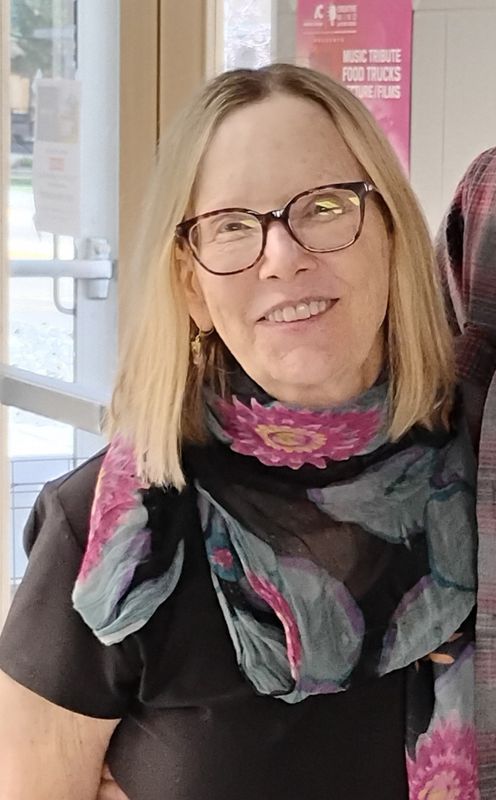
Andrea Elise is an Amarillo resident and regular column contributor.
This article originally appeared on Amarillo Globe-News: Would’ves, could’ves and the six words I dread | OPINION
Reporting by By Andrea Elise, Special to the Amarillo Globe-News / Amarillo Globe-News
USA TODAY Network via Reuters Connect
By Andrea Elise, Special to the Amarillo Globe-News | USA TODAY Network