Cinco de Mayo — Spanish for “fifth of May” — is often mistaken for Mexico’s Independence Day or compared to the Fourth of July in the United States. That’s not accurate.
The holiday commemorates a 19th-century military victory that occurred decades after Mexico gained independence from Spain, and it is not one of the country’s official nationwide holidays requiring a day off work.

Here are five things to know about the holiday.
What Cinco de Mayo actually celebrates
Cinco de Mayo commemorates a specific moment in Mexican military history — the Battle of Puebla on May 5, 1862.
At the time, Mexico was facing an invasion by French forces under Emperor Napoleon III, who sought to expand French influence in the Americas, according to the Texas State Historical Association. A well-equipped French army advanced toward central Mexico, expecting a quick victory.
Instead, they were met by a much smaller and less-equipped Mexican force led by General Ignacio Zaragoza at the city of Puebla. Despite the odds, the Mexican army managed to hold its ground and ultimately defeat the French troops in what became known as the Battle of Puebla.
The victory did not end the French intervention in Mexico, but it became a powerful symbol of resistance — showing that a smaller, less-equipped army could defeat a major European power. That symbolic win is what Cinco de Mayo honors today, rather than Mexico’s independence itself.
Who celebrates Cinco de Mayo?
Although there are some Cinco de Mayo celebrations throughout Mexico, particularly in the city of Puebla, the event is small compared to Día de la Independencia, which is celebrated annually in September after the country claimed its independence from Spain in 1810.
In Mexico, observances are relatively limited, with the largest events taking place in Puebla, where the battle occurred. The holiday is far less prominent than Día de la Independencia, held each year on Sept. 16 to mark Mexico’s independence from Spain in 1810.
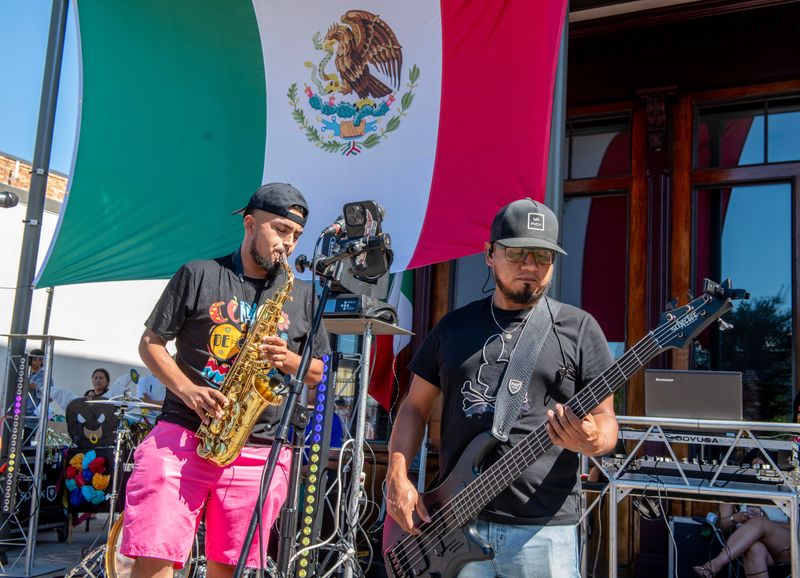
In the United States, however, Cinco de Mayo has grown into a broader celebration of Mexican American culture. Its rise is tied to the Chicano Movement, when communities began using the day to highlight identity, history and cultural pride.
Why is Cinco de Mayo celebrated in Texas?
Cinco de Mayo is celebrated in Texas to honor the rich cultural heritage of Mexican-descent communities, particularly Tejanos, who have deep historical roots in the state, according to the Texas State Historical Association. After the Texas Revolution, Tejanos began holding fiestas patrias in the 1820s to reinforce their ties to Mexico and celebrate their unique bicultural identity.
In cities like San Angelo and Houston, these celebrations have a long tradition. In San Angelo, celebrations began with a grand parade in 1910 and continued with large festivals, including sporting events and school concerts. By the late 1920s, the Mexican-American community began organizing events through the Comité Patriótico Mexicano, and in 1946, Estanislado Sedeno became a key figure in San Angelo’s Cinco de Mayo festivities, holding the event for 27 years at Sedeno Plaza.
In Houston, the celebrations started in the 1920s as the Hispanic population grew large enough to warrant a Mexican consulate. Early festivities included historic plays at Teatro Azteca and expanded over the years to include parades and dances. By the 1960s, groups like the Hispanic Club Familias Unidas began sponsoring events such as the Baile Ranchero, celebrating Mexican culture through music and dance. Today, Cinco de Mayo in Houston remains a major event, with various civic organizations playing a key role in sustaining and expanding the celebrations.
“Cinco de Mayo, in particular, has recently been embraced more generally in the same way as other ethnic celebrations such St. Patrick’s Day, Mardi Gras, and Octoberfest have found acceptance in American cultural life,” according to the Texas State Historical Association.
How to celebrate Cinco de Mayo respectfully
If you’re taking part in Cinco de Mayo, focus on events that respectfully highlight Mexican culture — including food, music and history. Avoid stereotypes or phrases that reduce the holiday, such as “Cinco de Drinko,” which can overshadow its historical significance.
When is Mexico’s Independence Day?
Mexico’s Independence Day — Diez y Seis de Septiembre — is celebrated on Sept. 16. It marks one of the most important moments in Mexican history: the start of the country’s war for independence from Spain in 1810.
The movement is tied to the Grito de Dolores, when Catholic priest Miguel Hidalgo y Costilla delivered a call for rebellion in the early hours of Sept. 16 in the town of Dolores, near present-day Guanajuato. In his speech, Hidalgo urged people to rise up against Spanish colonial rule, launching a long and complex war for independence.
Unlike Cinco de Mayo, which recognizes a single battlefield victory, Mexico’s Independence Day reflects the beginning of a nationwide revolutionary movement that ultimately led to independence from Spain in 1821.
This article originally appeared on El Paso Times: What is Cinco de Mayo? 5 things to know about the holiday
Reporting by Brandi D. Addison, USA TODAY NETWORK / El Paso Times
USA TODAY Network via Reuters Connect