Two small, resident avians become more noticeable during winter months because many of their larger or more conspicuous relatives have abandoned our Texas region for warmer climes.
Also, fall migrants of both species migrate to our region to overwinter. Both birds are predators, but they are only distantly related.

One, the American kestrel, is our smallest North American falcon, whereas, the second bird, the Loggerhead Shrike, is distinguished as a unique, predatory songbird.
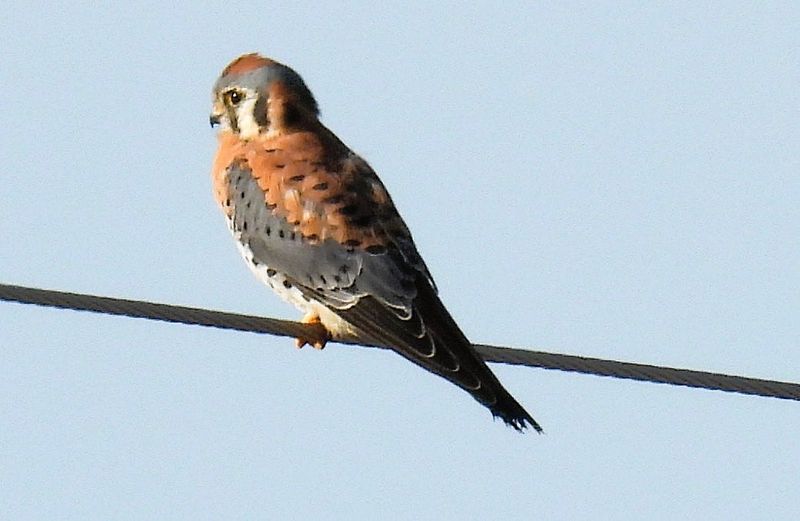
American kestrels, sometimes referred to as “sparrow hawks,’ are approximately the size of doves or pigeons. Kestrels have striking plumage and markings. Tails of American kestrels are long, narrow, and relatively square at their terminal end.
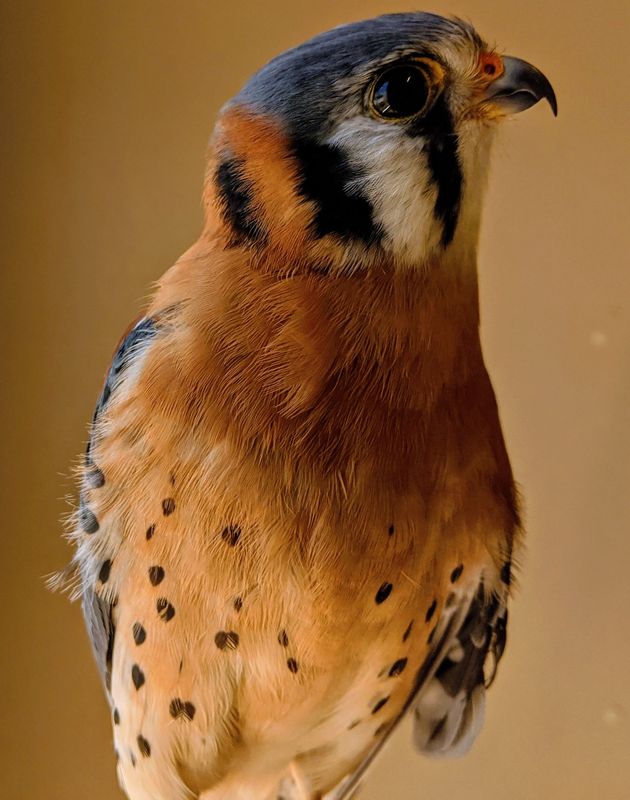
Wings are narrow and pointed at the tips, and the bird’s overall flight profile is streamlined. Kestrels hover with ease and appear relatively buoyant as they utilize slight, shallow wingbeats. Adults have bold facial patterns with two distinct, vertical, dark facial stripes and barred, rufous-colored backs.
Female kestrels possess black-barred tails while males have solid rufous tails terminating in black tips and white edging. Male American kestrels have spotted abdomens as opposed to the streaked abdomens of female kestrels, and males have bluish-gray wings compared to all rufous wings of females.
Beaks are distinctly hooked but small and delicate. Calls of these tiny hunters have been described as a shrill “killy-killy-killy.”
American kestrel populations are relatively stable in our region, but sharp declines have been reported within the northeastern United States and other areas. Habitat loss and increased use of insecticides possibly facilitated the kestrel’s declines throughout its range.
These small falcons prefer hollow tree cavities and old woodpecker holes as nesting sites and will occasionally use cliff banks, crevices and other birds’ abandoned nests. Placing nest boxes in appropriate habitats has improved nesting success and increased American kestrel numbers in many locations.
The birds form pair bonds after courtship flights. Females fly in a slow, fluttering, horizontal manner while males fly in high, diving/stooping loops. Male kestrels also offer food to their partners during these courtship flights.
Kestrels are primarily ambush hunters and utilize elevated perches to search for appropriate prey. Fence posts, electric poles, transmission lines, bare tree branches and other raised objects within woodland edge and relatively open habitats are excellent places to search for these patient little falcons.
During winter months, female kestrels tend to occupy more open habitats than do males. The birds hawk — slowly fly and hover over fields, pastures, parks, and along roadsides — in search of insects (usually grasshoppers), small mice and other rodents, lizards and other prey.
Bats, sparrows, European starlings and other birds are suitable prey for American kestrels, and these prairie predators are capable of subduing birds equal to their own size. Dove and quail may also be captured but usually in insignificant numbers because American kestrels are not exceptionally strong or swift fliers.
Although not the swiftest in flight, American Kestrels are relatively easy to train and are considered excellent beginner birds for falconers and falconry activities — with appropriate permits, of course.
The loggerhead shrike’s common name refers to the bird’s large head compared to the rest of its body. Loggerhead shrikes are widespread, endemics of North America. But, similar to the American kestrel, population numbers have experienced recent declines within the eastern United States.
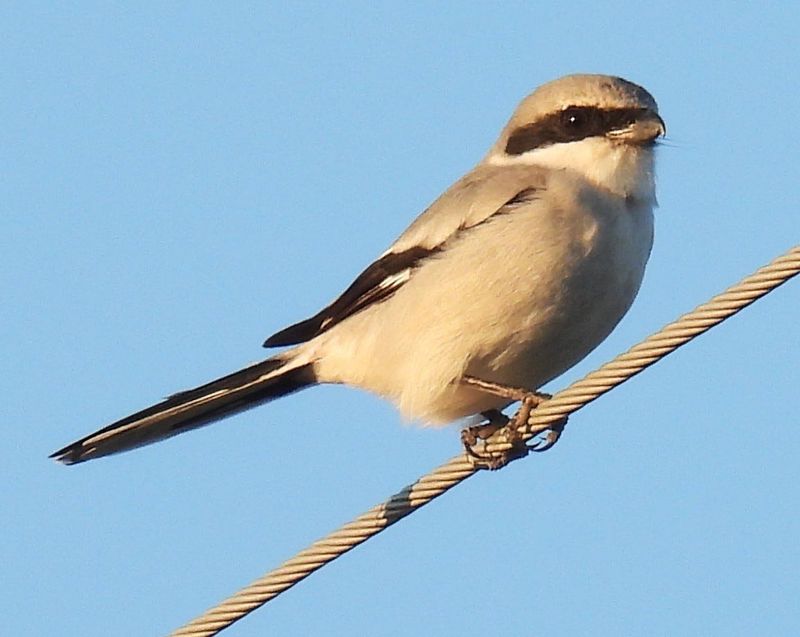
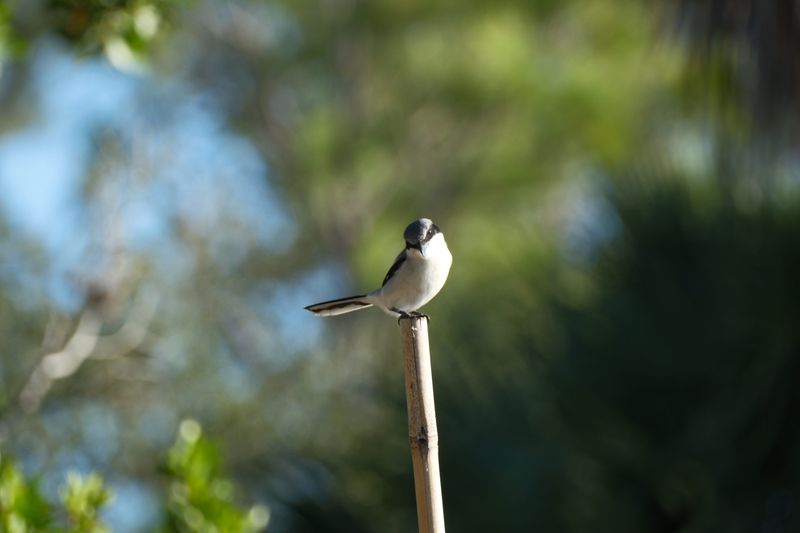
Shrikes are small birds — lengths usually ranging from 7 to 9 inches — with slate-gray dorsal plumage and white throats and bellies. Loggerhead shrikes have black wings, tail and beaks and a distinctive broad, black, bandit mask extending from behind each eye to the bill.
The shrike’s primary wing feather bases are white and form a distinctly shaped handkerchief spot and white patch whenever the birds are resting and in flight. Loggerhead shrikes are perching birds and have slender legs and nonraptorial, rather weak feet that are not specialized for subduing prey. Instead, shrikes use their short, stout, terminally-hooked bills to capture food items.
Loggerhead shrikes usually inhabit open pastureland and grassland areas containing suitable perches and often nest in cedar trees and other thorny vegetation within our region. Shrikes seem to prefer areas with short vegetation that reduces the time and effort the birds must spend searching for prey. Shrikes are usually sighted as they perch on poles, electric lines, fences and other structures.
Loggerhead shrikes are primarily solitary birds and are seasonally monogamous during spring mating season. The male loggerhead shrike courts females with an erratic flight display and by fanning his tail and fluttering his wings.
If the female partner is receptive, she will reciprocate with her own fluttering display and emit begging calls that encourage the courting male to provide a food offering. Loggerhead shrike calls include a repertoire of scolding, grating and ringing sounds.
Shrikes are diurnal and search out insects, spiders, scorpions, lizards and other reptiles, rodents, amphibians, small birds and other prey. Instead of utilizing their feet to capture and subdue prey, Loggerhead shrikes rapidly strike and spear the back of an animal’s head then twist their bill to cause a whiplash-type injury that incapacitates the victim.
Insects are usually consumed as shrikes are flying; however, if a fortunate shrike captures a larger prey item, an instinctive behavior is elicited that has earned the shrike its common name of “butcher bird!”
Because their feet are not adapted to process prey items, shrikes carry large items to thorny vegetation and/or barbed wire fences and promptly impale the prey upon a thorn or barb. This behavior allows the shrike to more easily dismember and consume prey using its bill and also allows at least temporary food storage in a type of improvised larder.
Enjoy the increased presence of these two avians in our region while their winter residency numbers are at their height and look for these birds as they perch and diligently wait for their next meals to come within striking distance!
Jim Goetze is a retired professor of biology and former chairperson of the Natural Sciences Department of Laredo College with an avid interest in all aspects of the natural world. He can be contacted at gonorthtxnature@gmail.com.
This article originally appeared on Abilene Reporter-News: Two vigilant prairie predators | Opinion
Reporting by Jim Goetze, Abilene Reporter-News / Abilene Reporter-News
USA TODAY Network via Reuters Connect