Texas school boards and parents would have unprecedented control over school library book selection under a wide-ranging state Senate bill that the House passed 86-55 on Wednesday, hours before a key legislative deadline.

Senate Bill 13 would require school districts to pull books with “indecent,” “profane” or “sexually explicit” content and grant elected board members veto power over new purchases. Any new library material, whether digital or physical, would be subject to a 30-day public review period, after which the school board would have another month to approve the content.
The legislation was authored by Sen. Angela Paxton, R-McKinney. Republican House members who are supportive of the measure said it would prevent students from being exposed to “sexually explicit” and inappropriate books.
“Senate Bill 13 understands that, too often and for too long, our libraries have been filled with agendas, and it’s time to end that,” said Rep. Brad Buckley, R-Salado, the bill’s House sponsor. “The way to end it is to empower our local leaders and our parents to find some resolution.”
Democratic House members called the bill a distraction from “real” problems facing Texas children, such as teacher shortages, housing instability and gun violence. They also argued the bill’s terms are unconstitutionally vague and could allow districts to strike classics like “Lonesome Dove,” “Catcher in the Rye” or “Romeo and Juliet.”
“No child has ever died from a book, but many, like me, have been saved by one,” said Rep. Christina Morales, D-Houston.
The House version of SB 13 authorizes school boards to appoint parental library advisory councils, but does not require them. These councils will be tasked with singling out books that contain “indecent content or profane content inconsistent with local community values or age appropriateness,” as per Buckley’s Monday amendment.
The bill comes as a 2023 Texas law with a similar goal remains tied up in court on a First Amendment challenge. Under a 5th Circuit Court of Appeals ruling, the state cannot enforce House Bill 900’s requirement that vendors rate books for sexual content, meaning schools are not yet on the hook for removing them.
Librarians have warned that SB 13 could substantially slow down the book purchasing process, creating a significant roadblock to acquiring new materials.
San Antonio high school librarian Lucy Podmore said she was able to purchase a book on monologues for a student with a one-week turnaround this school year, making sure a student had it for a debate she was preparing for.
“If the bill (was) in place right now, we would have to wait six to eight weeks, plus two more months, to get that,” Podmore, who served as chair of the Texas Association of School Librarians, told the American-Statesman.
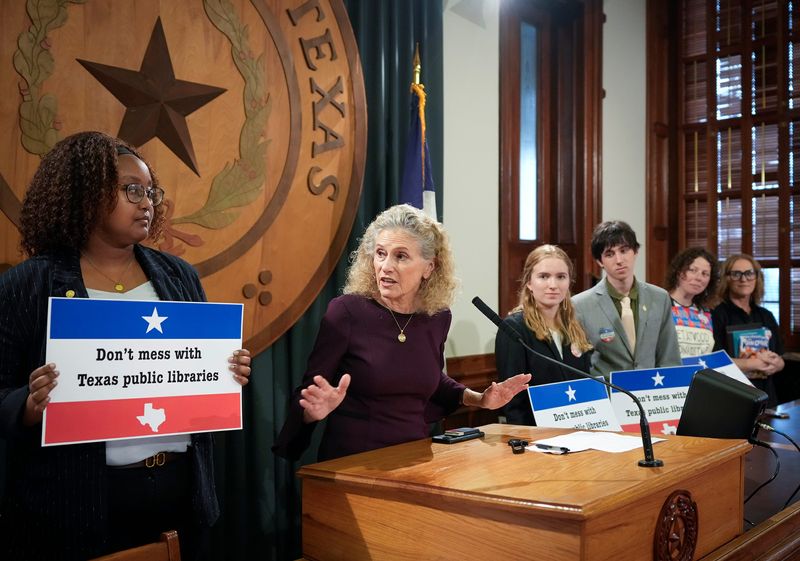
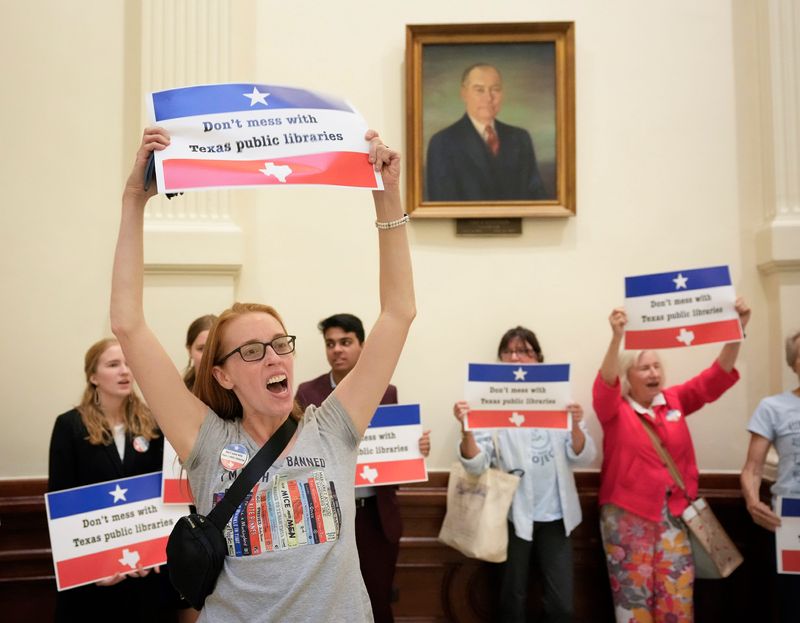
The award-winning librarian was among several dozen people who protested the bill Monday at the Capitol. Spread out on the floor and the steps outside of the House chamber, the group of parents, children, librarians and activists quietly read to themselves in front of a “FREE TO READ” banner.
“I don’t think this bill is about protecting children,” said Emily Kaszczuk, who participated in the “read-in” with her 6- and 9-year-old daughters from Leander. “I think it’s about control.”
Under SB 13, school boards would be required to create a library advisory council if 20% of parents sign a petition in support of it. The bill also would let any parent submit a list of titles their child cannot check out, as well as give parents access to their child’s borrowing history.
Books that are challenged or under review would be removed from the shelves until probes are completed, at which time school board members would publicly vote on them.
Schools could use state funds to offset compliance costs under a successful amendment from Rep. Charles Cunningham, R-Humble.
Before the chamber’s initial vote, Democratic members implored their colleagues to oppose the bill. Rep. Mihaela Plesa of Dallas, whose parents fled from Romania’s Communist regime, said SB 13 reminds her of measures used by that authoritarian government to stifle dissent.
“We do not protect liberty by silencing it,” she said. “We do not strengthen education by censoring it. And we do not honor democracy by fearing diversity.”
For Rep. Jessica González, D-Dallas, the proposal “will push LGBTQ kids away from the safety of school and education.”
As a concerned mother, freshman Rep. Hillary Hickland, R-Belton, said she supported the bill because she had seen what she called “filth” in library catalogs.
“Trust has been broken between parents and public schools,” she said. “As a parent, we want to know that our kids are safe in the libraries.”
The legislation now heads back to the Senate for a review of House changes. The upper chamber will either sign off on the final proposal or convene a conference committee to hash out the differences.
This article originally appeared on Austin American-Statesman: Texas House passes bill to implement sweeping restrictions on school libraries
Reporting by Bayliss Wagner, Austin American-Statesman / Austin American-Statesman
USA TODAY Network via Reuters Connect