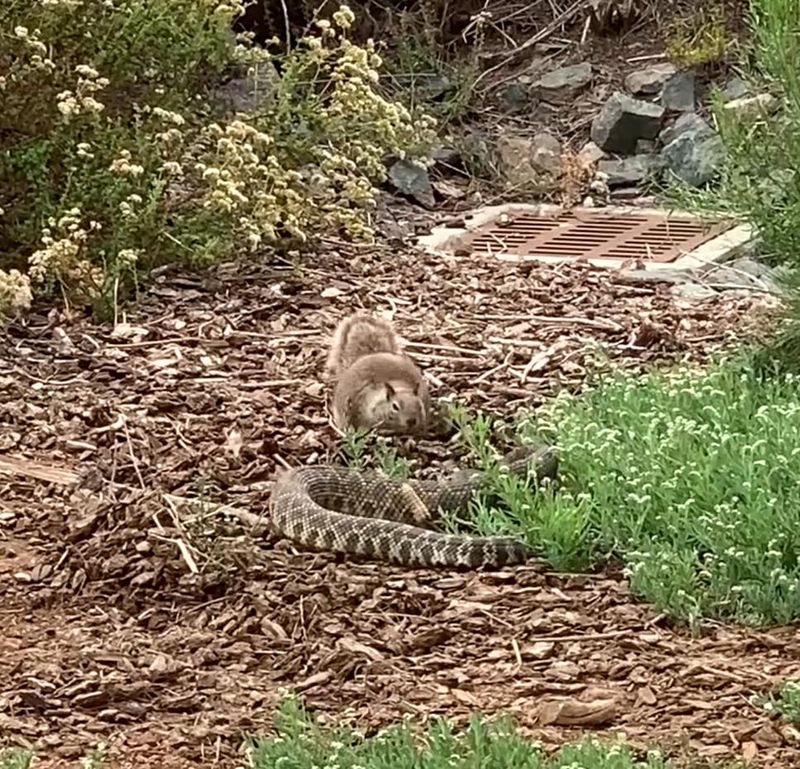
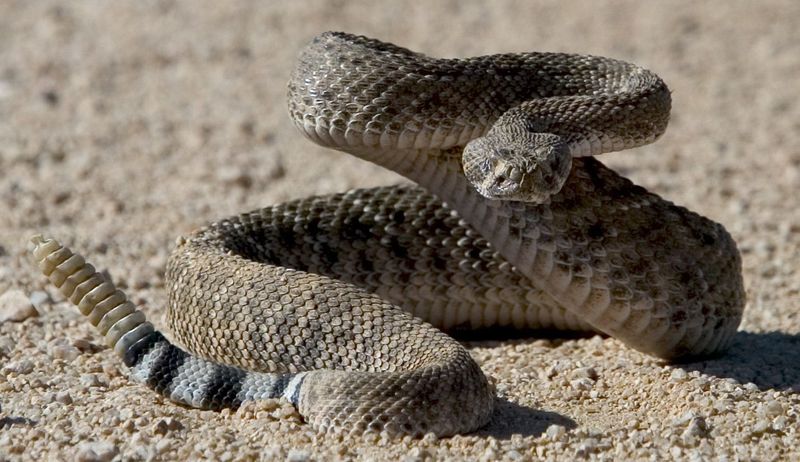
If you’re hiking, hunting, or just spending time outdoors in Texas, there’s one sound you don’t want to hear: the sharp warning rattle of a snake.
And in some parts of the state, the odds of hearing it are higher than almost anywhere else in the country.

Texas leads the nation in snake diversity, with more than 100 species and subspecies — including at least 10 rattlesnake species, which is more than any other state. It’s also one of the few states in the U.S. where all four major types of venomous snakes roam: copperheads, cottonmouths, rattlesnakes and coral snakes.
In short: Watch your step.
Which areas in Texas have the most rattlesnakes?
According to World Atlas, these seven popular spots in Texas have the highest rattlesnake populations:
Palo Duro Canyon, Canyon
Known as the “Grand Canyon of Texas” — and the second-largest canyon in the country — Palo Duro’s dramatic cliffs and hidden grottos create an ideal habitat for both western diamondback and prairie rattlesnakes.
The canyon’s red rock formations and eroded ledges offer countless denning sites, while the prairie dog towns scattered across the floor provide a steady food supply. Western diamondbacks tend to favor the rocky outcrops and brush-filled arroyos, while prairie rattlesnakes are more commonly found in the grassy uplands near the canyon rim.
Big Bend National Park, Brewster County
Big Bend’s vast and varied terrain is home to both black-tailed and rock rattlesnakes, with habitats ranging from the desert floor to the mountain peaks. In the Chisos Mountains, rock rattlesnakes thrive in higher, cooler elevations, where boulder fields and oak-pine woodlands provide ample cover. Black-tailed rattlesnakes are more common in the lower desert regions, especially where rocky outcrops border desert grasslands — ideal terrain for hunting and shelter.
Enchanted Rock State Natural Area, Fredericksburg
Western diamondbacks and black-tailed rattlesnakes are well-adapted to this rocky environment, using the dome’s natural fractures, ledges, and crevices for shelter and ambush hunting.
Where granite meets brush or grassy terrain — especially around the base of the dome and along the Echo Canyon Trail — snake activity tends to increase. After rainfall, these areas become even more active as rodents and other prey emerge, drawing snakes closer to trails and footpaths.
Despite the dome’s open appearance, its layered rock formations and seasonal water pools support a complex and well-hidden ecosystem — one that’s best admired with caution.
Davis Mountains, Fort Davis
In the higher elevations of the Davis Mountains, banded rock rattlesnakes are most often found above 6,000 feet, where pine-oak woodlands and exposed rock outcrops provide the cool, shaded habitat they prefer. Lower down, black-tailed rattlesnakes are more common, especially along rocky slopes that transition into open grasslands.
Both species make use of the region’s steep canyons and natural drainages, which serve as pathways between seasonal habitats. Areas like Madera Canyon and Mount Livermore are known hotspots for rattlesnake activity, particularly during warm-weather months.
Hikers are advised to stay alert on rugged trails, where snakes may be hidden among rocks or brush. Early morning and late afternoon are peak movement times, so it’s wise to move carefully — and consider using trekking poles to probe dense vegetation before stepping through.
Lower Rio Grande Valley, Alamo
The thick thornbrush of the Rio Grande Valley provides ideal conditions for large populations of western diamondback and southern Pacific rattlesnakes. Along the river corridor, snake activity is especially high during the spring and fall migration seasons. Protected areas like Santa Ana National Wildlife Refuge and Bentsen-Rio Grande Valley State Park are known for hosting some of the densest rattlesnake populations in the region.
Lost Maples State Natural Area, Vanderpool
Lost Maples’ limestone canyons and clear streams offer prime habitat for western diamondbacks, while also supporting notable populations of Texas coral snakes. The blend of rocky cliffs, woodlands, and riparian areas creates a varied landscape rich with hunting opportunities. Western diamondbacks are most commonly found along canyon rims, where limestone formations meet dense maple and oak forests.
Devils River State Natural Area, Del Rio
The limestone canyons and pristine waters of Devils River provide a perfect home for western diamondback and rock rattlesnakes. Thanks to the area’s remote setting and limited development, these snakes thrive in a largely untouched environment. Limestone cliffs and caves offer excellent denning spots, with western diamondbacks favoring the rocky terrain above the river and rock rattlesnakes sticking to the steep canyon walls.
Can venomous snakes climb trees?
Believe it or not, venomous snakes like copperheads, rattlesnakes and even coral snakes can climb trees, though they’re not as agile as nonvenomous rat snakes known for their ability to climb high and get themselves in a mess.
After a viral video of a rattlesnake perched on a tree limb sparked claims of photo editing, Arizona-based Rattlesnake Solutions confirmed this behavior is real, though it’s not commonly observed.
How to identify a rattlesnake
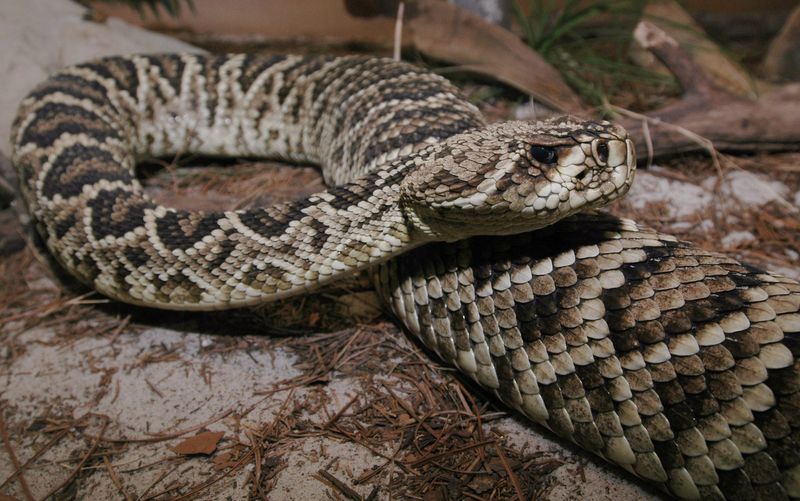
Rattlesnakes come in various forms across Texas, but the most common is the western diamondback rattlesnake. This species typically has a brown body marked with dark brown, diamond-shaped patterns running down its back. Near its rattle, you’ll notice alternating black and white rings. Western diamondbacks usually grow to about 4 feet long but can reach lengths of up to 7 feet.
To identify rattlesnakes, it’s best to look for several key features rather than relying on just one, as some variations do exist. Here are the most important identifying characteristics:
Do some rattlesnakes not have rattlers?
All rattlesnakes are born with a small, hard structure at the tip of their tails called a “button,” which grows into a rattle over time as the snake sheds its skin.
Each time a rattlesnake sheds, it adds a new segment to its rattle, creating the familiar buzzing sound when vibrated. However, rattles can sometimes break off or wear down due to injury, age or frequent use, leaving some rattlesnakes with a very small, damaged or even missing rattle.
Because of this, it’s important to remember that a rattlesnake may not always have a fully intact or audible rattle — but it is still venomous and should be treated with caution regardless.
What to do if a rattlesnake rattles at you
Here’s what to do if a rattlesnake rattles at you, according to a recent story from the Arizona Republic.
What to do if a venomous snake bites you
Here’s what to do if a venomous snake bites you, according to a recent story from the Arizona Republic.
How to identify venomous snakes in Texas
Texas is home to four venomous snakes, three of which belong to the same family — the pit vipers. While most venomous snakes share key identifying features, it’s important to know multiple traits to avoid misidentifying them and accidentally getting too close to the wrong snake.
Here’s how to identify the venomous snakes you might encounter apart from rattlesnakes.
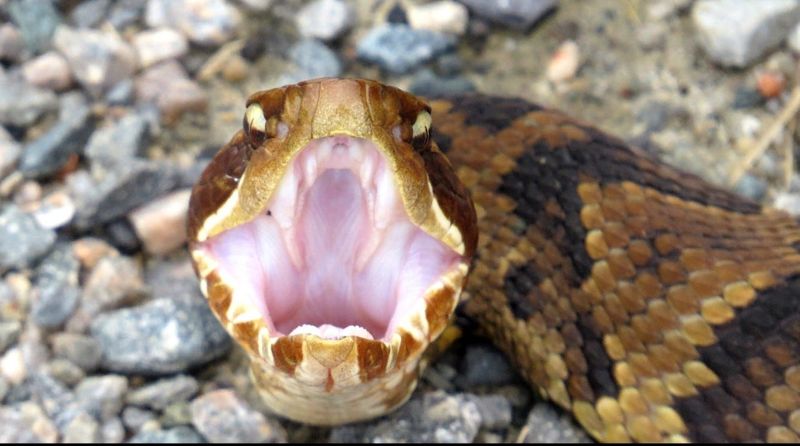
Cottonmouths, also known as water moccasins because they tend to live in swamps, lakes and rivers, are usually dark brown, olive green or black, with wide, dark bands along their bodies. They grow to about 3½ feet long. If threatened, cottonmouths will display white tissue inside their mouths, from which they get their name.
Their patterns can very widely, and they are often mistaken for nonvenomous snakes, such as diamondback water snakes and plain-bellied water snakes, and even the venomous copperhead.
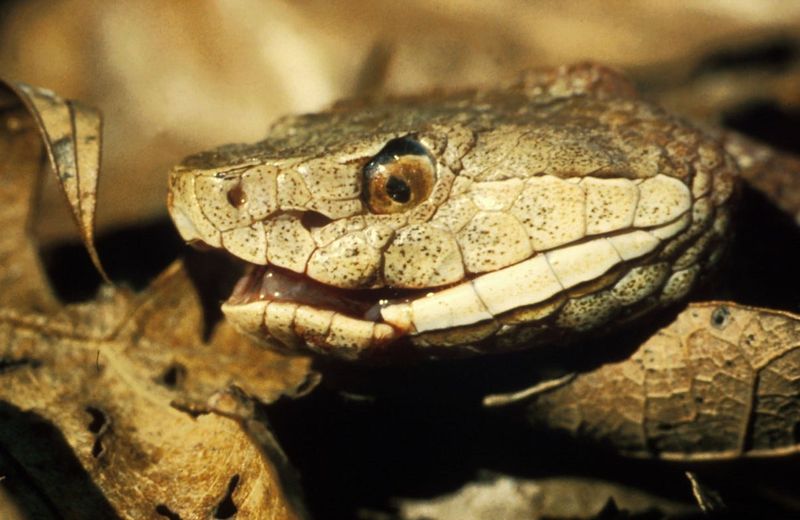
Copperheads have light-colored bodies with reddish-brown circular bands. They tend to live in rocky areas and wooded bottomlands that have ample moisture. They grow to be about 2 feet long, and their bites don’t normally kill humans because of their short fangs and minimal venom. There are three subspecies of copperheads in Texas, and their patterns vary.
Often mistaken for king snakes or milk snakes, coral snakes display distinctive red, yellow, and black rings encircling their bodies. They typically grow to about 2½ feet long and favor habitats such as woodlands and canyons. Their venom ranks among the most potent in North America, making their bites highly dangerous. However, coral snakes are generally shy and elusive, tending to retreat at the first sign of danger rather than confront threats like pit vipers do.
Interestingly, their diet primarily consists of other snakes — including rattlesnakes. Thanks to their reserved behavior and role as snake predators, coral snakes can actually be a beneficial presence in the ecosystem — and may even be the venomous snake you’d prefer to have nearby, despite the potent venom.
This article originally appeared on Austin American-Statesman: Snakes on the plains? 7 places in Texas you’re most likely to encounter a rattlesnake
Reporting by Brandi D. Addison, Austin American-Statesman / Austin American-Statesman
USA TODAY Network via Reuters Connect