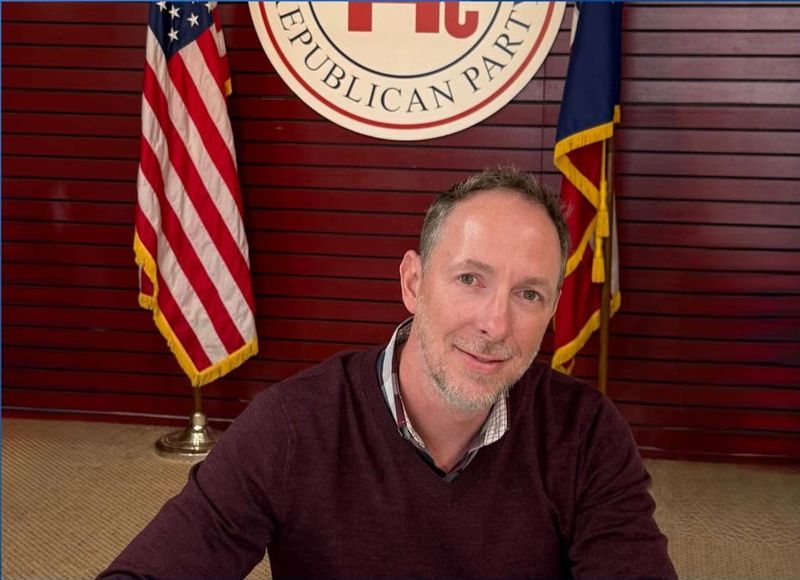
The Lubbock County 2026 March primaries are just around the corner.
Learn more about Wesley Houck’s platforms in the Republican Primary for the Lubbock County Judge race.

Note: The Lubbock Avalanche-Journal/ USA TODAY Network only edited the response to comply with journalistic standards and did not change any responses.
Current Occupation: Retired / works with Tesla.
Age: 47.
Q: The County Judge serves as the leader of the county government and presides over the Commissioners Court. What is your vision for Lubbock County’s future, and what would be your top three priorities if elected?
A: As County Judge, my priorities are straightforward and grounded in what matters most to Lubbock families. I want a county that stays affordable to live in, preserves everything that makes it special and good, and keeps both as we grow maintaining a future we actually want. It all starts at the top—with strong, unifying leadership.
My three Day One priorities are clear:
Q: The Lubbock County Expo Center has been controversial since the funding was approved in 2018. The county is ready to move forward, but private fundraising hasn’t fully materialized and financial details remain private. Where do you stand on the Expo Center project—should the county proceed, combine it with other projects like the Civic Center renovation, or take a different approach? How would you ensure transparency and accountability?
A: The Lubbock County Expo was approved by a direct vote of the people of Lubbock County. That vote included the vision that was promised and the location that was presented.
What we see here is another clear example of leadership that was missing from the very beginning. The order was backward:
Instead, it was presented to the voters first — and then we were supposed to figure it out later. That’s not the right way to do big projects.
Now we’re here, and we have to get it right. Recent efforts have been updated to reflect today’s post-COVID construction costs aided with purchasing plans from a previous effort and study — that’s a step forward. I would still like to see a clear, final study that more clearly defines and determines needs and wants, but I’m encouraged that professional work has already been done by another source. The key is urgency with clarity, to assure we don’t fall behind as prices climb and delays drag on—like the $7.7 million in HOT tax already spent with little to show.
Q: Lubbock County is experiencing significant growth. How would you balance managing that growth with maintaining the county’s fiscal responsibility and keeping the tax burden manageable for residents?
A: Growth is exciting for Lubbock County, but let’s be honest: Growth is expensive. New roads, water lines, sewer systems, broadband, and electrical infrastructure don’t come cheap. Lubbock County, now estimated at 337,000 people and growing 1.5% yearly, means once built, that new infrastructure and added use it brings now puts more strain on our existing systems — which must be maintained along with the new for decades. Falling behind on either one drives costs way up because delays only let prices climb higher while we hesitate and wait.
Here is how I would lead with watchful, intentional executive action:
Right now, building permits are up about 21% — that’s strong momentum if it’s the right kind of growth that truly benefits our families and communities. As County Judge, I’ll make sure we capture that upside while keeping fiscal responsibility front and center — no one in Lubbock wants higher property taxes.
Q: The County Judge plays a crucial role in the county budget process. Walk me through your philosophy on county spending — where should Lubbock County be investing more, and where should spending be restrained or reduced?
A: My philosophy on county spending is the same one I used to run my businesses for nearly 25 years — and the same one I brought to the Wolfforth City Council:
When these principles guide us, taxpayers feel confident, satisfied, and good about the value they receive. That’s what’s been missing in too much government spending — and often only seen in well run public business.
I want to bring that same standard to Lubbock County. It will take hard work and some sacrificed time, but with a unified Commissioners Court, it’s absolutely possible.
Where we should invest more: In needs-based growth — smart infrastructure, workforce development, and economic drivers that directly benefit residents and pay for themselves over time.
Where we should restrain or reduce spending: On non-essentials and anything that doesn’t deliver clear, measurable results. No distractions, no mismanagement — just focused, on-mission projects that get the job done efficiently and on time.
Q: What experience and qualifications make you the right person to lead the Lubbock County government at this moment? How do you differ from your opponent in this race?
A: In a nutshell: I’ve spent decades running businesses across multiple sectors — home building, materials supply, mortgages, commercial lending, and real estate investing. I’ve signed the front of checks with my own money, carried payrolls, and had families depending on me for their livelihoods. In the real business world, success or failure rides on cash-flow management, new business generation, planning, execution, and adapting to whatever the market throws at you. Market crashes, setbacks, and failures aren’t just theoretical lessons in a classroom — the pain experienced is personal, the stakes are highly personal, and the lessons stick in a way no textbook can teach. They only come through experiencing those lessons.
That’s the executive experience Lubbock County needs right now.
I’m also not a lawyer — and I see that as a strength, not a weakness. The County Judge role requires wearing two equal hats: judicial and executive. My opponent chooses to approach it as 70% judicial. I believe both roles demand equal effort and priority. The county already has a strong judicial system; what it needs is strong executive leadership, too — someone focused on unity, results, and getting things done for the people.
Finally, my faith, my family, and my upbringing from a poor childhood with a single mother guides everything I do. They teach me to treat every person with kindness and respect, to seek unity even across differences, to focus on solutions over blame, to be fiscally responsible with time AND money, to put humanity first, and to be authentically myself — whether I’m talking to a governor, a lawmaker, a janitor, or the person in line in front of me. Every person is made in God’s image and deserves humble respect as a fellow fallen person who is only saved by grace. The fruit of that approach is ultimately on display for all to see.
Q: County services and facilities affect residents’ daily lives. What improvements or changes would you prioritize in how the county delivers services to its citizens?
A: County services and facilities shape daily life for every resident, so we must deliver them efficiently, transparently, and with real value.
My top priorities would be:
This is about treating residents like valued customers: plan smart, communicate openly, and stay focused on what truly matters — so Lubbock County works better for everyone.
Q: The Commissioners Court makes decisions that impact all of Lubbock County. How would you approach working with the four commissioners, building consensus, and leading the court through difficult or divisive issues?
A: The Commissioners Court is where real decisions happen for all of Lubbock County, so my approach is simple: lead with communication, respect, and a focus on unity.
First, regular one-on-one meetings with each commissioner — something I don’t believe is happening now. You can’t lead effectively if you don’t truly understand each commissioner’s priorities, concerns, and the needs of their precinct. I’d schedule consistent, private conversations to listen, ask questions, and build trust — not just when there’s a crisis, but as a regular practice.
Second, in court I’d set ground rules and decorum: focus on the problem, not blame; present options, not ultimatums; and always aim for win/win solutions. My experience on the Wolfforth City Council showed me that when people feel heard and respected, a consensus eventually follows — even on tough issues.
Third, keep the public in the loop with clear communication about what’s being discussed and why. Transparency builds confidence and reduces division.
Bottom line: I’d lead the court the way I’ve led teams and businesses — by listening first, communicating openly, treating everyone with respect, and putting forth final objectives and goals to chase after. When we do that, difficult issues become opportunities to solve problems as a team, not battles to win.
Mateo Rosiles is a reporter for the Lubbock Avalanche-Journal and USA TODAY Network in Texas. Got a news tip for him? Email him: mrosiles@usatodayco.com.
This article originally appeared on Lubbock Avalanche-Journal: Read Lubbock County Judge GOP primary candidate Wesley Houck platforms
Reporting by Mateo Rosiles, Lubbock Avalanche-Journal / Lubbock Avalanche-Journal
USA TODAY Network via Reuters Connect