I think most of us have heard a version of the expression beginning with “If it walks like a duck and talks like a duck…” at one time or another.
This familiar saying, often called the “Duck Test,” is a type of reasoning wherein an observer studies or identifies a subject’s (for instance, animal, plant, human, or other objects, behaviors or systems) specific characteristics in order to reach a broad conclusion regarding the subject.

The idiom was credited to author and poet James Whitcomb Riley and implies that something’s true nature is evinced by observable characteristics and behaviors despite what it might be called.
This reasoning method is a bottom-up approach leading to broad generalizations that may be probable but are not guaranteed and may subsequently require revision with additional observations and evidence.
This is even true when applying the characteristics and observations of the Duck Test to members of the avian family containing ducks (Family Anatidae)!
Duck diversity
Ducks belong to a large, cosmopolitan group, collectively called waterfowl, whose members demonstrate a great deal of morphological, ecological and behavioral variation.
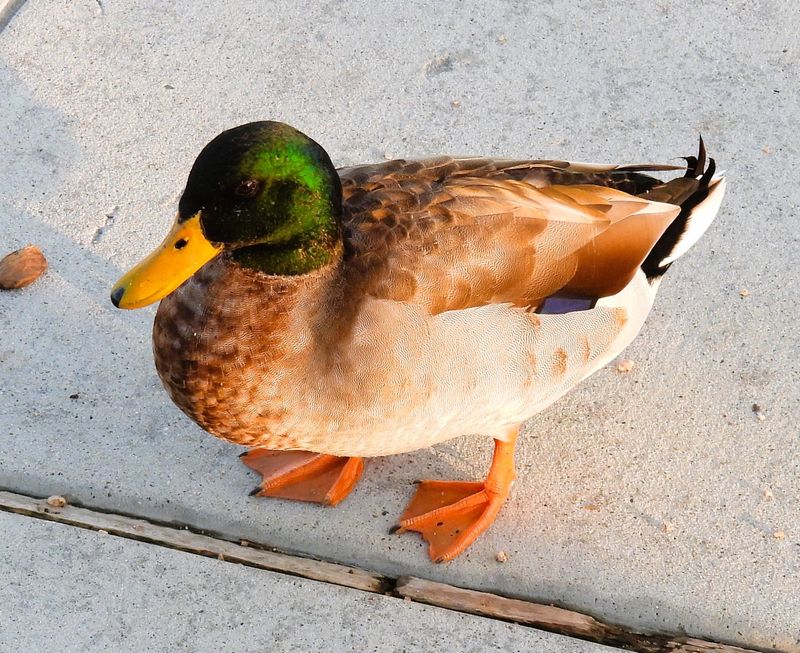
The most well-known duck is likely the widespread, almost ubiquitous mallard (Anas platyrhynchos). This is likely because mallard ducks are one of the primary ancestors of domesticated ducks; therefore, whenever envisioning a duck, most people probably bring to mind a mallard or similar appearing domestic duck because of frequent encounters with these birds.
Mallards belong to the subfamily Anatinae, which most biologists consider to be true ducks so this isn’t an incorrect image or impression. However, ascribing only mallard characteristics to the different ducks within the waterfowl family is a disservice and oversimplification of this group’s diversity.
Dabbling and diving ducks
A common way to segregate ducks is to divide them into two groups according to foraging methods they use to acquire their food resources. These groups are known as the dabbling and diving ducks.
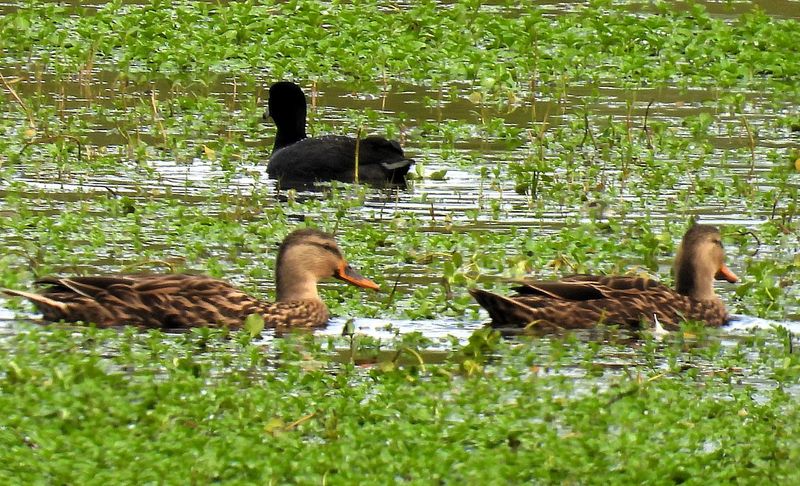
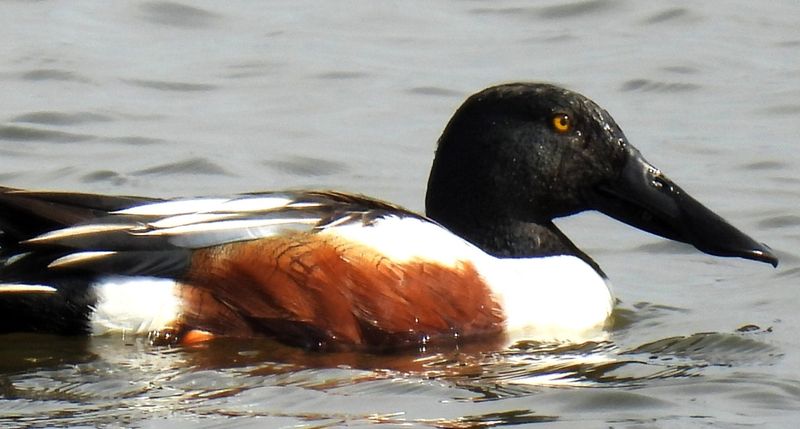
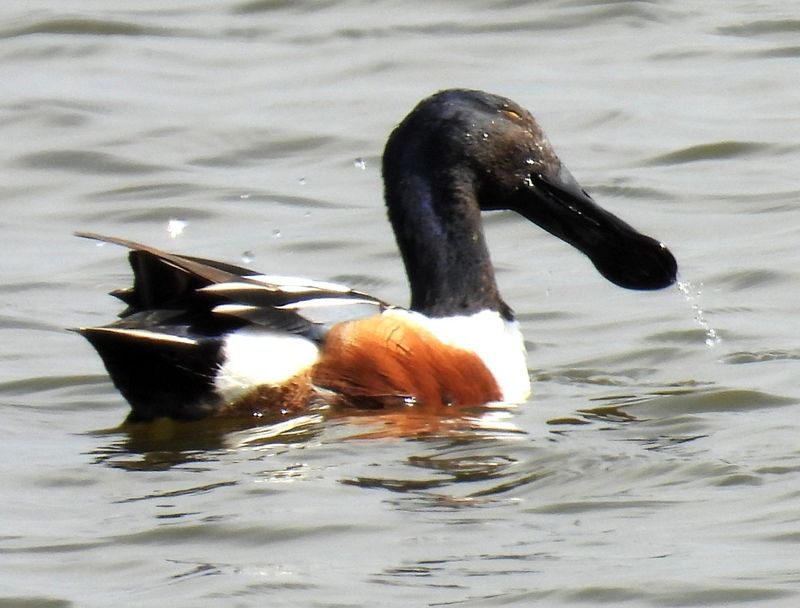
Dabbling ducks include many of our region’s winter-season and migratory species such as mallards, blue-winged and green-winged teal, northern shovelers, northern pintails, widgeons, and gadwalls.
These ducks usually forage in relatively shallow wetlands, marshes and peripheral areas of lakes and ponds. Dabblers skim the water’s surface and muddy shallows with their bills in search of seeds, vegetation and small invertebrates.
Dabblers will also upend — basically, do a headstand in shallow water — to reach submerged vegetation and tubers and roots.
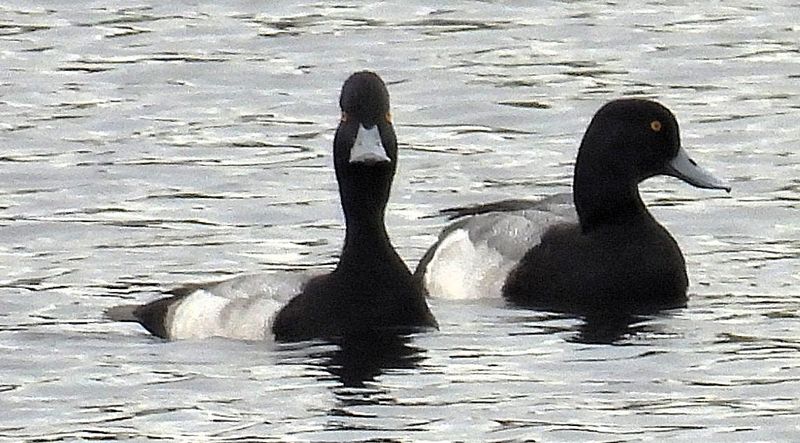
Conversely, as their name implies, diving ducks usually search for prey, such as fishes, mussels, clams, crustaceans and other aquatic invertebrates by diving and swimming submerged in deeper waters of lakes, ponds and coastline areas. A few examples of diving ducks found in our area include scaups, ring-necked ducks, and common mergansers.
Dabbling ducks, such as mallards and northern shovelers, tend to have somewhat flatter, broader bills with laminar edges acting as strainers to separate primarily herbivorous food items from water taken into the duck’s mouth.
But diving ducks, such as common mergansers, have much narrower, more pointed bills with serrated edges enabling them to effectively capture and hold their mobile, animal prey.
‘Walks like a duck’
With these subdivisions in mind, let’s examine a few tenents of the aforementioned Duck Test to further explain and illustrate the diversity of ducks: beginning with “walking like a duck.”
The front three toes of all ducks are completely webbed, but their hind toes are differently shaped. The hind toes of dabbling ducks are narrow, whereas, the hind toes of diving ducks are more broadly lobed and provide more efficient underwater propulsion.
Also, the feet of diving ducks tend to be somewhat larger and their legs shorter than those of dabbling ducks. Placement of feet and legs differs between the groups. Dabbling ducks’ legs are more centrally located underneath the birds, and dabbling ducks stand with a more-or-less horizontal body posture.
Diving ducks’ shorter legs are oriented closer to their tail — and consequently function as more efficient, powerful propellors during underwater swimming — and, when standing on land, diving ducks assume a more vertical, upright posture.
Dabbling ducks amble more easily upon land and some species, such as mallards, occasionally forage in grain fields and other upland areas, but diving ducks are rarely found far from water.
Swimming postures and water take-offs also differ between dabblers and divers. Dabblers are usually more buoyant and float higher on the water surface than diving ducks.
Divers’ feathers are usually compressed closer to their bodies and, therefore, trap less air so that these ducks are less buoyant and float lower while swimming on the surface. Because of their more centrally placed legs, dabbling ducks tend to take flight from the water with a single, explosive, almost vertical motion.
Diving ducks, however, usually take flight with a pattering run, involving flapping their wings and lightly running upon the water’s surface to gain sufficient momentum and lift for a takeoff.
‘Quacks like a duck’
Even the Duck Test’s “quacks like a duck” is an oversimplification of the varied vocalizations of this large avian group.
Many female dabbling ducks do indeed quack and chuckle, whereas, their male counterparts often vocalize using various whistling calls. Masters of whistling vocalizations are the large, lanky, pink-legged and -billed, black-bellied whistling ducks that are currently expanding their range into our region from southern and central Texas.
In contrast, the calls of many diving ducks have been described as similar to growls, cat-like meows, hoots, giggles and various whistling calls.
We’ve barely scratched the surface regarding duck diversity and discussed only a few of these marvelous waterfowls’ characteristics related to the Duck Test axiom.
However, we can state with some certainty that all ducks are not the same.
In fact, without prior knowledge when observing a common merganser for the first time, one might honestly conclude, based upon the Duck Test, that the merganser isn’t a duck.
But we know better, don’t we?
Jim Goetze is a retired professor of biology and former chairperson of the Natural Sciences Department of Laredo College with an avid interest in all aspects of the natural world. He can be contacted at gonorthtxnature@gmail.com.
This article originally appeared on San Angelo Standard-Times: ‘If it looks like a duck …’ | Opinion
Reporting by Jim Goetze, San Angelo Standard-Times / San Angelo Standard-Times
USA TODAY Network via Reuters Connect