Beachcombing after a strong winter cold front can be equal parts fascinating and sobering. This week was no exception along the Texas coast.
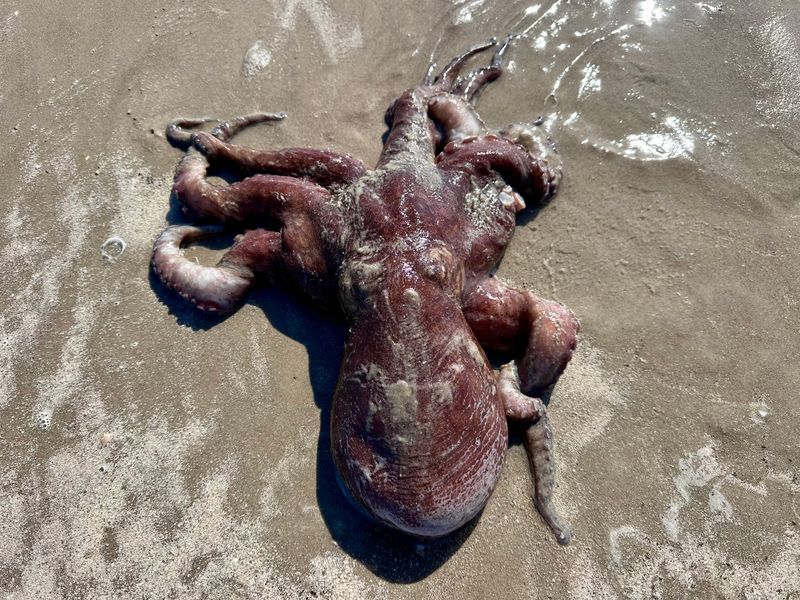
With water temperatures dropping quickly over the last several days, a number of unusual strandings have been reported, including several dead common octopuses washing ashore on North Padre Island.

While walking the beach a couple miles south of Bob Hall Pier, I came across something I never expected to see alive on the sand — a common octopus, stranded but still moving. Given the rapid temperature drop associated with the recent cold front, it was clear the animal was likely cold-stunned, a condition where sudden cold water slows metabolism and muscle function, leaving marine life unable to swim or seek shelter.
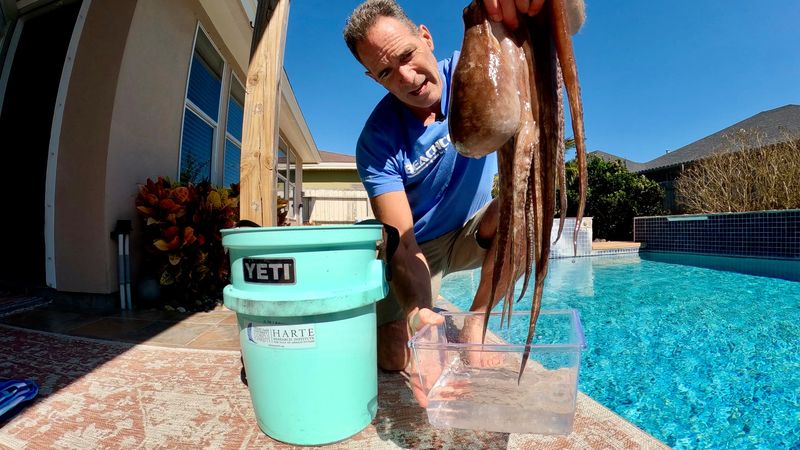
I carefully placed the octopus into a bucket of seawater and took it home for a brief observation period, about 30 minutes, to see if warming it slightly could help. At my house, I transferred it into a small, clear tub and placed it in the sun for roughly five minutes. The goal wasn’t to dramatically change conditions, but simply to raise the temperature a couple of degrees.
After a few minutes, the octopus began to show more movement, a promising sign. At that point, I immediately returned it to the water and released it along the south Packery Channel jetty, placing it gently among the rocks.
The octopus quickly crawled into a crevice, disappearing from view, hopefully into a sheltered spot where it can ride out the rest of the winter.
Some quick common octopus facts: They have three hearts, blue blood and more than 2,000 suckers on their eight arms; females can lay up to 500,000 eggs; they can change color instantly; they can ink their predators; and they are incredibly intelligent.
Sometimes beachcombing is about collecting shells or observing patterns, but every once in a while, it offers a chance to help a remarkable animal get a second shot beneath the waves.
Jace Tunnell is the director of community engagement for the Harte Research Institute at Texas A&M University-Corpus Christi. His Beachcombing series appears on YouTube and you can follow Jace at harteresearch.org, or Facebook (facebook.com/harteresearch), Instagram (@harteresearch) and X (@HarteResearch).
This article originally appeared on Corpus Christi Caller Times: How Jace Tunnell rescued a cold-stunned octopus on Texas beach
Reporting by Jace Tunnell, Harte Research Institute / Corpus Christi Caller Times
USA TODAY Network via Reuters Connect