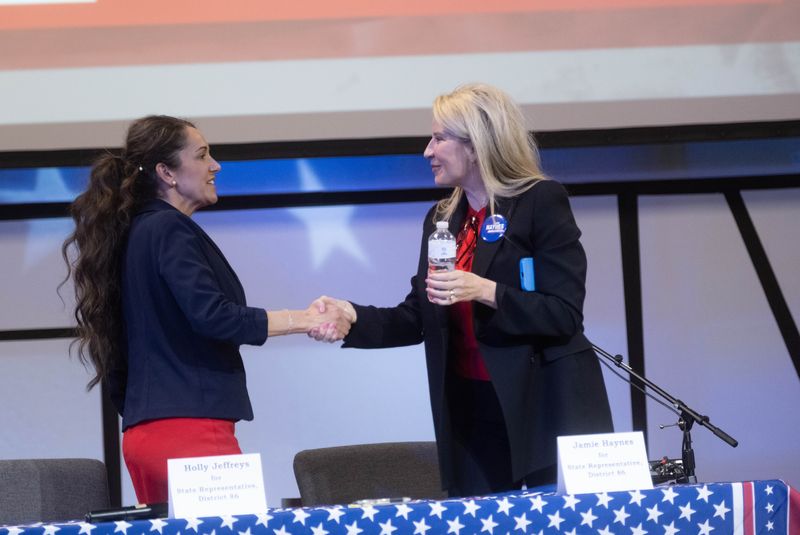
Holly Jeffreys, left, and Jamie Haynes shake hands after the District 86 Republican primary debate at First Family Church in Amarillo.
Home » News » National News » Texas » House District 86 candidates Jeffreys, Haynes face off in GOP debate
Texas

House District 86 candidates Jeffreys, Haynes face off in GOP debate

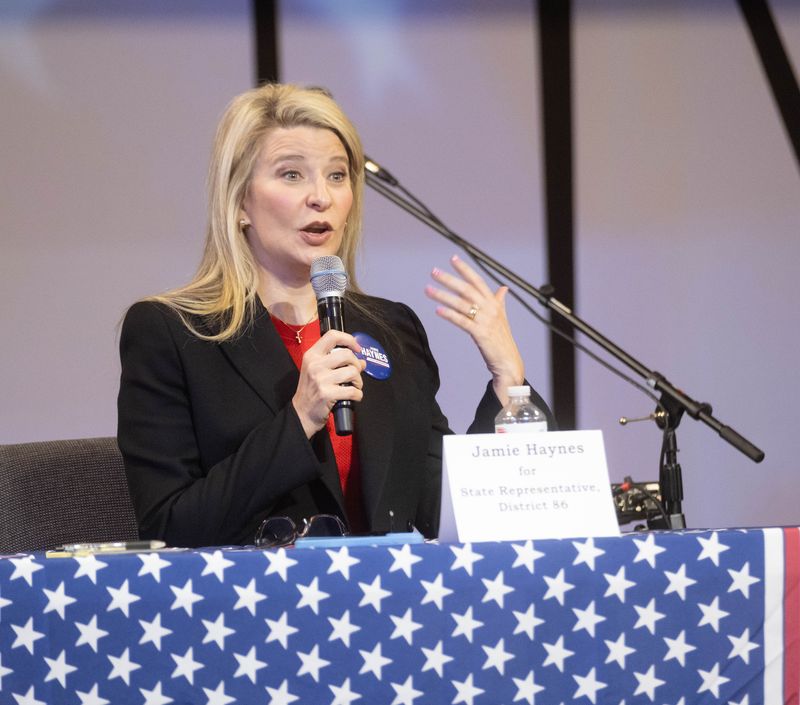
Republican voters in Potter and Randall counties heard from candidates seeking local offices and the Texas House District 86 seat during a primary debate at First Family Church.

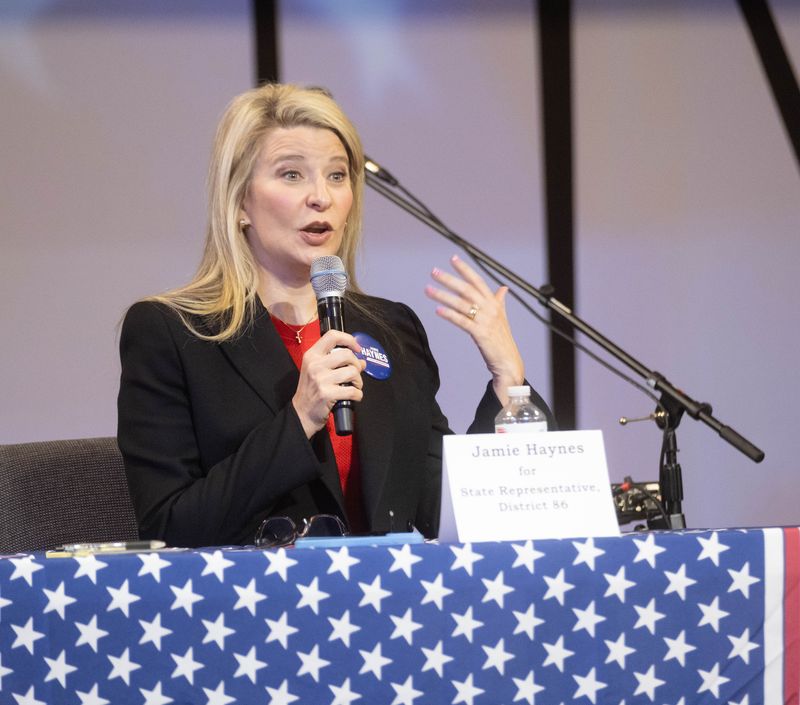
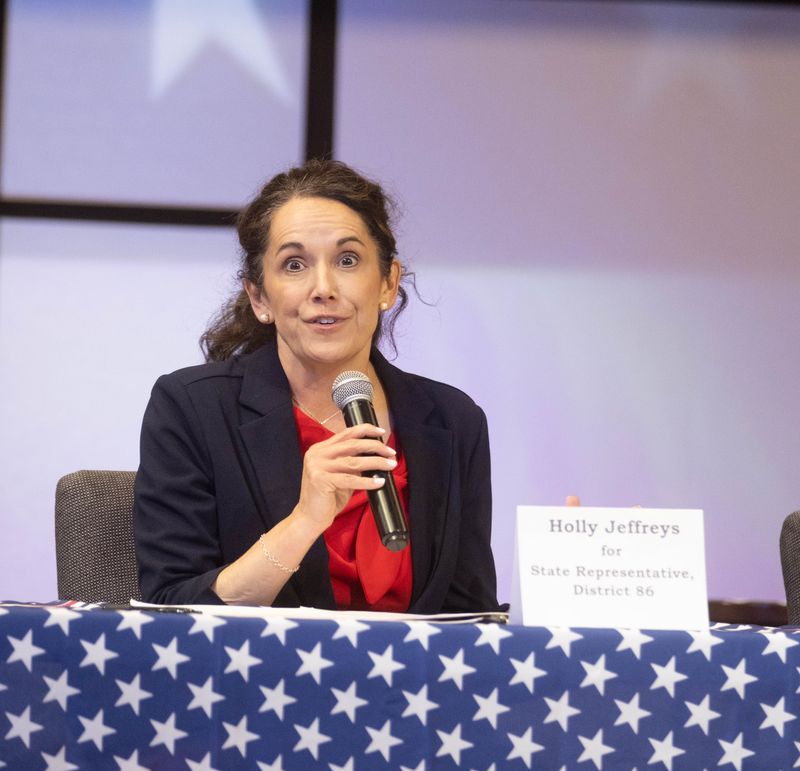
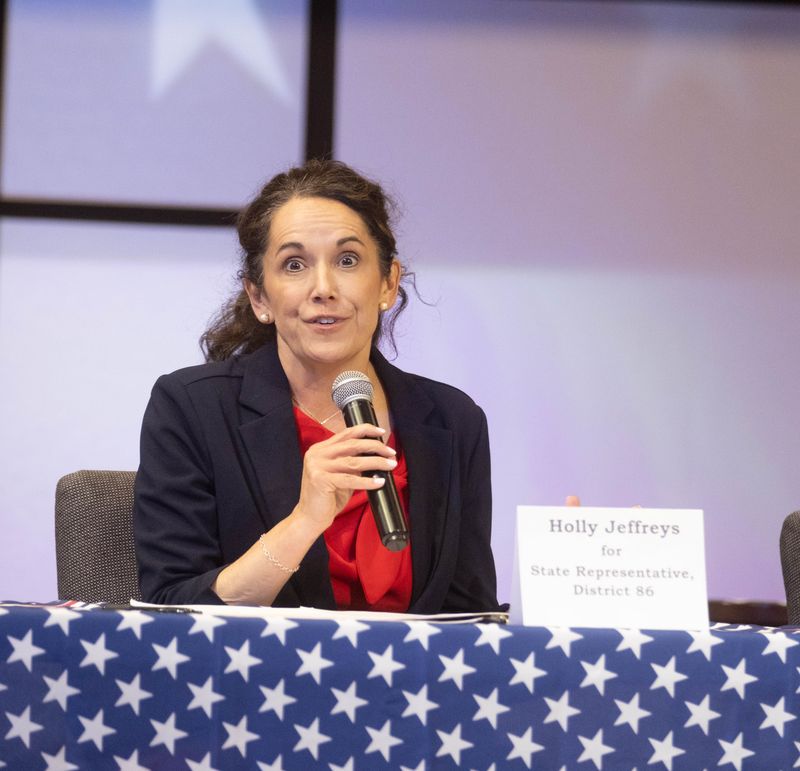
The Feb. 12 event, hosted by Amarillo Republicans and the High Plains Republican Women, featured District 86 candidates Holly Jeffreys and Jamie Haynes.

Video Thumbnail

Early voting begins Tuesday, Feb. 17.

Election Day is March 3. In the heavily Republican district, the GOP primary often determines the eventual officeholder.

Throughout the forum, the two candidates expressed largely similar positions on major issues, with differences emerging more in emphasis and governing approach than in specific policy proposals.

Jeffreys, a healthcare educator and rural clinic founder, described the position as a community-focused public service role centered on solving local problems. Haynes, a business owner and conservative activist, emphasized limiting government power and applying conservative principles to state policy decisions.

In the reliably Republican Panhandle district, the candidates shared similar policy goals but emphasized different approaches to the role of a legislator, with Jeffreys focusing on local problem-solving and Haynes stressing limits on government authority. Throughout the discussion, Haynes frequently answered questions in terms of constitutional limits and the proper role of government, while Jeffreys often framed responses around local services and community impact.

Jeffreys said the position should not become a full-time political career, describing the Legislature as a citizen body where members serve and then return to their communities. Haynes agreed she did not view the role as a long-term career and said she would aim to prepare a successor while focusing on whether legislation fits within the proper role of government.

Jeffreys is dean of the College of Nursing and Health Sciences at West Texas A&M University and founded Panhandle Family Care clinics serving rural communities. Haynes co-owns a real estate business and has been active in Republican Party organizations and parental-rights advocacy.

Asked how lawmakers should handle a future state budget surplus, both candidates said excess revenue should be returned to taxpayers.

“This is your tax money. It doesn’t belong to Austin,” Haynes said. “It should return to Texans in the form of tax relief and programs that help rural communities.”

Jeffreys pointed to recent property-tax reductions approved by lawmakers and said relief efforts should continue.

“When the government takes more than it needs, it should give it back to the people,” Jeffreys said.

Both candidates emphasized reducing property taxes as a priority. Jeffreys said she is running to “keep the values of the Texas Panhandle” and identified eliminating property taxes among her top goals, along with water protection and parental rights in education.

“Our water is not for sale,” Jeffreys said. “We fought this fight once and we don’t want to fight it again.”

Haynes also stressed fiscal conservatism and deregulation.

“Our rights come from God, not the government,” Haynes said. “Free-market capitalism, slashing taxes and cutting regulations, and constantly asking whether legislation is the proper role of government.”

Jeffreys described the Legislature as a citizen body made up of community members who temporarily serve in Austin before returning home.

“The Legislature was meant to be a citizen legislature, not a career,” Jeffreys said.

Haynes framed the position as a check on government expansion.

“The most important question you ask is: Is this the proper role of government?” she said.

Both candidates supported parental choice in education but stressed oversight in implementation. Jeffreys said parents should choose the best education for their children while ensuring transparency and fiscal responsibility. Haynes said programs must prioritize students over bureaucracy.

“We need oversight and accountability so the money benefits students, not bureaucracy,” Haynes said. Despite those differences in framing, the candidates largely aligned on outcomes, supporting tax relief, school choice and conservative fiscal policy.

Candidates also identified affordability as a major concern across the district.

“People tell me everything is too expensive, property taxes, insurance, everything,” Haynes said.

Jeffreys emphasized protecting parental rights in education, maintaining public safety and helping families remain in the region. The exchange left the primary defined more by governing style than by policy agenda.

Throughout the forum, the candidates expressed largely similar positions on major issues, with differences emerging more in emphasis and governing approach than in specific policy proposals.

County commissioner race focuses on jail and debt

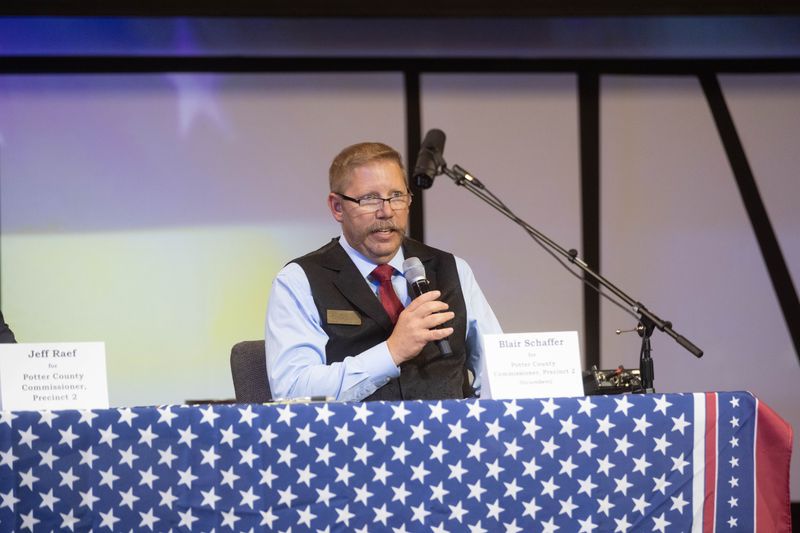
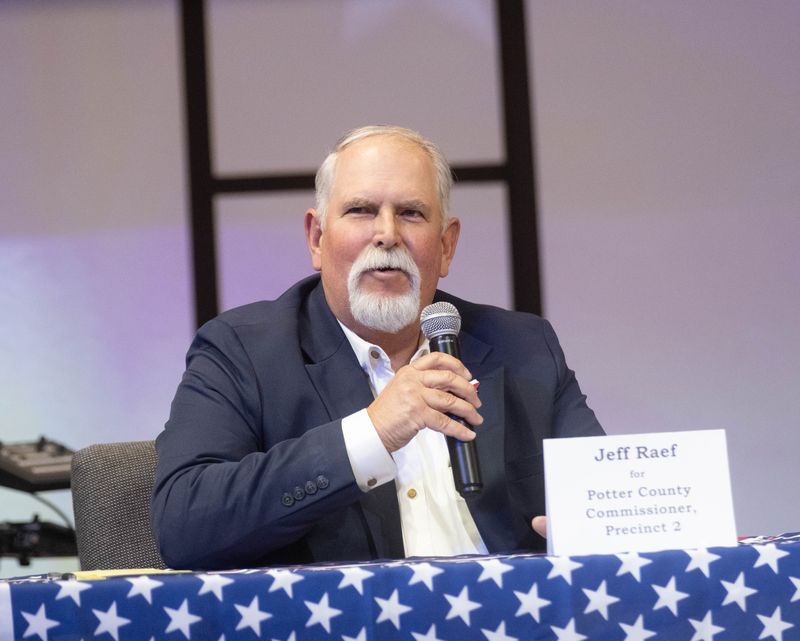
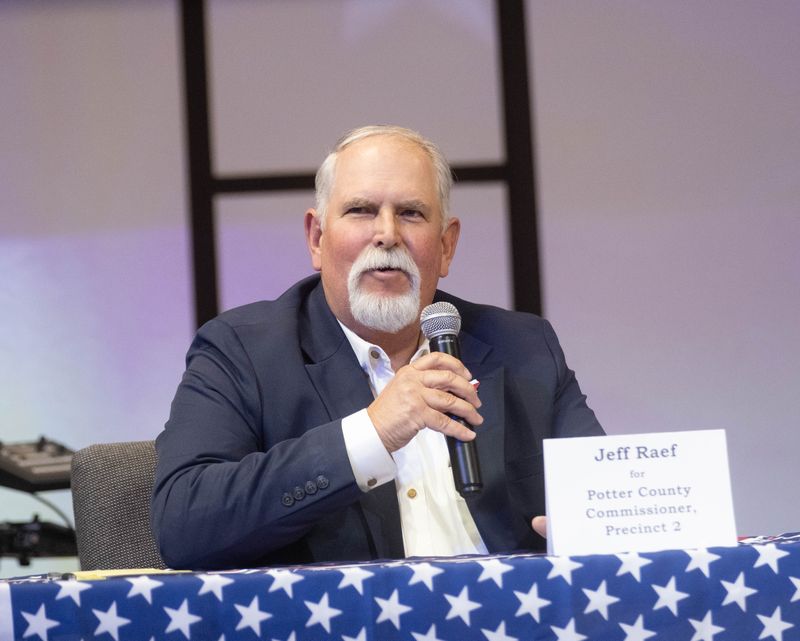
In the Potter County Precinct 2 race, incumbent Blair Schaffer and challenger Jeff Raef focused on jail overcrowding and county finances.

Schaffer said the county will likely need a new jail facility sized for current and near-future needs but emphasized any funding proposal should go before voters and be planned carefully to protect taxpayers.

Raef said officials must move beyond continued discussion and adopt long-term budgeting, including reducing reliance on certificates of obligation, which he said were intended for emergencies rather than routine expenses. He also cited county debt levels compared with similarly sized counties.

Asked about the county’s biggest challenge, Schaffer pointed to maintaining public-safety infrastructure and proactive planning, while Raef cited crime and said the county should ensure law enforcement is funded and work to attract residents amid population decline.

The debate also featured contested Republican primaries for several local offices, including Randall County clerk (Marie McNutt and Gigi Yeats), Potter County justice courts in Precincts 1 and 3 (Bryan Tackett, Lisa DeVries and Amanda Mayfield in Precinct 1, and Gary Jackson and Zach Harvey in Precinct 3), and Randall County Court at Law No. 1 (Claire Hamker Grammer, Dallas McKibben, Andrew Caleb Smith, Paul Herrmann and Quenton Todd Hatter).

This article originally appeared on Amarillo Globe-News: House District 86 candidates Jeffreys, Haynes face off in GOP debate

Reporting by Michael Cuviello, Amarillo Globe-News / Amarillo Globe-News

USA TODAY Network via Reuters Connect
Image

Image

Image

Image

Image

Related posts

Leave a Comment

Holly Jeffreys, left, and Jamie Haynes shake hands after the District 86 Republican primary debate at First Family Church in Amarillo.
Home » News » National News » Texas » House District 86 candidates Jeffreys, Haynes face off in GOP debate
Texas

House District 86 candidates Jeffreys, Haynes face off in GOP debate

Republican voters in Potter and Randall counties heard from candidates seeking local offices and the Texas House District 86 seat during a primary debate at First Family Church.

The Feb. 12 event, hosted by Amarillo Republicans and the High Plains Republican Women, featured District 86 candidates Holly Jeffreys and Jamie Haynes.

Video Thumbnail

Early voting begins Tuesday, Feb. 17.

Election Day is March 3. In the heavily Republican district, the GOP primary often determines the eventual officeholder.

Throughout the forum, the two candidates expressed largely similar positions on major issues, with differences emerging more in emphasis and governing approach than in specific policy proposals.

Jeffreys, a healthcare educator and rural clinic founder, described the position as a community-focused public service role centered on solving local problems. Haynes, a business owner and conservative activist, emphasized limiting government power and applying conservative principles to state policy decisions.

In the reliably Republican Panhandle district, the candidates shared similar policy goals but emphasized different approaches to the role of a legislator, with Jeffreys focusing on local problem-solving and Haynes stressing limits on government authority. Throughout the discussion, Haynes frequently answered questions in terms of constitutional limits and the proper role of government, while Jeffreys often framed responses around local services and community impact.

Jeffreys said the position should not become a full-time political career, describing the Legislature as a citizen body where members serve and then return to their communities. Haynes agreed she did not view the role as a long-term career and said she would aim to prepare a successor while focusing on whether legislation fits within the proper role of government.

Jeffreys is dean of the College of Nursing and Health Sciences at West Texas A&M University and founded Panhandle Family Care clinics serving rural communities. Haynes co-owns a real estate business and has been active in Republican Party organizations and parental-rights advocacy.

Asked how lawmakers should handle a future state budget surplus, both candidates said excess revenue should be returned to taxpayers.

“This is your tax money. It doesn’t belong to Austin,” Haynes said. “It should return to Texans in the form of tax relief and programs that help rural communities.”

Jeffreys pointed to recent property-tax reductions approved by lawmakers and said relief efforts should continue.

“When the government takes more than it needs, it should give it back to the people,” Jeffreys said.

Both candidates emphasized reducing property taxes as a priority. Jeffreys said she is running to “keep the values of the Texas Panhandle” and identified eliminating property taxes among her top goals, along with water protection and parental rights in education.

“Our water is not for sale,” Jeffreys said. “We fought this fight once and we don’t want to fight it again.”

Haynes also stressed fiscal conservatism and deregulation.

“Our rights come from God, not the government,” Haynes said. “Free-market capitalism, slashing taxes and cutting regulations, and constantly asking whether legislation is the proper role of government.”

Jeffreys described the Legislature as a citizen body made up of community members who temporarily serve in Austin before returning home.

“The Legislature was meant to be a citizen legislature, not a career,” Jeffreys said.

Haynes framed the position as a check on government expansion.

“The most important question you ask is: Is this the proper role of government?” she said.

Both candidates supported parental choice in education but stressed oversight in implementation. Jeffreys said parents should choose the best education for their children while ensuring transparency and fiscal responsibility. Haynes said programs must prioritize students over bureaucracy.

“We need oversight and accountability so the money benefits students, not bureaucracy,” Haynes said. Despite those differences in framing, the candidates largely aligned on outcomes, supporting tax relief, school choice and conservative fiscal policy.

Candidates also identified affordability as a major concern across the district.

“People tell me everything is too expensive, property taxes, insurance, everything,” Haynes said.

Jeffreys emphasized protecting parental rights in education, maintaining public safety and helping families remain in the region. The exchange left the primary defined more by governing style than by policy agenda.

Throughout the forum, the candidates expressed largely similar positions on major issues, with differences emerging more in emphasis and governing approach than in specific policy proposals.

County commissioner race focuses on jail and debt

In the Potter County Precinct 2 race, incumbent Blair Schaffer and challenger Jeff Raef focused on jail overcrowding and county finances.

Schaffer said the county will likely need a new jail facility sized for current and near-future needs but emphasized any funding proposal should go before voters and be planned carefully to protect taxpayers.

Raef said officials must move beyond continued discussion and adopt long-term budgeting, including reducing reliance on certificates of obligation, which he said were intended for emergencies rather than routine expenses. He also cited county debt levels compared with similarly sized counties.

Asked about the county’s biggest challenge, Schaffer pointed to maintaining public-safety infrastructure and proactive planning, while Raef cited crime and said the county should ensure law enforcement is funded and work to attract residents amid population decline.

The debate also featured contested Republican primaries for several local offices, including Randall County clerk (Marie McNutt and Gigi Yeats), Potter County justice courts in Precincts 1 and 3 (Bryan Tackett, Lisa DeVries and Amanda Mayfield in Precinct 1, and Gary Jackson and Zach Harvey in Precinct 3), and Randall County Court at Law No. 1 (Claire Hamker Grammer, Dallas McKibben, Andrew Caleb Smith, Paul Herrmann and Quenton Todd Hatter).

This article originally appeared on Amarillo Globe-News: House District 86 candidates Jeffreys, Haynes face off in GOP debate

Reporting by Michael Cuviello, Amarillo Globe-News / Amarillo Globe-News

USA TODAY Network via Reuters Connect
Image

Image

Image

Image

Image

Related posts

Leave a Comment