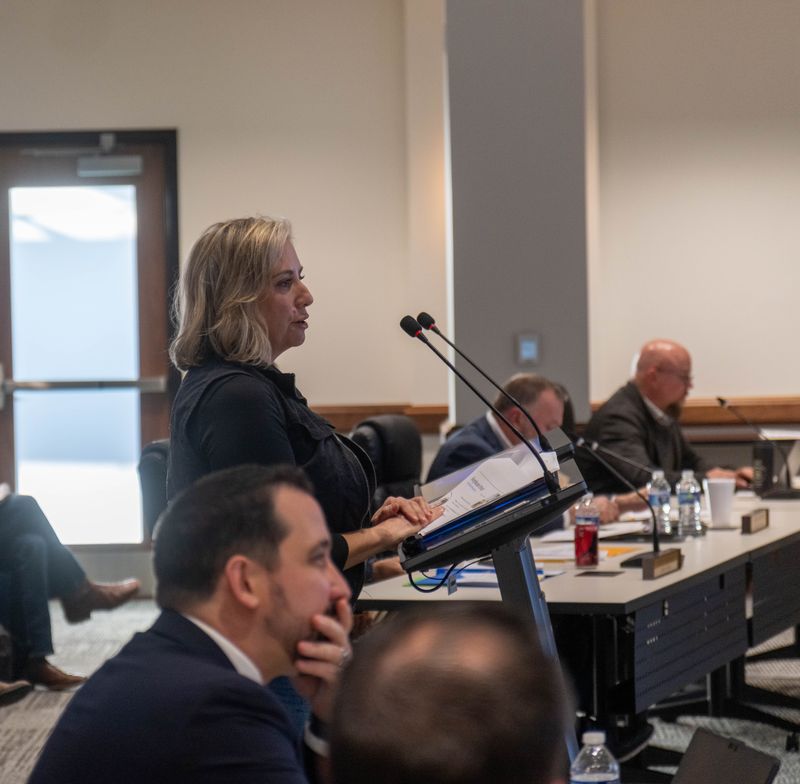
During a packed Amarillo City Council meeting Tuesday night, residents listened as Stephanie Brady outlined a plan that could reshape the future of the city-owned Amarillo Zoo.
Brady, founder and executive director of the Wild West Wildlife Rehabilitation Center, proposed shifting daily zoo operations from the city to a private nonprofit — a model she said would allow the facility to grow beyond the limits of public funding.

“We’ve watched this zoo operate on the same budget and the same facilities for decades,” Brady told the council. “Turning it into a nonprofit gives it the flexibility to raise money, expand habitats, and tell the stories of these animals in a way that connects people to conservation.”
Several attendees nodded along as Brady spoke, while council members listened intently and asked questions about staffing, costs and oversight.
Brady outlines vision for growth and upgrades
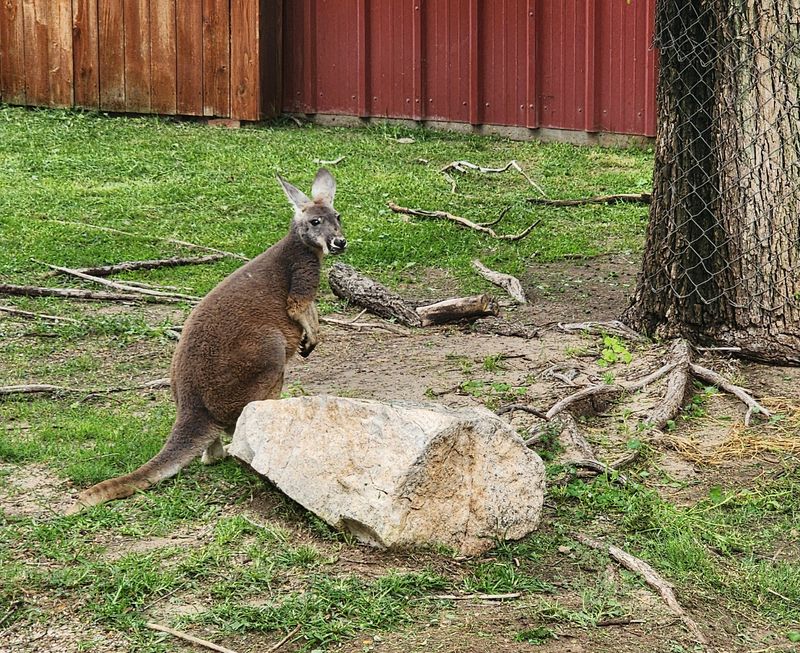
Brady said her organization, which rehabilitates about 3,100 injured or orphaned animals each year, already partners with sanctuaries and zoos across the region and could bring that experience to Amarillo’s 100-animal facility. She described the zoo as “small but full of potential,” adding that nonprofit management could unlock private donations and grant funding unavailable to the city.
As part of her presentation, Brady discussed plans for major upgrades to improve animal care and the visitor experience. She said the nonprofit would prioritize larger enclosures, new shade structures and climbing areas, and interactive exhibits that give animals more enrichment while allowing visitors to engage more closely in educational ways.
“We want to create an environment that’s stimulating for the animals and meaningful for guests,” Brady said. “That means bigger habitats, better landscaping, and more natural settings — places where the animals can thrive and the community can learn.”
She also highlighted infrastructure improvements, including modernized feeding stations, updated signage, and accessibility upgrades to make the zoo easier to navigate for families and individuals with disabilities.
“Many of the current facilities are outdated,” she said. “These changes would make it safer, more comfortable, and more inviting for everyone.”
Brady hopes to pursue accreditation from the Association of Zoos and Aquariums (AZA), which would take several years and require higher standards for care, safety and enrichment. “We’ve reached out to our friends at Cameron Park Zoo in Waco, and they’ve agreed to help train us on the AZA way,” she said. “It’s not a quick fix, but it’s the right direction.”
Most of the zoo’s animals, Brady said, are rescues from fur farms or private owners. “We are against purchasing animals,” she told the council. “Their stories deserve to be told, and this is their forever home.”
She also proposed redesigning the entrance with a café and gift shop featuring local vendors. “When families visit, they should be able to grab coffee or sunscreen, meet with other parents, or just linger,” she said. “We’d love to partner with Amarillo-area businesses and make the zoo a gathering place.”
Council reaction: interest and caution
Mayor Cole Stanley said the nonprofit concept could answer long-standing questions about how to keep the zoo viable without over-stretching tax dollars.
“The zoo has always been something we’ve asked, ‘What are we going to do?’” Stanley said after the meeting. “With all the demands on the budget, it’s hard to prioritize new habitats or expansions. You need community leaders willing to think outside the box — and that’s what this is.”
He said the plan could reduce the zoo’s annual cost to the city from about $600,000 to $300,000 within a year, with a $50,000 reduction each year until the nonprofit becomes fully self-sustaining.
“That’s the goal,” he said. “Amarillo is an animal-loving community. We see the value in having a zoo we all feel ownership in.”
Councilmember Les Simpson urged caution, saying the city must ensure a clear plan for employees and animal care. “I want to see a transition that protects the people who’ve cared for these animals for years,” Simpson said. “We need clarity on who’s responsible for what.”
While the council raised questions about staffing, liability and fundraising oversight, the overall tone was optimistic. A few residents during public comment praised the proposal as a creative step toward revitalizing one of Amarillo’s oldest public attractions.
Nonprofit structure and community role
Brady said the Wild West Wildlife Rehabilitation Center would form a separate nonprofit board to oversee zoo operations and fundraising, while the city would retain ownership of the property through a lease agreement — similar to the Fort Worth Zoo’s successful transition to nonprofit management in the 1980s.
She said donors are already prepared to help fund early improvements if the transition is approved. “Some of these supporters grew up going to this zoo,” she said. “It’s personal for them. We could start smaller projects within the first year while building momentum for larger expansions.”
Admission prices would stay the same, she added, but visitors would see a more interactive experience. “You’ll see more engagement with keepers, new exhibits and transparency about where every dollar goes,” Brady said. “That’s how you earn trust.”
Part of a national trend
If approved, Amarillo would join a growing number of U.S. cities that have transferred zoo management to nonprofit groups — a model credited with reducing public costs and attracting private investment.
In Texas, the Houston Zoo privatized in 2002 and now operates under a city lease as a nonprofit housing more than 6,000 animals. It draws about 2.3 million visitors annually and relies largely on private donations for expansions such as its $85 million elephant habitat.
The San Antonio Zoo shifted to nonprofit control decades earlier, receiving limited city funding while running donor-supported programs for endangered species such as the Kemp’s ridley sea turtle. The Dallas Zoo, the state’s largest, followed a similar path in the early 2000s, capping its city subsidy and enabling multimillion-dollar habitat upgrades under AZA standards.
Outside Texas, the Cheyenne Mountain Zoo in Colorado Springs and the John Ball Zoo in Grand Rapids, Michigan, have become models of self-sustaining nonprofit governance — proof, Brady said, that “a smaller city like Amarillo can do this too.”
“These examples show it’s possible to cut taxpayer costs while elevating care and conservation,” she said. “We can be proud of what’s here.”
Next steps in the process
Stanley said the council will continue discussions over several meetings. “We’ll have them come back, present in detail, and we’ll ask our questions,” he said. “We’re trying to move forward with as much communication and transparency as possible.”
The topic will return to the agenda Nov. 18, with a potential vote in December.
Brady said she plans to meet soon with current zoo staff to discuss retention and ensure a smooth handoff. “They’re used to familiar faces and voices,” she said. “We want a transition where everyone — staff and animals — benefits.”
Looking ahead
Both Brady and Stanley described the proposal as a turning point for a facility that has struggled to modernize.
“The zoo has been static for too long,” Stanley said. “Regardless of how hard those people work, they haven’t had the funding to move it forward. This could open another level of opportunity for Amarillo.”
Brady said success will depend on public involvement. “Whether it’s us or someone else, the goal is to see this zoo succeed,” she said. “It’s about pride, education and giving these animals the life they deserve.”
This article originally appeared on Amarillo Globe-News: Amarillo leaders weigh nonprofit plan to revive city zoo
Reporting by Michael Cuviello, Amarillo Globe-News / Amarillo Globe-News
USA TODAY Network via Reuters Connect