

By Heather Schlitz
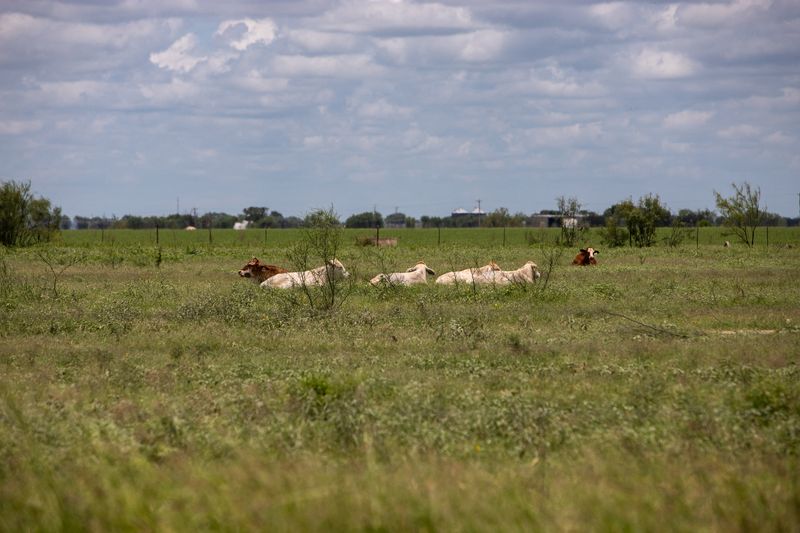
LA PRYOR, Texas, June 5 (Reuters) – The quiet Texas cattle town of La Pryor has become ground zero in the fight against screwworm after the first U.S. case in decades was detected there, prompting a livestock quarantine and putting ranchers and pet owners on edge.

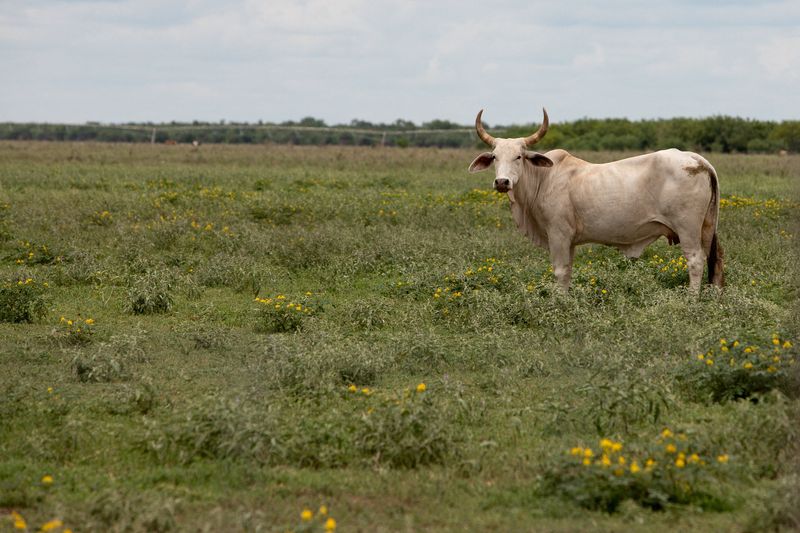
A calf at a ranch tested positive on Wednesday for the flesh-eating parasite, which left a gaping hole around its umbilical cord.
Ranchers in South Texas have been bracing for the arrival of screwworm for more than a year, as the flies progressed from Colombia through Central America, inching closer to the U.S. border. The parasite could decimate cattle herds and local wildlife.
U.S. Department of Agriculture Secretary Brooke Rollins has said only one case has been confirmed, and that the agency was doing all it could to stop a spread that threatened Texas’ multi-billion-dollar cattle industry.
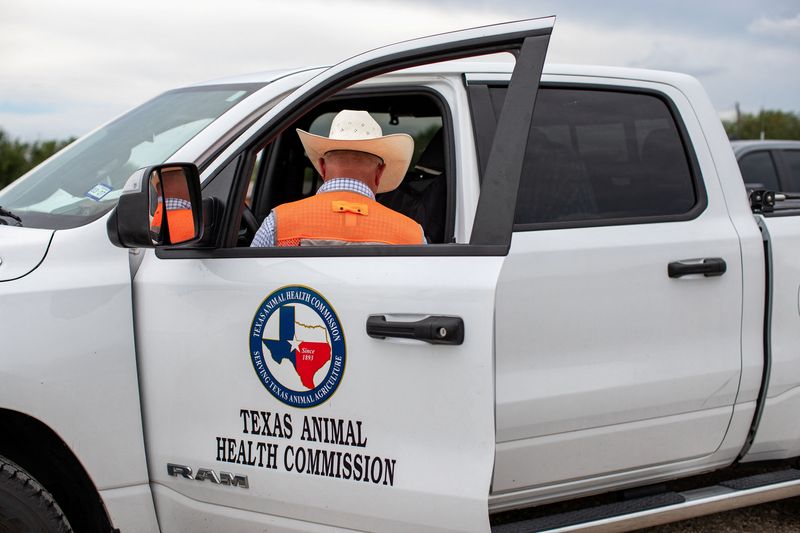
USDA WORKERS LEAD CONTAINMENT EFFORTS On Friday, 28 USDA workers fanned out across Zavala County, which borders Mexico’s Coahuila state, setting fly traps, releasing sterile flies to halt their reproduction and talking to ranchers. Four more workers were scheduled to arrive soon, said Rear Admiral Michael Schmoyer, associate administrator for USDA’s Animal and Plant Health Inspection Service. Major roads out of La Pryor were marked with blinking orange signs urging vehicles carrying livestock to pull into a checkpoint staffed with sheriffs and state personnel to inspect the animals for signs of screwworm.
Marcel Valdez, a retired teacher and Texas A&M University extension agent, recalled the last time screwworm appeared in South Texas, when he was a boy in the 1960s.
As he sat on his truck’s tailgate watching stray cats eat food he put out, he recalled how screwworm-infested calves kicked and licked at their open wounds, the smell of rotting flesh as hundreds of larvae ate the animals alive, and the sharp smell of the black, tar-like medicine he used to treat them.
Now he worries most about younger cattle ranchers who have no experience treating the pest, the abundance of wild animals that could become vectors for spreading it and the limited number of sterile flies being produced.
“The screwworm multiplies so fast, it can get out of hand very, very quickly,” he said.
TEXAS DECLARES STATE OF DISASTER Texas Governor Greg Abbott, a Republican, declared a state of disaster on Friday, asking the federal government to speed up completion of a sterile fly production facility. The plant, which broke ground in April, was set to be operating by November 2027. Abbott offered to have Texas shoulder additional costs to accelerate construction. “We need the high volume of sterile flies as quickly as possible,” Abbott said at a press conference. “It’s critical the new facility that is being constructed in Texas right now be completed even faster.”
The sterile male flies mate with wild female screwworms to produce infertile eggs. The facility must be completed before summer 2027 because the pest is more likely to spread during summer than winter, Abbott said. “We cannot make it through a second summer,” he said.Other ranchers and some Texas politicians, including those in President Donald Trump’s Republican Party, lambasted the USDA’s efforts.
“The USDA has had plenty of time to prepare for this and they are failing,” Brent Smith, the attorney for Kinney County, adjacent to Zavala County, wrote on X.
Rollins said on Thursday that screwworm had been projected to cross into the U.S. by last year, and that the Trump administration’s efforts staved it off, giving the USDA time to deploy a rapid response.
Fears of further infestations continued to rattle markets on Friday, extending a rally on U.S. cattle futures.
(Reporting by Heather Schlitz; Additional reporting contributed by Tom Polansek in Chicago; Editing by Emily Schmall and Rod Nickel)
By Heather Schlitz | Reuters | © Copyright Thomson Reuters 2026.
