The stomach-churning parasite cyclospora is spreading across Ohio and the United States, with no definite answers uet on the exact source as case counts reach unprecedented numbers.
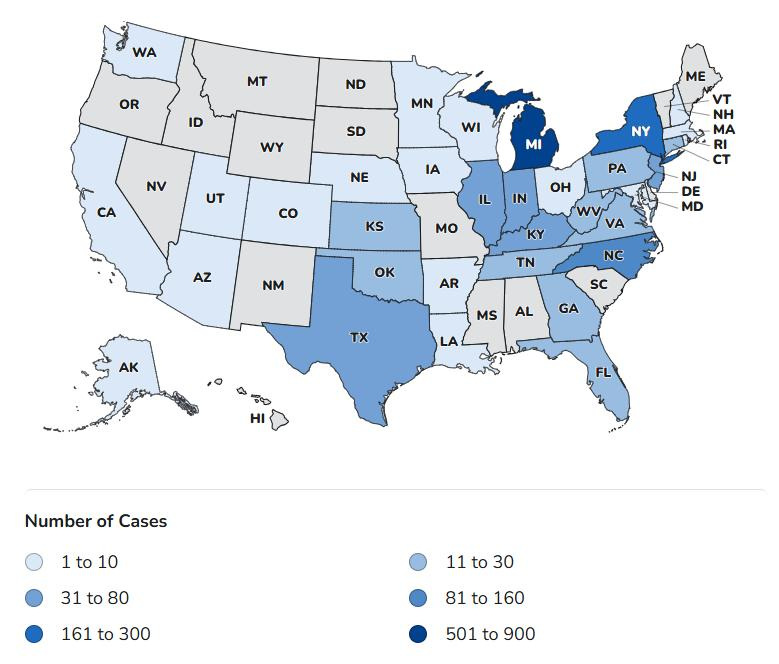
Ohio currently ranks second in the country for the number of cyclosporiasis cases at 364 as of July 9, although the Ohio Department of Health (ODH) is expected to update its data on July 16.

Michigan leads the nation with 3,762 confirmed cases as of July 15, according to the Michigan Department of Health and Human Services, including 44 people who have been hospitalized. The state normally has only 40-50 cases in a whole year, the department said.
The Centers for Disease Control and Prevention announced a national case count of nearly 7,000 in 34 states either confirmed or being investigated on July 14. However, the CDC has rolled back tracking certain foodborne illnesses and has said this is not a national emergency, so case number reports have primarily come from state health departments.
Cyclospora is not uncommon, but this level of cases is rare, according to industry experts. The illness causes watery, “explosive” diarrhea and a host of other digestive symptoms, such as cramping and loss of appetite.
While not fatal, some infected people have had to be hospitalized and can experience severe dehydration. Symptoms can persist for over a month if not properly treated.
The Dispatch reached out to the central Ohio community to gauge their biggest questions around this gut-bubbling parasite. The Dispatch spoke with experts from Ohio State University, Columbus Water and Power and OhioHealth to get some answers.
What is cyclosporiasis and why are there so many cases?
Cyclosporiasis is a gastrointestinal illness caused by cyclospora cayatenensis, a parasite that enters the gut after someone eats food or drinks water contaminated by feces, according to the CDC. It’s primarily a foodborne illness and is not usually life-threatening. In the U.S. it is often linked to fresh produce and peaks in May through August.
It’s not clear why this year’s outbreak is so large, as a source has not been determined.
Cyclospora is more common in warmer, tropical climates outside the U.S., explained Dr. Sanja Ilic, a professor of human nutrition with Ohio State University and a food safety state specialist. Warmer temperatures and more extreme weather have driven up case counts in the U.S., though Ilic said this outbreak is unlike anything he has seen before.
Even with more habitable conditions, previous years saw much lower case counts. Franklin County Public Health reported 11 cases in the county in 2025.
Actual case counts in 2026 have been difficult to pin down. Symptoms are delayed between two days and two weeks following consumption of a contaminated food, and not everyone with the illness reports it.
The CDC already lagged behind multiple state health departments like Michigan and Ohio when it came to updating case numbers, though it is now catching up. Local health departments may be counting cases with different criteria than state or national trackers.
Toledo-Lucas County Health Department, for example, updates data daily and bases its counts on positive laboratory results. But ODH told The Dispatch in an emailed statement that it follows CDC case definitions, which also assess symptoms alongside positive lab results. ODH updates its infectious disease dashboard weekly on Thursday afternoons.
What are the symptoms of cyclosporiasis and how can I get treated?
The most common and intense side effect of this stomach illness is explosive, watery diarrhea. Health experts are urging people to take this symptom seriously due to the risk of severe dehydration, especially in more vulnerable populations like elderly people, children, pregnant women and those with disabilities or chronic conditions.
Other more common symptoms include:
Less common symptoms may include:
Dr. Christopher Johnson, a family medicine physician with OhioHealth, told The Dispatch that individuals should seek medical care if they believe they have the illness, so they can be tested and receive proper treatment.
Cyclosporiasis is typically treated with the antibiotic trimethoprim-sulfamethoxazole, which is sold as Bactrim, Cotrim and Septra. If you are allergic to these medications, consult your health care provider about other options.
Ivermectin, which is used in humans to treat certain parasitic infections like threadworms, has entered the internet rumor mill as a possible treatment. But there is no evidence ivermectin cures this illness, Johnson said.
Johnson and Ilic concurred that anyone with the illness should be vigilant about hydrating, resting and keeping electrolyte levels up.
How long does cyclosporiasis last?
Cyclosporiasis can last over a month without proper treatment, Johnson said. Cyclosporiasis also waxes and wanes, he explained, so you may have a day or two of feeling better before diarrhea and other symptoms return. Why the parasite causes this cycle is unknown and unique to cyclospora, Johnson said.
The longevity of the disease is concerning because dehydration and diarrhea for such a long period of time can create malnutrition and malabsorption issues, Ilic said. Johnson noted that people can be hospitalized for kidney problems from it.
Even if you are cured of the illness, Johnson said you should still prioritize rest and hydration as your body recovers from fighting the parasite. Don’t plan on being at work the day after the diarrhea stops.
Are some people more vulnerable to the parasite?
Like with any disease, some populations are more vulnerable than others. Nearly 25% of the population is considered susceptible to a foodborne illness, said Ilic.
Elderly people, children, pregnant women and those with disabilities or chronic illness can be more severely impacted by cyclosporiasis. People with kidney issues should be especially careful and seek medical care right away, as dehydration can be particularly detrimental, Johnson said.
Pregnant women should also seek medical care more immediately, as prolonged dehydration and diarrhea can lead to issues with absorbing and keeping nutrients. However, pregnant women do not have to worry about passing the parasite onto their baby, as the parasite lives in the intestinal tract and does not enter the bloodstream.
Why hasn’t the source been found?
Cyclosporiasis is harder to track than other foodborne illnesses because of its long incubation period, which can be as long as two weeks in the human body.
CDC officials said a cluster of cases in four states − Michigan, Ohio, Kentucky and West Virginia − are likely linked, but officials are still trying to determine whether a food or produce item is the culprit. Local and state health departments are working with the CDC to accurately track cases and find the source.
Some food safety experts say the CDC’s quiet rollback of foodborne illness surveillance has made the source of these cases harder to pinpoint. Bill Marler, a food safety attorney, told USA Today that he expects a lengthy investigation, especially with staff losses at both the CDC and FDA due to budget cuts and firings.
And, unfortunately, feces are present in a lot more places than we’d like to admit, Ilic noted. It could be as simple as someone defecating in a field, and the feces being picked up by an irrigation system, or a storm causing flooding and sewage runoff to enter a field. But determining that is difficult and takes time.
Michigan health officials announced they were investigating lettuce as a possible source in the Michigan outbreak.
Taco Bell voluntarily recalled some ingredients at select locations, though the fast food chain said in a statement that public health officials have not yet “confirmed a link to Taco Bell or any specific ingredient, supplier, restaurant or retailer.”
Can I eat vegetables safely? What should I avoid?
You don’t have to swear off produce. However, people should take extra precautions and practice additional food safety with raw fruits and vegetables, such as:
Bleach is not a safe way to clean vegetables.
Canned or frozen vegetables and fruits are not currently considered a high risk for cyclospora, but be sure to check for any other reported foodborne illnesses in certain products, Ilic advised. If you go out to eat at a restaurant, avoid raw vegetables. At home, cooking produce to an internal temperature of 158 degrees should kill the parasite.
Michigan health officials have linked previous outbreaks to the following foods:
Is water safe to drink?
Yes, your local water supply is safe to drink, said Emilie Eskridge, regulatory compliance manager for Columbus Water and Power’s Division of Water.
While there is a risk of cyclospora transmission through water, Eskridge emphasized that health officials are talking about raw, untreated water, like water in a river or an irrigation system for farming.
The municipal water you get from your sink or that you shower in goes through a lengthy, multi-step treatment process that prevents cyclospora or similar parasites and bacteria from entering the local supply.
Cyclospora and parasites like it are removed in a step known as “flocculation,” when the chemical alum is added to coagulate particles into bigger ones. They are then sifted from the treated water before moving onto the next treatment stage.
When is the outbreak expected to end?
It’s not clear when this outbreak could end, as there is still no confirmed source.
Business and consumer issues reporter Samantha Hendrickson can be reached at shendrickson@dispatch.com
This article originally appeared on The Columbus Dispatch: Your questions answered about ‘explosive diarrhea’ outbreak in Ohio
Reporting by Samantha Hendrickson, Columbus Dispatch / The Columbus Dispatch
USA TODAY Network via Reuters Connect
By Samantha Hendrickson, Columbus Dispatch | USA TODAY Network