Cincinnati City Council members will wrestle with how to prevent future floods as they reconvene from summer recess this week.
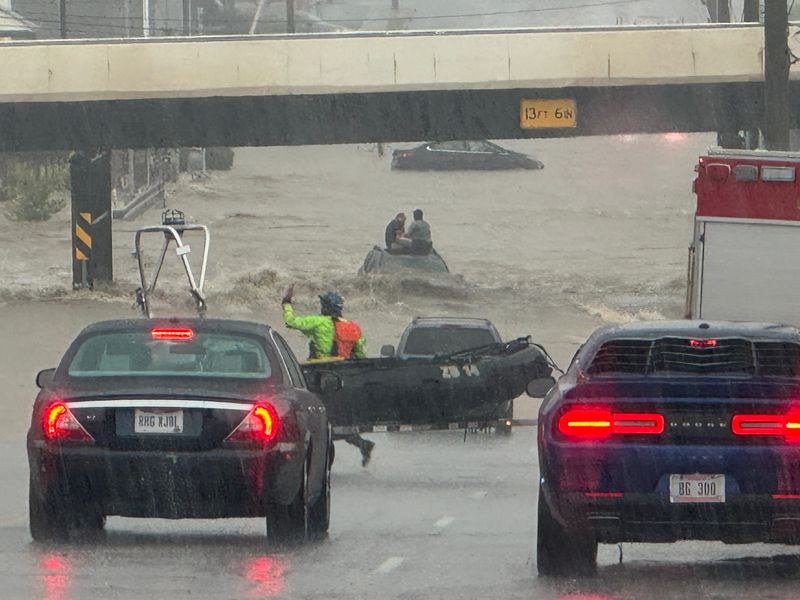
On July 17, a 1,000-year-storm dumped 6 inches of rain in one hour on Oakley, Hyde Park and other East Side neighborhoods. Those types of storms will become more frequent, council members told The Enquirer.

“It’s time we take it seriously,” said Councilman Seth Walsh.
Council this week will vote on motions from Walsh and other members asking the administration over the next several months to come up with ways to prepare for major flooding.
Here are some of the questions facing Cincinnati City Council this week.
Will the Madison Road bridge on Duck Creek be rebuilt?
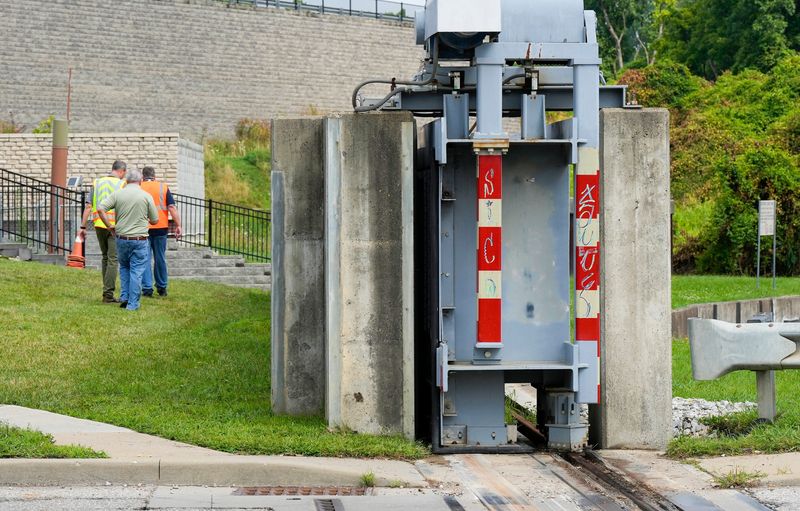
The condition of a floodgate and bridge over Duck Creek along Madison Road has become one of the biggest concerns in the wake of the July 17 flood.
Six years ago, an engineering firm recommended the city replace a bridge along Madison Road over Duck Creek in Oakley to reduce the risk of flooding. The city did not replace the bridge and floodgate, citing the cost.
As floodwaters rose in Oakley on July 17, the floodgate across the Madison Road bridge remained open. Floodwaters poured through, swamping properties in the area.
A mechanical malfunction kept the gate from closing automatically, city officials determined.
How important is the flood gate?
The city manager, in a press conference July 23, said the gate’s closure alone wouldn’t have prevented the massive flooding in the neighborhood or elsewhere in the city. But it may have lessened the impact for the 40 properties in the area the floodgate is designed to protect.
A motion submitted by council members Mark Jeffreys and Anna Albi would direct the city administration to revisit the decision not to replace the bridge, as well as look at other stormwater management measures. The motion asks for the administration to report back to City Council in 60 days.
“I want to understand what’s the cost and benefit of it,” Jeffreys said. “It was recommended back in 2020. At the time the administration said it was cost-prohibitive. What’s the cost and what’s the added protection?”
City officials told the media on July 23 that the city determined a bridge replacement to be too expensive and impractical.
Cincinnati Water Works Deputy Director Jason Fleming said a new bridge would have required the purchase of properties. He didn’t give a cost figure or specifics on how many properties would be taken.
“Everything in that area would have had to completely be rearranged and redone,” Fleming said. He said a railroad line and utilities would also have complicated the project. “All those things piled on top of each other led to the conclusion that was not a feasible solution.”
What is happening to the floodgate?
Technicians are working on the floodgate this week, officials have said. The floodgate’s automatic closing system failed during the flood, according to the city. City officials haven’t given a time frame on how long the work will take. A message to Cincinnati Water Works was not returned.
As to whether the administration would reconsider a new bridge, City Manager spokeswoman Mollie Lair said that will be outlined in the report delivered to council in two months. She declined to comment further.
Are there other measures the city can take?
City Council also wants to look at other ways to reduce flooding. In addition to whether to rebuild the Madison Road bridge, Jeffrey and Albi’s motion directs the administration over the next 60 days to study whether more underground retention basins can be installed in flood-prone areas.
Council members want to also look at more green infrastructure. The idea of rain gardens and increased vegetation to absorb rainwater isn’t new. The city’s Green Cincinnati Plan in 2023 took aim at the city’s concrete and steel surfaces, such as parking lots, saying they “amplified the effects of extreme storms.”
Cincinnati can create a “sponge city” of nature-based projects to absorb rainwater, said Howard Miller, the environment division manager in the Cincinnati city manager’s office, in an email to The Enquirer.
What have council members proposed?
A motion introduced by council members Seth Walsh, Meeka Owens, Jeff Cramerding and Ryan James would give the city administration 120 days to study ways to expand the city’s green infrastructure and assemble a “Flood Resilience Task Force” to come up with flood control suggestions.
The motion doesn’t specify what these measures would look like or who would be on the task force.
“These storms are going to be more and more frequent,” Walsh said. “While infrastructure was sufficient years ago, we need to look as a whole at a larger real solution.”
When will City Council meet?
City Council will meet at City Hall, 801 Plum St., beginning on Aug. 3 with the first committee meetings. City Council’s Climate, City Services and Infrastructure Committee is expected to take up many of the flooding issues on Aug. 4 at 10 a.m. The neighborhood council in Hyde Park – one of the hardest hit areas – on Facebook urged residents to show up Aug. 4 and share their flooding stories and concerns. The general Cincinnati City Council meeting will take place at 1:30 p.m. on Aug. 5.
This article originally appeared on Cincinnati Enquirer: Will city rebuild Duck Creek bridge? Leaders look to prevent floods
Reporting by Scott Wartman, Cincinnati Enquirer / Cincinnati Enquirer
USA TODAY Network via Reuters Connect
By Scott Wartman, Cincinnati Enquirer | USA TODAY Network